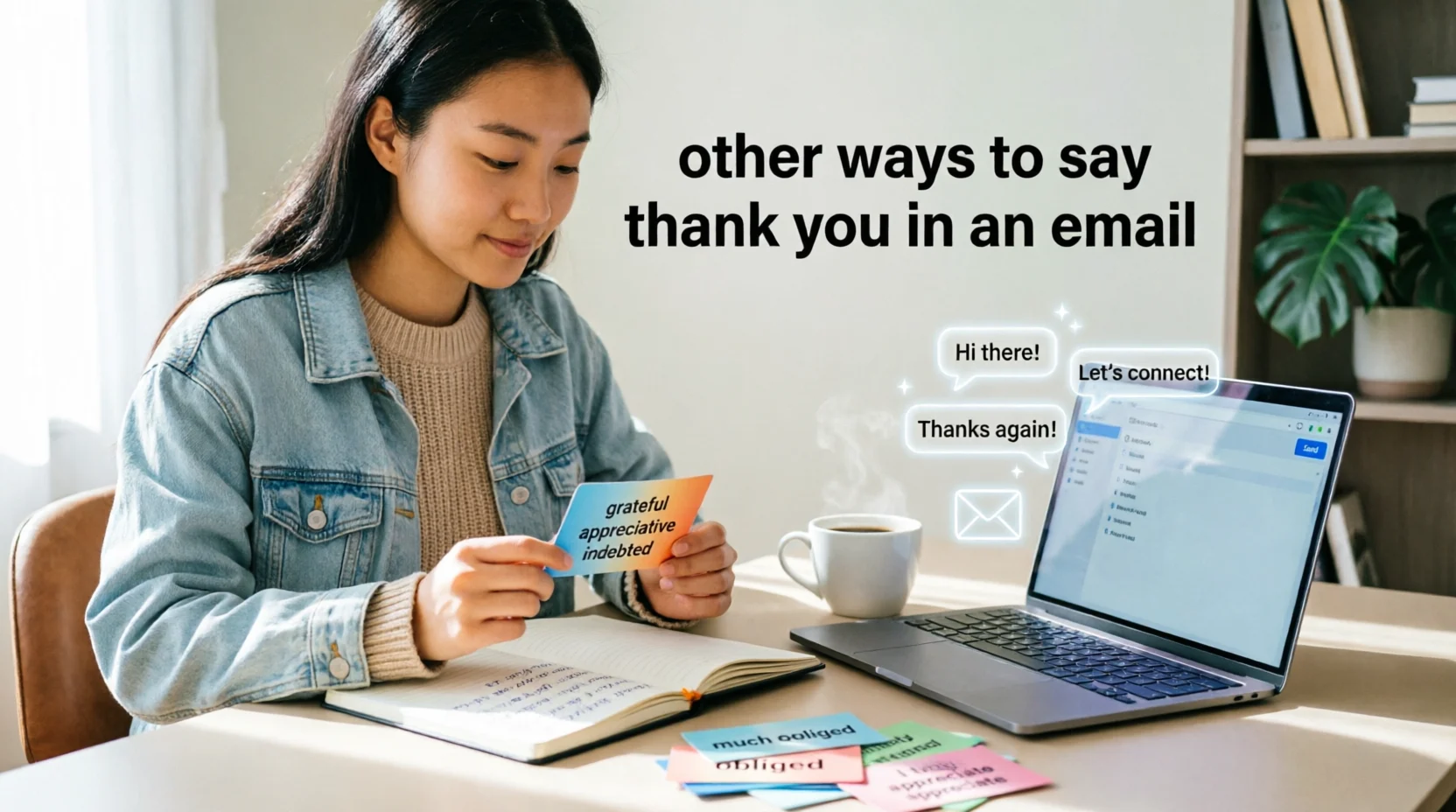
There are many ways to express gratitude in an email, depending on your relationship with the reader and the level of formality. For professional communication, try I appreciate your help, Thank you for your assistance, I’m grateful for your support, Many thanks, or I sincerely appreciate it.
The right thank you phrase can make a simple email sound warmer, more professional, and more confident.
Knowing other ways to say thank you in an email can help you communicate with greater confidence in professional, academic, and everyday situations. While “thank you” is always polite, using different expressions allows you to match your message to the relationship, situation, and level of formality.
Professionals often need alternatives to other ways to say thank you in an email when replying to a manager, client, colleague, teacher, recruiter, or business partner. A thoughtful phrase can show appreciation without sounding repetitive or overly formal. It can also help English learners develop a wider range of natural communication skills. Learning these expressions is not only useful for gratitude. Similar communication skills can help you express excitement in English, show appreciation, acknowledge assistance, and build positive professional relationships. The key is choosing an expression that sounds natural for your audience and purpose.
Quick Categories
Formal Alternatives to “Other Ways to Say Thank You in an Email”
• I sincerely appreciate your assistance.
• Thank you for your valuable support.
• I am deeply grateful for your help.
• Please accept my sincere thanks.
Pro Tip: Use formal expressions when writing to senior professionals, clients, institutions, or people you do not know well.
Casual Alternatives
• Thanks so much for your help.
• I really appreciate it.
• Thanks a lot.
• I appreciate you helping me out.
Pro Tip: Casual phrases work best when you already have a friendly relationship with the recipient.
Professional Alternatives
• I appreciate your assistance.
• Thank you for your prompt response.
• I appreciate your time and support.
• Thank you for taking the time to help.
Pro Tip: Professional phrases are useful in workplace emails because they sound courteous without being unnecessarily formal.
Informal Expressions
• Thanks again!
• Really appreciate it!
• Many thanks!
• Thanks for everything!
Pro Tip: Use informal expressions with friends, familiar colleagues, classmates, or people you communicate with regularly.
Professional gratitude does not have to sound complicated. Clear and sincere language is often the most effective.
Common Mistakes
1. Using overly casual language in a formal email
Mistake: “Thanks a bunch for sorting this out!”
This may sound too relaxed when writing to a client or senior manager.
2. Repeating “thank you” in every email
Mistake: “Thank you for your email. Thank you for your help. Thank you for your time.”
Repeating the same phrase can make your writing sound mechanical.
3. Using a phrase that is too formal
Mistake: “Please accept my profound gratitude for your kind consideration.”
This can sound unnatural in an ordinary workplace email.
4. Forgetting to mention what you appreciate
Mistake: “Thanks.”
A more useful version is: “Thank you for sending the updated report.”
5. Using informal expressions with unfamiliar recipients
Mistake: “You’re a lifesaver!”
This may be acceptable with a close colleague but is usually inappropriate in formal business communication.
What Does “Other Ways to Say Thank You in an Email” Mean?
The phrase refers to alternative expressions that communicate gratitude in written email communication. Instead of repeatedly using “thank you,” writers can choose different phrases according to the situation, relationship, and desired tone.
Gratitude expressions can be complete sentences or short phrases.
Example: “I appreciate your assistance with this project.”
The grammar usually involves a verb or expression that communicates appreciation, such as appreciate, thank, or be grateful.
When to Use “Other Ways to Say Thank You in an Email”
Different gratitude expressions are useful in many situations, including:
• Replying to a professional email
• Acknowledging someone’s assistance
• Thanking a manager or supervisor
• Responding to a client
• Following up after an interview
• Thanking someone for their time
• Showing appreciation after receiving information
• Acknowledging a recommendation or introduction
• Thanking a teacher or mentor
• Responding to a colleague’s support
Spoken vs Written
Some expressions work naturally in both speech and writing, such as I really appreciate it. Others, including Please accept my sincere thanks, are more common in formal written communication.
Formal vs Informal
Formal expressions are appropriate for clients, senior professionals, institutions, and unfamiliar recipients. Informal expressions are better suited to friends and familiar colleagues.
A strong English communicator does not simply know more words. They know when each expression fits the situation.
Is “Other Ways to Say Thank You in an Email” Professional or Polite?
The basic expression “thank you” is polite and widely accepted, but its professional effect depends on the context and surrounding message.
Polite? ✔️ Yes
Professional? ✔️ Yes, when used appropriately
For business communication, a more specific phrase can sound stronger and more purposeful.
Business example:
“Thank you for taking the time to review my proposal. I appreciate your detailed feedback.”
This sounds professional because it identifies the reason for the gratitude instead of using a vague expression alone.
Pros and Cons of Using “Thank You”
Pros
• Simple and natural
• Friendly tone
• Common usage
• Easy to understand
Cons
• Can sound too informal in some work situations
• May become repetitive when overused
• Offers limited emotional range
• May not be suitable for highly formal writing without additional context
Other Ways to Say “Thank You” in an Email With Examples
These other ways to say thank you in an email can help you sound more fluent, confident, and natural in different situations.
Use them according to tone, context, and audience to express appreciation, admiration, or approval.
1. Phrase: I appreciate your help
Meaning: This means you are grateful for someone’s assistance.
Explanation: It is a natural and professional way to acknowledge useful support.
Example Sentence: I appreciate your help with preparing the presentation.
Best Use: Workplace emails
Worst Use: Very formal letters
Tone: Warm, professional, appreciative
Context Variability: casual / professional / spoken examples
2. Phrase: Thank you for your assistance
Meaning: This expresses gratitude for someone’s practical help.
Explanation: It is especially common in professional and customer service communication.
Example Sentence: Thank you for your assistance with resolving this issue.
Best Use: Business communication
Worst Use: Close friends
Tone: Formal, polite, respectful
Context Variability: casual / professional / spoken examples
3. Phrase: I really appreciate it
Meaning: This shows genuine gratitude for something someone has done.
Explanation: It sounds friendly while remaining suitable for many workplace situations.
Example Sentence: I really appreciate it. Your feedback helped me improve the proposal.
Best Use: Friendly workplaces
Worst Use: Legal correspondence
Tone: Warm, natural, sincere
Context Variability: casual / professional / spoken examples
4. Phrase: Many thanks
Meaning: This is a concise expression of gratitude.
Explanation: It is frequently used at the end of professional emails.
Example Sentence: Many thanks for sending the documents so quickly.
Best Use: Email closings
Worst Use: Highly formal letters
Tone: Polite, concise, friendly
Context Variability: casual / professional / spoken examples
5. Phrase: I sincerely appreciate your support
Meaning: This communicates genuine appreciation for someone’s support.
Explanation: It is appropriate when the recipient has provided meaningful assistance.
Example Sentence: I sincerely appreciate your support throughout this project.
Best Use: Professional relationships
Worst Use: Casual messages
Tone: Formal, sincere, respectful
Context Variability: casual / professional / spoken examples
6. Phrase: Thank you for your time
Meaning: This thanks someone for giving attention or time to you.
Explanation: It is particularly useful after meetings, interviews, consultations, or discussions.
Example Sentence: Thank you for your time and consideration during our meeting.
Best Use: Meetings and interviews
Worst Use: Quick casual replies
Tone: Professional, courteous, appreciative
Context Variability: casual / professional / spoken examples
7. Phrase: I’m grateful for your support
Meaning: This expresses sincere gratitude for continued assistance.
Explanation: It can communicate deeper appreciation than a simple “thanks.”
Example Sentence: I’m grateful for your support during this important project.
Best Use: Meaningful support
Worst Use: Routine requests
Tone: Sincere, warm, respectful
Context Variability: casual / professional / spoken examples
8. Phrase: Thank you for taking the time
Meaning: This recognizes the effort someone made to help or respond.
Explanation: It is useful when someone has spent significant time reviewing or discussing something.
Example Sentence: Thank you for taking the time to review my application.
Best Use: Applications and reviews
Worst Use: Quick acknowledgments
Tone: Polite, professional, thoughtful
Context Variability: casual / professional / spoken examples
9. Phrase: I appreciate your assistance
Meaning: This means you value the help someone provided.
Explanation: It is a concise professional alternative to “thank you for your help.”
Example Sentence: I appreciate your assistance with the account update.
Best Use: Workplace emails
Worst Use: Casual chats
Tone: Formal, clear, courteous
Context Variability: casual / professional / spoken examples
10. Phrase: Thank you for your prompt response
Meaning: This thanks someone for replying quickly.
Explanation: It is especially useful when responding to customer service or business communication.
Example Sentence: Thank you for your prompt response to my inquiry.
Best Use: Business emails
Worst Use: Informal texts
Tone: Professional, polite, appreciative
Context Variability: casual / professional / spoken examples
11. Phrase: I’m thankful for your help
Meaning: This directly expresses gratitude for assistance.
Explanation: It sounds warm and natural without being extremely formal.
Example Sentence: I’m thankful for your help with this assignment.
Best Use: Personal support
Worst Use: Formal complaints
Tone: Warm, sincere, friendly
Context Variability: casual / professional / spoken examples
12. Phrase: Thank you for your valuable input
Meaning: This thanks someone for providing useful ideas or feedback.
Explanation: It works particularly well when someone’s suggestions contributed to a project.
Example Sentence: Thank you for your valuable input during the planning session.
Best Use: Team collaboration
Worst Use: Casual requests
Tone: Professional, appreciative, respectful
Context Variability: casual / professional / spoken examples
13. Phrase: I appreciate your consideration
Meaning: This expresses gratitude for someone’s attention to a request or proposal.
Explanation: It is common in applications, requests, and formal correspondence.
Example Sentence: I appreciate your consideration of my application.
Best Use: Formal requests
Worst Use: Friendly emails
Tone: Formal, respectful, courteous
Context Variability: casual / professional / spoken examples
14. Phrase: Thank you for your continued support
Meaning: This recognizes ongoing assistance or encouragement.
Explanation: It is useful when someone has helped you repeatedly over time.
Example Sentence: Thank you for your continued support of our team.
Best Use: Long term support
Worst Use: One time favors
Tone: Professional, warm, appreciative
Context Variability: casual / professional / spoken examples
15. Phrase: I’m truly grateful
Meaning: This communicates sincere and strong appreciation.
Explanation: It is suitable when the person’s help had meaningful value.
Example Sentence: I’m truly grateful for the opportunity and support you provided.
Best Use: Significant support
Worst Use: Routine replies
Tone: Sincere, warm, heartfelt
Context Variability: casual / professional / spoken examples
16. Phrase: Thank you for your kind assistance
Meaning: This politely acknowledges someone’s helpful action.
Explanation: It has a slightly formal and courteous tone.
Example Sentence: Thank you for your kind assistance with this matter.
Best Use: Formal correspondence
Worst Use: Friendly chats
Tone: Formal, courteous, respectful
Context Variability: casual / professional / spoken examples
17. Phrase: I appreciate your guidance
Meaning: This thanks someone for advice, direction, or mentorship.
Explanation: It is particularly useful when a teacher, manager, or experienced colleague helps you.
Example Sentence: I appreciate your guidance as I work through this project.
Best Use: Mentorship situations
Worst Use: Simple favors
Tone: Respectful, professional, sincere
Context Variability: casual / professional / spoken examples
18. Phrase: Thank you for clarifying
Meaning: This thanks someone for explaining something clearly.
Explanation: It is useful when someone has answered a question or removed confusion.
Example Sentence: Thank you for clarifying the requirements.
Best Use: Work discussions
Worst Use: Personal favors
Tone: Clear, polite, professional
Context Variability: casual / professional / spoken examples
19. Phrase: I appreciate your quick response
Meaning: This thanks someone for replying promptly.
Explanation: It emphasizes appreciation for the speed of their response.
Example Sentence: I appreciate your quick response to my question.
Best Use: Business communication
Worst Use: Formal ceremonies
Tone: Professional, friendly, concise
Context Variability: casual / professional / spoken examples
20. Phrase: Thanks so much
Meaning: This is a warmer version of “thank you.”
Explanation: It is suitable for friendly or familiar relationships.
Example Sentence: Thanks so much for helping me prepare for the interview.
Best Use: Friendly communication
Worst Use: Formal applications
Tone: Warm, friendly, informal
Context Variability: casual / professional / spoken examples
21. Phrase: I’m much obliged
Meaning: This is an old fashioned expression of gratitude.
Explanation: It can sound polite but may feel less natural in modern everyday business English.
Example Sentence: I’m much obliged for your assistance.
Best Use: Traditional style
Worst Use: Modern workplace
Tone: Formal, traditional, courteous
Context Variability: casual / professional / spoken examples
22. Phrase: Thanks again
Meaning: This expresses gratitude once more.
Explanation: It works especially well near the end of an email after thanking someone earlier.
Example Sentence: Thanks again for reviewing the document.
Best Use: Email closings
Worst Use: Formal reports
Tone: Friendly, concise, warm
Context Variability: casual / professional / spoken examples
23. Phrase: I’m grateful for your time
Meaning: This acknowledges the time someone spent helping or speaking with you.
Explanation: It is particularly appropriate after meetings, interviews, and consultations.
Example Sentence: I’m grateful for your time and thoughtful feedback.
Best Use: Professional meetings
Worst Use: Quick replies
Tone: Sincere, professional, respectful
Context Variability: casual / professional / spoken examples
24. Phrase: Your help is greatly appreciated
Meaning: This formally communicates that someone’s assistance is valued.
Explanation: It has a professional and somewhat formal tone.
Example Sentence: Your help is greatly appreciated as we finalize the project.
Best Use: Formal workplace
Worst Use: Friendly messages
Tone: Formal, respectful, appreciative
Context Variability: casual / professional / spoken examples
25. Phrase: I can’t thank you enough
Meaning: This emphasizes strong gratitude.
Explanation: It is an expressive phrase used when someone has provided especially meaningful help.
Example Sentence: I can’t thank you enough for helping me meet the deadline.
Best Use: Significant favors
Worst Use: Routine emails
Tone: Warm, expressive, sincere
Context Variability: casual / professional / spoken examples
26. Phrase: Thank you for going the extra mile
Meaning: This recognizes effort beyond what was expected.
Explanation: It is common in professional environments when acknowledging exceptional effort.
Example Sentence: Thank you for going the extra mile to complete the project on time.
Best Use: Exceptional effort
Worst Use: Routine tasks
Tone: Appreciative, professional, warm
Context Variability: casual / professional / spoken examples
27. Phrase: Your support means a lot
Meaning: This communicates that someone’s help has personal or professional value.
Explanation: It sounds warm and personal while remaining suitable for familiar colleagues.
Example Sentence: Your support means a lot as we work through this challenge.
Best Use: Meaningful support
Worst Use: Formal notices
Tone: Warm, sincere, personal
Context Variability: casual / professional / spoken examples
28. Phrase: Please accept my sincere thanks
Meaning: This is a formal expression of genuine gratitude.
Explanation: It is best suited to highly formal correspondence rather than everyday emails.
Example Sentence: Please accept my sincere thanks for your generous assistance.
Best Use: Formal letters
Worst Use: Casual emails
Tone: Formal, sincere, respectful
Context Variability: casual / professional / spoken examples
29. Phrase: I value your support
Meaning: This communicates that someone’s assistance is important to you.
Explanation: It is a concise professional expression that can sound thoughtful without being overly emotional.
Example Sentence: I value your support and guidance throughout this process.
Best Use: Professional relationships
Worst Use: Casual favors
Tone: Professional, sincere, respectful
Context Variability: casual / professional / spoken examples
30. Phrase: Thank you for everything
Meaning: This expresses broad gratitude for someone’s overall help or support.
Explanation: It is best when the recipient has helped in several ways rather than with one specific task.
Example Sentence: Thank you for everything you have done to support the team.
Best Use: Broad appreciation
Worst Use: Specific requests
Tone: Warm, sincere, appreciative
Context Variability: casual / professional / spoken examples
Specific gratitude often sounds more genuine than a generic “thanks.” Mention what the person actually did whenever possible.
Professional Reaction Phrases You Can Use
Learning professional reaction phrases can make your emails more natural when responding to help, feedback, or information.
Try expressions such as:
• I appreciate your feedback.
• Thank you for bringing this to my attention.
• I appreciate you keeping me informed.
• Thank you for your thoughtful response.
• Your input is greatly appreciated.
These phrases can replace repetitive wording while maintaining a respectful professional tone.
Informal Expressions in English
For friends and familiar colleagues, you can use simpler informal expressions in English.
• Thanks so much!
• Really appreciate it!
• Thanks again!
• You’re the best!
• I owe you one!
The last expression is highly informal and suggests that you intend to return the favor. It should generally be avoided in formal workplace communication.
Mini Quiz and Self Check
1. You are emailing a client after receiving a quick response. Which phrase fits best?
A. Thanks a bunch!
B. Thank you for your prompt response.
C. You’re the best!
D. I owe you one!
Answer: B
2. Your close colleague helped you finish an important task. Which expression sounds natural?
A. Please accept my sincere thanks.
B. I’m much obliged.
C. Thanks so much for your help.
D. Your assistance is hereby acknowledged.
Answer: C
3. You are thanking a manager for guidance on a project. Which phrase is appropriate?
A. I appreciate your guidance.
B. Thanks a bunch.
C. You saved me!
D. Cheers, mate!
Answer: A
4. Which phrase is best for recognizing exceptional effort?
A. Thank you for going the extra mile.
B. Thanks.
C. Okay, great.
D. Nice one!
Answer: A
Comparison Table: Top Alternatives
| Phrase | Tone | Best Use |
|---|---|---|
| I appreciate your help | Professional | Workplace assistance |
| Thank you for your assistance | Formal | Business communication |
| I really appreciate it | Warm | Familiar colleagues |
| Many thanks | Polite | Email closings |
| I’m grateful for your support | Sincere | Meaningful support |
| Thank you for your time | Professional | Meetings and interviews |
| I appreciate your guidance | Respectful | Mentorship |
| Thank you for your valuable input | Professional | Team collaboration |
| Thanks so much | Informal | Friendly communication |
| Please accept my sincere thanks | Very formal | Formal correspondence |
Tone matters as much as vocabulary. The best phrase is the one that fits both your relationship and your situation.
Frequently Asked Questions
What are the best alternatives to “thank you” in a professional email?
Useful professional alternatives include I appreciate your assistance, Thank you for your support, I appreciate your time, and Thank you for your valuable input.
How can I say thank you professionally in an email?
Mention the specific reason for your gratitude. For example, “I appreciate your assistance with the project” sounds more purposeful than simply writing “Thanks.”
What is a formal way to say thank you in an email?
You can write Please accept my sincere thanks, I sincerely appreciate your assistance, or I am grateful for your support.
Can I use “thanks so much” in a professional email?
Yes, but it depends on the relationship. It is generally better for friendly workplace communication than highly formal business correspondence.
Why should I learn different ways to say thank you?
Learning alternatives helps you avoid repetition, communicate different levels of gratitude, and choose language that matches formal, professional, casual, and personal situations.
Conclusion
Learning different gratitude expressions can make your email writing more natural, flexible, and confident. Instead of repeating the same phrase in every message, choose an expression that clearly matches the situation and relationship.
Practice a few professional, formal, and casual phrases each day. Over time, you will naturally recognize which expression fits each context. Good communication is not only about knowing what to say but also knowing how and when to say it.
CTA: Which phrase do you use most often? Share your favorite expression and try using one new alternative in your next email.