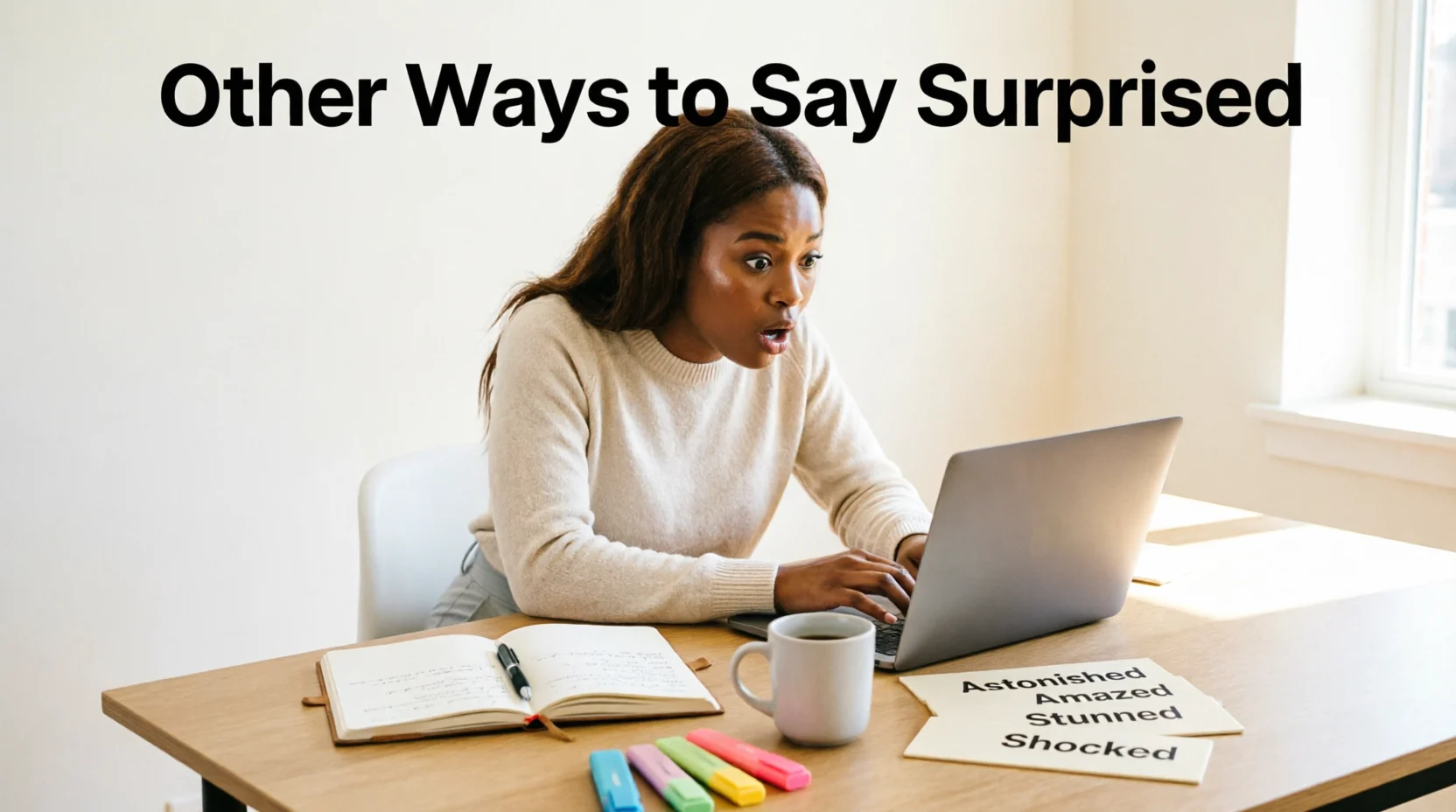
If you want to sound more natural than simply saying “surprised,” you can choose a phrase based on your emotion, audience, and situation.
Top alternatives: astonished, amazed, shocked, taken aback, caught off guard.
Being surprised can mean feeling unexpected excitement, confusion, disbelief, or even mild shock. The phrase “surprised” is common in everyday English, but repeating the same word can sometimes make your conversations and writing feel less expressive.
Learning alternatives to other ways to say surprised can help you communicate more precisely. For example, “astonished” suggests great surprise, while “taken aback” often describes a reaction to something unexpected or unusual.
These expressions are useful in conversations, emails, presentations, stories, and professional situations. They can also help English learners express excitement in English without relying on the same basic vocabulary repeatedly. Choosing the right expression depends on how strong your reaction is and who you are speaking to.
“Fluent English is not only about knowing more words. It is about choosing the right word for the situation.”
Formal alternatives to “other ways to say surprised”
- Astonished
- Astounded
- Amazed
- Stunned
Pro Tip: Use stronger words such as “astonished” or “astounded” when the unexpected event genuinely creates a powerful reaction.
Casual alternatives
- Amazed
- Taken aback
- Caught off guard
- Didn’t expect that
Pro Tip: Casual phrases work well in everyday conversations, but choose simpler wording when speaking with people unfamiliar with informal English.
Professional alternatives
- Surprised by the outcome
- Unexpected
- Taken by surprise
- Unexpectedly impressed
Pro Tip: In professional communication, describe the specific reaction or result instead of using highly emotional expressions.
Informal expressions
- I didn’t see that coming.
- That caught me off guard.
- I wasn’t expecting that.
- I can’t believe it.
Pro Tip: These informal expressions sound natural in conversations but may be unsuitable for formal reports or business emails.
“Professional English becomes stronger when your reaction matches the seriousness of the situation.”
Common Mistakes
1. Using “shocked” for every type of surprise
“Shocked” usually suggests a stronger emotional reaction than ordinary surprise.
Example: I was surprised by the result.
2. Using “astonished” for minor events
“Astonished” can sound too dramatic when something is only mildly unexpected.
Example: I was astonished when the meeting started five minutes late.
3. Using informal expressions in formal emails
Phrases such as “I can’t believe it” may sound too conversational.
Example: Instead, write: “The result was unexpected.”
4. Confusing “surprised” with “excited”
Surprise and excitement can happen together, but they have different meanings.
Example: I was surprised to receive the award, and I was delighted too.
5. Ignoring the audience
A phrase that sounds natural with friends may not fit a client conversation.
Example: “That caught me off guard” is conversational in tone, while “The outcome was unexpected” is more professional.
Read This other ways to say special
What Does “Other Ways to Say Surprised” Mean?
The phrase refers to alternative expressions that communicate the feeling of being unexpectedly affected by something.
“Surprised” is an adjective describing a person’s emotional reaction.
Example: I was surprised by her decision.
You can change the expression depending on intensity. “Amazed” can show positive surprise, while “stunned” usually communicates a much stronger reaction.
When to Use “Other Ways to Say Surprised”
You can use different expressions for surprise in:
- Everyday conversations
- Business discussions
- Professional emails
- Presentations
- Academic writing
- Personal messages
- Storytelling
- Social conversations
- Interviews
- Customer communication
Spoken vs. Written English
Spoken English often allows expressions such as “I didn’t see that coming” or “That caught me off guard.”
Written English usually benefits from clearer expressions such as “The result was unexpected” or “I was astonished by the announcement.”
Formal vs. Informal English
Formal contexts generally favor precise vocabulary. Informal conversations can use more expressive and conversational phrases.
“The best synonym is not always the strongest one. It is the one that fits your context.”
Is It Professional or Polite to Say “Surprised”?
Polite? ✔️ Yes
Professional? ❌ No (in most cases)
The word “surprised” is polite and completely understandable, but it can be too general for professional communication. In business settings, phrases such as “the outcome was unexpected” can sound more precise.
Business example:
“The team was surprised by the significant increase in customer engagement.”
For more useful professional reaction phrases, focus on describing the result and your response clearly.
Pros and Cons of Using “Surprised”
Pros
- Simple and natural
- Friendly tone
- Common usage
- Easy to understand
Cons
- Too informal for some work situations
- Can become overused
- Has limited emotional range
- May not suit formal writing
Other Ways to Say “Surprised” With Examples
These alternatives will help you sound more fluent, confident, and natural in different situations.
Use them according to tone, context, and audience to express excitement, admiration, or approval.
1. Phrase: Astonished
Meaning: Extremely surprised.
Explanation: Use this when something produces a very strong reaction.
Example Sentence: I was astonished by how quickly the project was completed.
Best Use: Strong surprise
Worst Use: Minor events
Tone: Formal, strong, expressive
Context Variability: Professional, written, spoken
2. Phrase: Astounded
Meaning: Extremely surprised or impressed.
Explanation: This word emphasizes a powerful reaction to an unexpected result.
Example Sentence: We were astounded by the number of applications received.
Best Use: Major results
Worst Use: Routine situations
Tone: Formal, emphatic, strong
Context Variability: Professional, written, spoken
3. Phrase: Amazed
Meaning: Very surprised, often positively.
Explanation: It is useful when surprise is combined with admiration.
Example Sentence: I was amazed by her presentation skills.
Best Use: Positive surprise
Worst Use: Negative events
Tone: Positive, natural, expressive
Context Variability: Casual, professional, spoken
4. Phrase: Stunned
Meaning: Extremely surprised or shocked.
Explanation: Use it when an event creates a powerful immediate reaction.
Example Sentence: Everyone was stunned by the unexpected announcement.
Best Use: Major news
Worst Use: Small changes
Tone: Strong, dramatic, emotional
Context Variability: Spoken, casual, written
5. Phrase: Taken aback
Meaning: Temporarily surprised or confused.
Explanation: This phrase is useful when something unexpected briefly affects your reaction.
Example Sentence: I was taken aback by the sudden change in plans.
Best Use: Unexpected situations
Worst Use: Happy news
Tone: Polished, moderate, expressive
Context Variability: Professional, written, spoken
6. Phrase: Caught off guard
Meaning: Surprised because you were not prepared.
Explanation: It emphasizes a lack of preparation for something unexpected.
Example Sentence: The difficult question caught me off guard during the interview.
Best Use: Unexpected moments
Worst Use: Planned events
Tone: Conversational, natural, direct
Context Variability: Casual, professional, spoken
7. Phrase: Impressed
Meaning: Positively affected by something unexpected or excellent.
Explanation: Use it when surprise comes with admiration.
Example Sentence: I was impressed by the team’s quick response.
Best Use: Positive results
Worst Use: Negative news
Tone: Professional, positive, confident
Context Variability: Professional, spoken, written
8. Phrase: Taken by surprise
Meaning: Unexpectedly affected by something.
Explanation: This phrase directly describes an unexpected event or reaction.
Example Sentence: We were taken by surprise by the sudden decision.
Best Use: Unexpected news
Worst Use: Expected results
Tone: Neutral, natural, professional
Context Variability: Professional, spoken, written
9. Phrase: Blown away
Meaning: Extremely impressed or surprised.
Explanation: It expresses a very strong positive reaction.
Example Sentence: I was blown away by the quality of the final design.
Best Use: Strong praise
Worst Use: Formal reports
Tone: Informal, enthusiastic, expressive
Context Variability: Casual, spoken
10. Phrase: Speechless
Meaning: So surprised or impressed that you do not know what to say.
Explanation: It emphasizes the strength of the emotional reaction.
Example Sentence: I was speechless when they announced the award.
Best Use: Emotional moments
Worst Use: Routine updates
Tone: Emotional, expressive, informal
Context Variability: Casual, spoken, written
11. Phrase: Shocked
Meaning: Extremely surprised and emotionally affected.
Explanation: Use this when the unexpected event is serious or powerful.
Example Sentence: We were shocked by the sudden news.
Best Use: Serious news
Worst Use: Small surprises
Tone: Strong, serious, emotional
Context Variability: Spoken, written, professional
12. Phrase: Unexpectedly impressed
Meaning: Impressed despite not expecting such a positive result.
Explanation: This phrase works especially well when describing performance or quality.
Example Sentence: I was unexpectedly impressed by the new proposal.
Best Use: Positive results
Worst Use: Personal drama
Tone: Professional, positive, measured
Context Variability: Professional, written, spoken
13. Phrase: Didn’t see that coming
Meaning: Did not expect something to happen.
Explanation: It is a natural conversational way to express surprise.
Example Sentence: I didn’t see that coming during the meeting.
Best Use: Casual reactions
Worst Use: Formal emails
Tone: Casual, conversational, natural
Context Variability: Casual, spoken
14. Phrase: I wasn’t expecting that
Meaning: The event was different from what you anticipated.
Explanation: This is a simple and flexible expression of surprise.
Example Sentence: I wasn’t expecting that response from the client.
Best Use: Everyday reactions
Worst Use: Formal reports
Tone: Neutral, conversational, clear
Context Variability: Casual, spoken, professional
15. Phrase: I can’t believe it
Meaning: Something seems extremely unexpected.
Explanation: It often expresses great emotional surprise.
Example Sentence: I can’t believe it. We actually won the competition.
Best Use: Exciting news
Worst Use: Formal writing
Tone: Emotional, informal, enthusiastic
Context Variability: Casual, spoken
16. Phrase: That was unexpected
Meaning: Something happened differently from what was anticipated.
Explanation: It is a simple way to acknowledge surprise without sounding overly emotional.
Example Sentence: That was unexpected, but the outcome was positive.
Best Use: Neutral reactions
Worst Use: Major celebrations
Tone: Neutral, measured, professional
Context Variability: Professional, spoken, written
17. Phrase: I was not prepared for that
Meaning: Something happened that you did not anticipate.
Explanation: It highlights a lack of preparation rather than simply expressing surprise.
Example Sentence: I was not prepared for such a positive response.
Best Use: Unexpected responses
Worst Use: Planned situations
Tone: Professional, reflective, neutral
Context Variability: Professional, spoken, written
18. Phrase: I was pleasantly surprised
Meaning: Something was unexpectedly better than expected.
Explanation: Use it when the surprise is positive.
Example Sentence: I was pleasantly surprised by the quality of the service.
Best Use: Positive experiences
Worst Use: Negative events
Tone: Polite, positive, professional
Context Variability: Professional, spoken, written
19. Phrase: I was amazed to see
Meaning: You were very surprised by something you observed.
Explanation: It works naturally when introducing an unexpected observation.
Example Sentence: I was amazed to see how much the company had grown.
Best Use: Positive observations
Worst Use: Routine facts
Tone: Positive, expressive, natural
Context Variability: Spoken, written, professional
20. Phrase: I was struck by
Meaning: Something made a strong and immediate impression.
Explanation: This phrase can communicate surprise, admiration, or strong awareness.
Example Sentence: I was struck by the clarity of her explanation.
Best Use: Strong impressions
Worst Use: Casual reactions
Tone: Polished, thoughtful, formal
Context Variability: Professional, written, spoken
21. Phrase: I found it surprising
Meaning: You considered something unexpected.
Explanation: This is a measured way to describe surprise in formal communication.
Example Sentence: I found it surprising that the proposal received such strong support.
Best Use: Formal observations
Worst Use: Exciting news
Tone: Formal, neutral, analytical
Context Variability: Professional, written
22. Phrase: I was taken by the result
Meaning: The result strongly affected your expectations.
Explanation: It can describe an unexpected outcome without sounding overly emotional.
Example Sentence: I was taken by the result of the latest customer survey.
Best Use: Business results
Worst Use: Casual jokes
Tone: Professional, measured, polished
Context Variability: Professional, written, spoken
23. Phrase: I was impressed by
Meaning: Something unexpectedly earned your admiration.
Explanation: This expression is especially useful in workplace communication.
Example Sentence: I was impressed by your attention to detail.
Best Use: Professional praise
Worst Use: Negative feedback
Tone: Professional, positive, respectful
Context Variability: Professional, spoken, written
24. Phrase: It came as a surprise
Meaning: Something happened unexpectedly.
Explanation: This phrase focuses on the event rather than the person’s emotional reaction.
Example Sentence: The announcement came as a surprise to the entire team.
Best Use: Formal news
Worst Use: Expected events
Tone: Neutral, formal, polished
Context Variability: Professional, written, spoken
25. Phrase: I was amazed by
Meaning: Something caused great positive surprise.
Explanation: It is useful when praising a result, performance, or achievement.
Example Sentence: I was amazed by the team’s creativity.
Best Use: Positive praise
Worst Use: Routine tasks
Tone: Positive, expressive, natural
Context Variability: Casual, professional, spoken
26. Phrase: I was surprised to learn
Meaning: You discovered information you did not expect.
Explanation: This phrase is particularly useful when discussing newly learned information.
Example Sentence: I was surprised to learn that the company had expanded internationally.
Best Use: New information
Worst Use: Personal excitement
Tone: Neutral, professional, clear
Context Variability: Professional, written, spoken
27. Phrase: I was struck with surprise
Meaning: You experienced a sudden feeling of surprise.
Explanation: It gives the reaction a more literary and expressive quality.
Example Sentence: I was struck with surprise when I saw the final result.
Best Use: Creative writing
Worst Use: Business emails
Tone: Literary, expressive, formal
Context Variability: Written, storytelling
28. Phrase: I was genuinely surprised
Meaning: You were truly and sincerely surprised.
Explanation: “Genuinely” emphasizes that the reaction was real.
Example Sentence: I was genuinely surprised by how quickly the issue was resolved.
Best Use: Honest reactions
Worst Use: Routine updates
Tone: Sincere, natural, professional
Context Variability: Professional, spoken, written
29. Phrase: It caught me by surprise
Meaning: Something happened without warning.
Explanation: This expression highlights the unexpected nature of an event.
Example Sentence: The sudden question caught me by surprise.
Best Use: Sudden events
Worst Use: Planned meetings
Tone: Conversational, natural, moderate
Context Variability: Casual, professional, spoken
30. Phrase: I was pleasantly astonished
Meaning: You were extremely surprised in a positive way.
Explanation: This combines great surprise with a positive reaction.
Example Sentence: I was pleasantly astonished by the quality of the final presentation.
Best Use: Exceptional results
Worst Use: Everyday situations
Tone: Formal, positive, emphatic
Context Variability: Professional, written, spoken
“Choose ‘astonished’ for powerful surprise, ‘impressed’ for admiration, and ‘unexpected’ for a measured professional response.”
See Also
See also: Explore another Other Ways to Say guide to expand your vocabulary for everyday English.
See also: Read a Professional English guide to improve workplace vocabulary, tone, and communication.
Mini Quiz: Test Your Understanding
1. Which phrase is most suitable for a formal business email?
A. I can’t believe it!
B. I was blown away!
C. The outcome was unexpected.
D. I didn’t see that coming.
Answer: C
2. Which expression shows positive surprise?
A. I was pleasantly surprised.
B. I was shocked by the accident.
C. I was caught off guard.
D. I was speechless with concern.
Answer: A
3. A client asks you an unexpected question during a meeting. Which phrase fits best?
A. That question caught me off guard.
B. I was astonished beyond words.
C. I can’t believe it!
D. I was blown away!
Answer: A
4. Which phrase best describes admiration for someone’s excellent work?
A. Taken aback
B. Impressed by
C. Shocked
D. Speechless
Answer: B
Comparison Table: Top Alternatives
| Phrase | Tone | Best Use |
|---|---|---|
| Astonished | Strong, formal | Major surprises |
| Astounded | Strong, formal | Exceptional results |
| Amazed | Positive, natural | Admiration |
| Stunned | Strong, emotional | Major news |
| Taken aback | Polished, moderate | Unexpected situations |
| Caught off guard | Conversational | Unprepared moments |
| Impressed | Positive, professional | Workplace praise |
| Taken by surprise | Neutral, professional | Unexpected events |
| Pleasantly surprised | Polite, positive | Good experiences |
| That was unexpected | Neutral, measured | Professional reactions |
Frequently Asked Questions
What are the best alternatives to “surprised”?
Some useful alternatives include astonished, amazed, astounded, stunned, taken aback, caught off guard, and impressed.
What is a professional way to say “surprised”?
In professional English, you can say “the outcome was unexpected,” “I was pleasantly surprised,” or “I found the result surprising.”
What is a casual way to say “surprised”?
Natural casual expressions include “I didn’t see that coming,” “I wasn’t expecting that,” and “That caught me off guard.”
Is “astonished” stronger than “surprised”?
Yes. “Astonished” usually communicates a much stronger reaction than the everyday word “surprised.”
How can I learn other ways to say “surprised”?
Practice each expression in different contexts, such as conversations, emails, meetings, and writing. Pay attention to whether the phrase sounds formal, casual, positive, or emotional.
Conclusion
Learning different expressions for surprise helps you avoid repetitive vocabulary and communicate your reaction more accurately. Instead of using one word in every situation, you can choose expressions such as “astonished,” “impressed,” “taken aback,” or “the outcome was unexpected.”
The key is to match the phrase with your audience and purpose. Practice these expressions in real conversations and writing, and your English will gradually sound more natural, flexible, and confident.
Which alternative will you use first? Share your favorite phrase and practice it in a sentence.