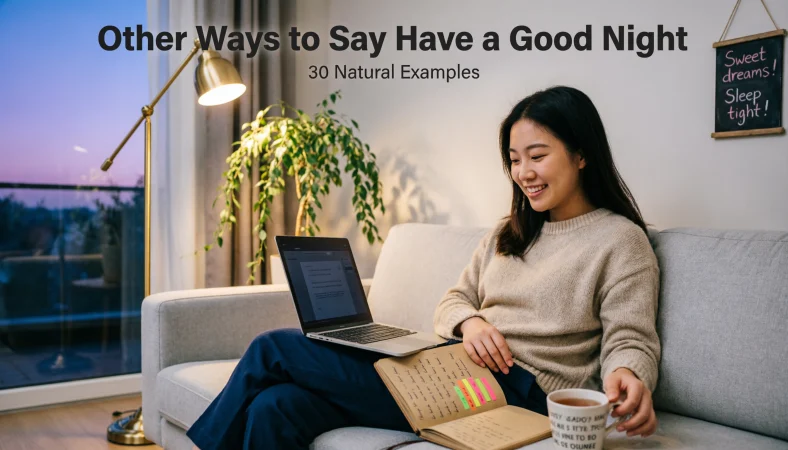
“Have a good night” is a friendly and natural expression used when saying goodbye in the evening or wishing someone a pleasant night. The best alternative depends on your relationship, setting, and level of formality.
Top alternatives: Sleep well, Good night, Have a restful night, Enjoy your evening, Rest well
“The right closing expression can make your English sound warmer, more natural, and more confident.”
“Have a good night” is a common English expression used when saying goodbye to someone in the evening or wishing them a pleasant and relaxing night. You can use it with friends, family members, coworkers, customers, and acquaintances. However, the best alternative can vary depending on the situation. For example, “Sleep well” sounds warm and personal, while “Have a pleasant evening” feels more polished and professional. Learning alternatives to have a good night can help English learners avoid repetition and choose expressions that fit different social and professional situations.
Understanding other ways to say have a good night also gives you more vocabulary to express excitement in English, show kindness, or end a conversation politely. Whether you are talking to a close friend, sending a text, or saying goodbye to a colleague, choosing the right phrase can make your communication sound more natural and appropriate. The goal is not to memorize every expression, but to understand when each one works best.
Formal Alternatives to “Have a Good Night”
Have a Pleasant Evening
This is a polite and refined way to wish someone an enjoyable evening.
Have a Restful Evening
This expression emphasizes relaxation and works well in courteous communication.
Wishing You a Pleasant Evening
This sounds more formal and is suitable for professional or written communication.
Enjoy the Rest of Your Evening
This is polite while still sounding natural and conversational.
Pro Tip
Use “Have a pleasant evening” or “Wishing you a pleasant evening” when speaking with clients, customers, or people you do not know well.
Casual Alternatives
Sleep Well
A warm and familiar expression commonly used with friends and family.
Good Night
The simplest and most universal alternative.
Rest Well
A short expression that focuses on relaxation.
Sweet Dreams
A warm expression commonly used with children, close friends, partners, or family.
Pro Tip
For everyday conversations, “Sleep well” and “Good night” are simple choices that sound natural without requiring complicated vocabulary.
Professional Alternatives
Have a Pleasant Evening
A polished choice for customers, colleagues, and professional contacts.
Enjoy Your Evening
Friendly and professional without sounding overly formal.
Have a Restful Evening
Useful when someone is finishing a demanding day.
I Hope You Have a Good Evening
A courteous option for professional conversations and messages.
Pro Tip
Professional reaction phrases should sound respectful without becoming unnecessarily formal. Choose an expression that matches the relationship.
Informal Expressions in English
Sleep Tight
A familiar expression meaning to sleep well.
Rest Up
A casual way to encourage someone to relax and recover their energy.
Get Some Rest
Useful when someone has had a tiring day.
Take Care Tonight
A warm way to end an evening conversation.
Pro Tip
Informal expressions in English work best when you already have a friendly relationship with the listener.
“Natural English is about choosing an expression that matches the relationship, not simply choosing the longest phrase.”
Common Mistakes
1. Using “Have a Good Night” Too Early
The expression usually works when someone is leaving or the conversation is ending.
Example: “Have a good night” while beginning a dinner meeting.
Better: “Enjoy your evening.”
2. Using “Good Night” as a Greeting
“Good night” is normally used when leaving or going to bed, not as a general evening greeting.
Example: “Good night, how are you?”
Better: “Good evening, how are you?”
3. Saying “Sleep Well” to Someone Who Is Not Going to Bed
“Sleep well” specifically refers to sleeping.
Example: Saying “Sleep well” to a coworker who is going to another evening event.
Better: “Enjoy your evening.”
4. Using Very Casual Expressions in Formal Situations
Expressions such as “Sleep tight” may sound too familiar in professional communication.
Example: “Sleep tight, Mr. Wilson.”
Better: “Have a pleasant evening, Mr. Wilson.”
5. Repeating the Same Expression
Using “Have a good night” after every evening conversation can make your English sound repetitive.
Example: “Have a good night” in every email and conversation.
Better: Alternate between “Enjoy your evening,” “Have a pleasant evening,” and “Rest well” when appropriate.
What Does “Have a Good Night” Mean?
“Have a good night” means I hope you have a pleasant, relaxing, or enjoyable night.
It is commonly used as a polite closing expression when an evening conversation ends or when someone is leaving.
Grammatically, “have” is used as an imperative verb. The speaker is expressing a good wish rather than giving a strict command.
Example: “Thanks for coming. Have a good night.”
The expression can refer to the remaining part of the evening or to the entire night, depending on the context.
When to Use “Have a Good Night”
You can use the expression in many everyday situations:
• When leaving a friend’s house in the evening
• When ending a phone conversation at night
• When finishing a dinner or social event
• When leaving work in the evening
• When saying goodbye to a customer
• When ending an online conversation
• When wishing someone a pleasant night before they go to bed
Spoken vs Written
“Have a good night” is especially common in spoken English. It also works naturally in text messages, emails, and casual online communication.
In formal writing, “Have a pleasant evening” can sound more polished.
Formal vs Informal
The phrase itself is neutral and polite. It can work in both casual and professional situations, although the surrounding conversation determines whether it sounds appropriately formal.
“A simple phrase becomes more powerful when you know exactly when to use it.”
Is It Professional or Polite to Say “Have a Good Night”?
Yes. “Have a good night” is polite and can be professional, especially in friendly workplace conversations.
However, in particularly formal customer service or business communication, “Have a pleasant evening” may sound more polished.
Polite? ✔ Yes
Professional? ✔ Yes, in many situations
Business example:
“Thank you for your time today. Have a pleasant evening.”
Pros and Cons of Using “Have a Good Night”
Pros
• Simple and natural: Easy to understand and remember
• Friendly tone: Creates a warm ending to a conversation
• Common usage: Widely used by English speakers
• Easy to understand: Suitable for many everyday situations
Cons
• Can sound repetitive: Frequent use may limit vocabulary variety
• Less formal than some alternatives: Formal settings may favor “Have a pleasant evening”
• Limited emotional range: It does not specifically express gratitude or affection
• Context dependent: “Sleep well” may be better when someone is going directly to bed
“The best alternative depends on whether you are saying goodbye, wishing someone sleep, or simply ending an evening conversation.”
Other Ways to Say “Have a Good Night” With Examples
These alternatives will help you sound more fluent, confident, and natural in different situations.
Use them according to tone, context, and audience to express warmth, kindness, appreciation, or approval.
1. Phrase: Good Night
Meaning: A simple way to say goodbye at night.
Explanation: It is one of the most common and versatile evening closing expressions.
Example Sentence: Thanks for everything. Good night.
Best Use: Everyday goodbyes
Worst Use: Formal announcements
Tone: Simple, friendly, natural
Context Variability: Casual conversation, professional goodbye, spoken English
2. Phrase: Sleep Well
Meaning: A wish for someone to have good sleep.
Explanation: This is warmer and more personal than a simple goodbye.
Example Sentence: You have an early start tomorrow, so sleep well.
Best Use: Bedtime goodbyes
Worst Use: Business meetings
Tone: Warm, caring, friendly
Context Variability: Family, friends, personal messages
3. Phrase: Have a Pleasant Evening
Meaning: A wish for someone to enjoy the rest of their evening.
Explanation: This is a polished alternative that works especially well in professional settings.
Example Sentence: Thank you for visiting us. Have a pleasant evening.
Best Use: Professional settings
Worst Use: Close friendships
Tone: Polite, formal, polished
Context Variability: Customer service, business communication, spoken English
4. Phrase: Enjoy Your Evening
Meaning: A wish that someone enjoys the rest of their evening.
Explanation: It sounds friendly while remaining appropriate in professional situations.
Example Sentence: Thanks for joining the meeting. Enjoy your evening.
Best Use: Evening farewells
Worst Use: Bedtime wishes
Tone: Friendly, positive, polite
Context Variability: Casual conversation, workplace, customer service
5. Phrase: Rest Well
Meaning: A wish for someone to relax and recover their energy.
Explanation: This phrase works particularly well when someone has had a tiring day.
Example Sentence: You have had a long day. Rest well.
Best Use: Tired people
Worst Use: Formal presentations
Tone: Caring, calm, supportive
Context Variability: Friends, family, personal messages
“Use ‘Sleep well’ when bedtime is the focus and ‘Enjoy your evening’ when the person is simply finishing their day.”
6. Phrase: Sweet Dreams
Meaning: A wish for pleasant dreams during sleep.
Explanation: It is affectionate and usually used with people you know well.
Example Sentence: Good night, Mom. Sweet dreams.
Best Use: Close relationships
Worst Use: Formal workplaces
Tone: Warm, affectionate, caring
Context Variability: Family, close friends, personal messages
7. Phrase: Have a Wonderful Evening
Meaning: A wish that someone has a very enjoyable evening.
Explanation: This adds more enthusiasm than the standard expression.
Example Sentence: Thank you for coming. Have a wonderful evening.
Best Use: Warm farewells
Worst Use: Serious situations
Tone: Warm, positive, enthusiastic
Context Variability: Social events, customer service, professional speech
8. Phrase: Have a Lovely Evening
Meaning: A warm wish for an enjoyable evening.
Explanation: This phrase sounds especially friendly and courteous.
Example Sentence: It was lovely meeting you. Have a lovely evening.
Best Use: Polite farewells
Worst Use: Urgent situations
Tone: Warm, courteous, pleasant
Context Variability: Social settings, customer service, spoken English
9. Phrase: Take Care Tonight
Meaning: A friendly wish for someone to stay safe and well during the evening.
Explanation: It combines a farewell with a gentle expression of concern.
Example Sentence: Thanks for walking me home. Take care tonight.
Best Use: Friendly goodbyes
Worst Use: Formal emails
Tone: Caring, casual, friendly
Context Variability: Friends, family, personal messages
10. Phrase: Have a Relaxing Evening
Meaning: A wish that someone enjoys a calm and restful evening.
Explanation: It is useful when someone has finished work or a stressful activity.
Example Sentence: You have worked hard today. Have a relaxing evening.
Best Use: After work
Worst Use: Exciting events
Tone: Calm, thoughtful, positive
Context Variability: Workplace, friends, spoken English
11. Phrase: Enjoy the Rest of Your Evening
Meaning: A wish that someone enjoys the remaining hours of the evening.
Explanation: This is a natural and versatile alternative to the original phrase.
Example Sentence: Thanks for your help today. Enjoy the rest of your evening.
Best Use: Evening farewells
Worst Use: Bedtime only
Tone: Polite, friendly, natural
Context Variability: Workplace, customer service, casual conversation
12. Phrase: Have a Peaceful Night
Meaning: A wish for a calm and undisturbed night.
Explanation: This expression emphasizes peace and relaxation.
Example Sentence: I hope everything settles down. Have a peaceful night.
Best Use: Calm wishes
Worst Use: Casual celebrations
Tone: Calm, gentle, thoughtful
Context Variability: Personal messages, supportive conversations, spoken English
13. Phrase: Sleep Tight
Meaning: A friendly wish for someone to sleep well.
Explanation: This is a familiar expression and is more informal than “Sleep well.”
Example Sentence: It is getting late. Sleep tight.
Best Use: Informal goodbyes
Worst Use: Formal workplaces
Tone: Casual, warm, familiar
Context Variability: Family, friends, personal messages
14. Phrase: Get Some Rest
Meaning: A suggestion that someone should relax or sleep.
Explanation: This is useful when someone is tired or has had a demanding day.
Example Sentence: You have been working all day. Get some rest.
Best Use: Tired people
Worst Use: Formal correspondence
Tone: Caring, direct, supportive
Context Variability: Friends, family, coworkers
15. Phrase: Rest Up
Meaning: Take time to relax and regain energy.
Explanation: This is a concise and informal expression for someone who needs recovery time.
Example Sentence: You have a busy day tomorrow, so rest up tonight.
Best Use: Casual situations
Worst Use: Formal emails
Tone: Informal, caring, encouraging
Context Variability: Friends, family, casual workplace speech
16. Phrase: Wishing You a Pleasant Evening
Meaning: A courteous wish for an enjoyable evening.
Explanation: This is more formal and works well in written professional communication.
Example Sentence: Thank you for contacting our office. Wishing you a pleasant evening.
Best Use: Formal messages
Worst Use: Close friends
Tone: Formal, courteous, polished
Context Variability: Emails, customer service, professional writing
17. Phrase: I Hope You Have a Good Evening
Meaning: A polite expression of goodwill.
Explanation: This sounds natural and considerate without being overly formal.
Example Sentence: I hope you have a good evening and a safe journey home.
Best Use: Polite farewells
Worst Use: Quick goodbyes
Tone: Polite, warm, considerate
Context Variability: Professional, social, spoken English
18. Phrase: Have a Peaceful Evening
Meaning: A wish for a calm and enjoyable evening.
Explanation: It is suitable when relaxation is more important than excitement.
Example Sentence: I hope you have a peaceful evening with your family.
Best Use: Calm situations
Worst Use: Party invitations
Tone: Gentle, warm, peaceful
Context Variability: Personal messages, supportive conversations, spoken English
19. Phrase: Enjoy Your Night
Meaning: A wish that someone enjoys their nighttime activities.
Explanation: This is more suitable when the person is going out or continuing an activity rather than going directly to bed.
Example Sentence: You are heading to the concert now. Enjoy your night.
Best Use: Night activities
Worst Use: Formal letters
Tone: Casual, positive, friendly
Context Variability: Friends, social events, spoken English
20. Phrase: Have a Great Evening
Meaning: A wish for an enjoyable evening.
Explanation: This is a friendly expression that adds enthusiasm.
Example Sentence: Thanks for meeting with me. Have a great evening.
Best Use: Friendly farewells
Worst Use: Serious situations
Tone: Friendly, positive, enthusiastic
Context Variability: Workplace, friends, customer service
21. Phrase: Enjoy the Rest of Your Night
Meaning: A wish that someone enjoys the remaining part of the night.
Explanation: It works well when the person is continuing their evening activities.
Example Sentence: I have to leave now. Enjoy the rest of your night.
Best Use: Social occasions
Worst Use: Formal reports
Tone: Casual, friendly, positive
Context Variability: Friends, social events, messages
22. Phrase: Have a Restful Night
Meaning: A wish for peaceful and refreshing sleep.
Explanation: This sounds thoughtful and slightly more formal than “Sleep well.”
Example Sentence: I hope you have a restful night after such a busy day.
Best Use: Rest wishes
Worst Use: Casual celebrations
Tone: Calm, thoughtful, polished
Context Variability: Personal messages, professional care, spoken English
23. Phrase: Have a Wonderful Night
Meaning: A wish for an especially enjoyable night.
Explanation: This expression is more enthusiastic than “Have a good night.”
Example Sentence: Thanks for coming to the celebration. Have a wonderful night.
Best Use: Special occasions
Worst Use: Serious conversations
Tone: Warm, enthusiastic, positive
Context Variability: Social events, friends, customer service
24. Phrase: Enjoy Your Night Out
Meaning: A wish for someone to enjoy an evening away from home.
Explanation: This phrase is particularly natural when someone is going to a restaurant, party, concert, or other event.
Example Sentence: You are meeting your friends tonight. Enjoy your night out.
Best Use: Social plans
Worst Use: Bedtime
Tone: Casual, friendly, upbeat
Context Variability: Friends, family, spoken English
25. Phrase: Have a Nice Evening
Meaning: A simple wish for an enjoyable evening.
Explanation: This is polite, neutral, and widely appropriate.
Example Sentence: Thank you for your assistance. Have a nice evening.
Best Use: General farewells
Worst Use: Intimate situations
Tone: Neutral, polite, friendly
Context Variability: Professional, casual, customer service
26. Phrase: I Hope You Have a Restful Night
Meaning: A sincere wish that someone gets good rest.
Explanation: This is useful when someone has been tired, stressed, or unwell.
Example Sentence: You have had a challenging week. I hope you have a restful night.
Best Use: Caring messages
Worst Use: Quick farewells
Tone: Caring, sincere, thoughtful
Context Variability: Personal messages, supportive conversations, professional care
27. Phrase: Until Tomorrow
Meaning: A way to say goodbye when you expect to see the person the next day.
Explanation: It naturally closes an evening conversation without directly mentioning sleep.
Example Sentence: I will see you at the office tomorrow. Until tomorrow.
Best Use: Next day plans
Worst Use: Unknown schedules
Tone: Simple, neutral, friendly
Context Variability: Workplace, friends, spoken English
28. Phrase: See You Tomorrow
Meaning: A friendly goodbye when you expect to meet the person the following day.
Explanation: This is more specific than wishing someone a good night.
Example Sentence: I have to go now. See you tomorrow.
Best Use: Familiar relationships
Worst Use: Uncertain plans
Tone: Casual, friendly, natural
Context Variability: Workplace, friends, family
29. Phrase: Have a Relaxing Night
Meaning: A wish for someone to spend a calm and restful night.
Explanation: It works well when someone plans to stay home and unwind.
Example Sentence: You deserve some downtime. Have a relaxing night.
Best Use: Relaxation wishes
Worst Use: Formal announcements
Tone: Warm, calm, supportive
Context Variability: Friends, family, casual workplace conversations
30. Phrase: Rest Easy
Meaning: A wish that someone can relax without worry.
Explanation: This expression can communicate comfort and reassurance as well as rest.
Example Sentence: Everything has been taken care of, so rest easy tonight.
Best Use: Reassurance
Worst Use: Routine farewells
Tone: Reassuring, calm, caring
Context Variability: Personal conversations, supportive messages, spoken English
“If you want one versatile professional choice, try ‘Have a pleasant evening.’ If you want a warm personal choice, try ‘Sleep well.’”
Mini Quiz and Self Check
Question 1
You are ending a formal conversation with a customer. Which expression is most appropriate?
A. Sleep tight
B. Have a pleasant evening
C. Rest up
D. Sweet dreams
Answer: B
Question 2
Your close friend is going to bed. Which phrase sounds most natural?
A. Wishing you a pleasant evening
B. Sleep well
C. Enjoy your evening
D. Have a productive evening
Answer: B
Question 3
A coworker is leaving the office at 7 PM but is not going to bed. Which phrase is appropriate?
A. Sweet dreams
B. Sleep tight
C. Enjoy the rest of your evening
D. Rest easy
Answer: C
Question 4
Which phrase is most informal?
A. Have a pleasant evening
B. Wishing you a pleasant evening
C. Sleep tight
D. I hope you have a good evening
Answer: C
Comparison Table: Top Alternatives
| Phrase | Tone | Best Use |
| Good night | Neutral | Everyday goodbyes |
| Sleep well | Warm | Bedtime wishes |
| Have a pleasant evening | Formal | Professional settings |
| Enjoy your evening | Friendly | Evening farewells |
| Rest well | Caring | Tired people |
| Sweet dreams | Affectionate | Close relationships |
| Have a wonderful evening | Enthusiastic | Warm farewells |
| Have a nice evening | Neutral | General situations |
| Wishing you a pleasant evening | Formal | Written communication |
| See you tomorrow | Casual | Next day plans |
FAQs
What are the best alternatives to “Have a good night”?
“Good night,” “Sleep well,” “Enjoy your evening,” “Have a pleasant evening,” and “Rest well” are among the most useful alternatives.
What is a professional way to say “Have a good night”?
“Have a pleasant evening” is an excellent professional alternative. “Enjoy your evening” is also appropriate in many workplace situations.
Is “Have a good night” formal or informal?
It is generally neutral and polite. It can be used casually or professionally, depending on the situation and relationship.
What can I say instead of “Have a good night” in an email?
Try “Have a pleasant evening,” “I hope you have a good evening,” or “Wishing you a pleasant evening” for a polished email closing.
What is the difference between “Good night” and “Sleep well”?
“Good night” is a general nighttime farewell, while “Sleep well” specifically wishes someone good and restful sleep.
Conclusion
Learning different ways to say “Have a good night” gives you more flexibility in everyday and professional English. Instead of repeating one expression, you can choose “Sleep well” for someone going to bed, “Enjoy your evening” for a general farewell, or “Have a pleasant evening” for a more professional setting.
Practice these expressions in real conversations and messages, paying attention to your relationship with the listener and the purpose of the conversation. Tone awareness will help you sound more fluent, natural, polite, and confident.
CTA: Which alternative do you use most often? Share your favorite phrase and practice it in a sentence.