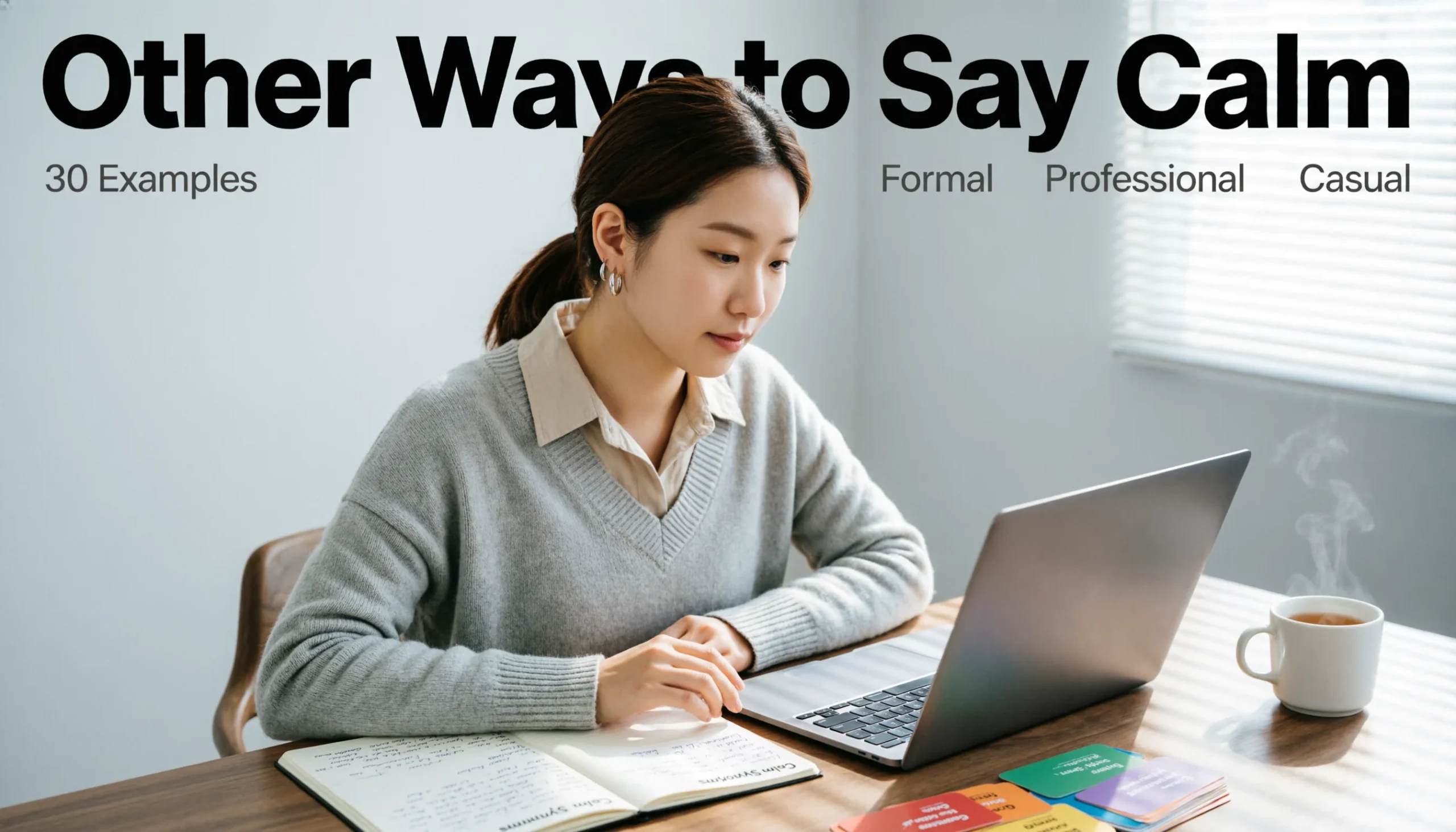
There are many useful alternatives to calm, depending on whether you are describing a person, atmosphere, response, or situation. Choosing the right synonym can make your English more precise and natural.
Top alternatives: peaceful, composed, relaxed, tranquil, collected
The word “calm” describes someone who remains relaxed and controlled, a peaceful situation, or a quiet environment. Learning alternatives to “calm” helps you express different shades of meaning, from emotional self-control and confidence to peace and reduced tension.
A wider vocabulary can make your English more natural and precise. Whether you want to describe a composed person, a peaceful setting, or express excitement in English while contrasting it with a calm reaction, choosing the right word can make your communication clearer and more engaging.
Formal Alternatives to “Calm”
- Composed
- Collected
- Serene
- Tranquil
Pro Tips Box
For formal writing, choose words such as composed for controlled behavior and serene or tranquil for peaceful conditions.
Casual Alternatives
- Relaxed
- At ease
- Peaceful
- Chill
Pro Tips Box
Use simple expressions such as relaxed and at ease in everyday conversations because they sound natural without being overly formal.
Professional Alternatives
- Composed
- Level headed
- Steady
- Unruffled
Pro Tips Box
In workplace communication, use words that emphasize emotional control, reliability, and thoughtful responses.
Informal Expressions
- Take it easy
- Stay relaxed
- Keep your cool
- Easygoing
Pro Tips Box
These informal expressions in English are useful in friendly conversations, but choose more neutral vocabulary for formal emails and reports.
“Professional communication often sounds stronger when emotional control is described precisely.”
Common Mistakes
1. Using “calm” when you mean “quiet”
Mistake: Treating calm and quiet as exact synonyms.
Example: The library was calm because nobody was talking.
Better: The library was quiet because nobody was talking.
2. Confusing “calm” with “relaxed”
Mistake: Assuming they always have the same meaning.
Example: She remained calm during the emergency.
Here, calm emphasizes emotional control, while relaxed may suggest comfort or lack of tension.
3. Using “serene” for a stressful person
Mistake: Using a word associated strongly with peacefulness to describe someone who is handling pressure.
Example: He was serene during the difficult negotiation.
Although grammatically possible, composed or collected may be more precise.
4. Using informal phrases in formal writing
Mistake: Writing “keep your cool” in a formal business report.
Example: The manager kept his cool during the meeting.
Better: The manager remained composed during the meeting.
5. Using “calm” when you mean “patient”
Mistake: Assuming someone who waits patiently is necessarily calm.
Example: She was calm while waiting for the customer.
If the focus is on her willingness to wait without frustration, patient may be the better word.
What Does “Calm” Mean?
Calm means peaceful, relaxed, or free from agitation, excitement, anger, or disturbance.
It can function as an adjective, verb, and noun. As an adjective, it describes a person, situation, place, or emotional state. As a verb, it means to make someone or something less upset or agitated.
Example: She stayed calm during the difficult conversation.
When to Use “Calm”
Use calm when you want to describe:
- Someone who controls their emotions
- A peaceful environment
- A quiet situation
- A controlled response
- A reduction in stress or agitation
- Peaceful weather or water
- A person who handles pressure well
Spoken vs Written
In spoken English, “calm,” “relaxed,” and “at ease” are highly natural.
In written English, “composed,” “serene,” “tranquil,” and “unruffled” can provide more specific descriptions.
Formal vs Informal
Use composed, collected, and unruffled in professional or formal contexts. Use relaxed, at ease, and take it easy in casual situations.
“Calm describes the state; stronger vocabulary can explain exactly what creates that state.”
Is It Professional or Polite to Say “Calm”?
Polite? ✔️ Yes
Professional? ❌ No (in most cases)
The word calm itself is completely polite and can be professional. However, when describing a colleague or professional response, a more specific term such as composed, steady, or level headed may communicate the intended quality more effectively.
Business example:
“The manager remained composed while addressing the client’s concerns.”
Pros and Cons of Using Calm
Pros
- Simple and natural: Almost every English speaker understands it.
- Friendly tone: It can sound reassuring and positive.
- Common usage: It works in everyday and professional situations.
- Easy to understand: Its meaning is usually clear from context.
Cons
- Too informal for some work situations: More precise words may be better.
- Overused: Repetition can make descriptions less interesting.
- Limited emotional range: It does not always explain why someone is calm.
- Not suitable for some formal writing: Specific alternatives may provide greater precision.
Other Ways to Say “Calm” With Examples
These alternatives will help you sound more fluent, confident, and natural in different situations.
Use them according to tone, context, and audience to describe emotional control, peaceful environments, professional behavior, or professional reaction phrases.
1. Phrase: Composed
- Meaning: Calm and in control of your emotions.
- Explanation: It is especially useful for describing someone who handles pressure professionally.
- Example Sentence: She remained composed throughout the difficult negotiation.
- Best Use: Professional behavior
- Worst Use: Casual scenery
- Tone: Formal, confident, controlled
- Context Variability: Casual: less common; Professional: excellent; Spoken: natural
2. Phrase: Relaxed
- Meaning: Free from tension, worry, or stress.
- Explanation: It commonly describes people who feel comfortable and untroubled.
- Example Sentence: He looked relaxed after completing the presentation.
- Best Use: Everyday situations
- Worst Use: Serious emergencies
- Tone: Casual, friendly, comfortable
- Context Variability: Casual: excellent; Professional: suitable; Spoken: very natural
3. Phrase: Peaceful
- Meaning: Free from disturbance, conflict, or noise.
- Explanation: It is often used for places, situations, relationships, or periods of time.
- Example Sentence: We spent a peaceful afternoon by the lake.
- Best Use: Peaceful settings
- Worst Use: Intense negotiations
- Tone: Gentle, positive, pleasant
- Context Variability: Casual: excellent; Professional: suitable; Spoken: natural
4. Phrase: Serene
- Meaning: Extremely peaceful and untroubled.
- Explanation: This slightly sophisticated word is useful for describing people, places, or scenes with deep tranquility.
- Example Sentence: The garden created a serene atmosphere for visitors.
- Best Use: Peaceful settings
- Worst Use: Heated arguments
- Tone: Elegant, peaceful, refined
- Context Variability: Casual: suitable; Professional: good; Spoken: natural but less frequent
5. Phrase: Tranquil
- Meaning: Quiet, peaceful, and free from disturbance.
- Explanation: It is especially common when describing environments or surroundings.
- Example Sentence: The hotel is located in a tranquil area away from the city center.
- Best Use: Quiet environments
- Worst Use: Busy workplaces
- Tone: Formal, peaceful, descriptive
- Context Variability: Casual: suitable; Professional: excellent; Spoken: somewhat formal
6. Phrase: Collected
- Meaning: Calm and mentally controlled.
- Explanation: It emphasizes someone’s ability to remain controlled under pressure.
- Example Sentence: She stayed collected despite the unexpected criticism.
- Best Use: Emotional control
- Worst Use: Describing scenery
- Tone: Formal, controlled, confident
- Context Variability: Casual: suitable; Professional: excellent; Spoken: natural
7. Phrase: Level Headed
- Meaning: Able to think clearly and sensibly.
- Explanation: It describes someone who makes rational decisions without becoming overly emotional.
- Example Sentence: We need a level headed person to lead the discussion.
- Best Use: Decision making
- Worst Use: Describing locations
- Tone: Practical, confident, positive
- Context Variability: Casual: excellent; Professional: excellent; Spoken: very natural
8. Phrase: Unruffled
- Meaning: Not upset or disturbed by difficult circumstances.
- Explanation: It emphasizes maintaining composure when others might become stressed.
- Example Sentence: The receptionist remained unruffled despite the long queue.
- Best Use: Handling pressure
- Worst Use: Peaceful scenery
- Tone: Formal, composed, confident
- Context Variability: Casual: less common; Professional: excellent; Spoken: natural
9. Phrase: Steady
- Meaning: Emotionally controlled and dependable.
- Explanation: It can describe a person’s behavior, voice, or response.
- Example Sentence: She maintained a steady voice throughout the interview.
- Best Use: Controlled response
- Worst Use: Complete silence
- Tone: Reliable, controlled, neutral
- Context Variability: Casual: suitable; Professional: excellent; Spoken: natural
10. Phrase: At Ease
- Meaning: Comfortable and free from worry.
- Explanation: It emphasizes comfort rather than simply emotional control.
- Example Sentence: The friendly conversation helped everyone feel at ease.
- Best Use: Social comfort
- Worst Use: Crisis situations
- Tone: Friendly, relaxed, reassuring
- Context Variability: Casual: excellent; Professional: suitable; Spoken: very natural
11. Phrase: Untroubled
- Meaning: Free from worry or difficulty.
- Explanation: It describes a state in which someone or something is not disturbed by problems.
- Example Sentence: He appeared completely untroubled by the criticism.
- Best Use: Emotional state
- Worst Use: Urgent situations
- Tone: Neutral, peaceful, descriptive
- Context Variability: Casual: suitable; Professional: suitable; Spoken: natural
12. Phrase: Unagitated
- Meaning: Not emotionally disturbed or excited.
- Explanation: It directly emphasizes the absence of agitation.
- Example Sentence: Her response remained unagitated despite the challenging question.
- Best Use: Emotional description
- Worst Use: Friendly conversation
- Tone: Formal, clinical, precise
- Context Variability: Casual: uncommon; Professional: good; Spoken: somewhat formal
13. Phrase: Self Possessed
- Meaning: Confident and in control of one’s emotions.
- Explanation: It is useful when calmness is connected with confidence and self control.
- Example Sentence: The candidate appeared self possessed during the interview.
- Best Use: Formal description
- Worst Use: Casual chatting
- Tone: Formal, confident, sophisticated
- Context Variability: Casual: uncommon; Professional: excellent; Spoken: formal
14. Phrase: Cool Headed
- Meaning: Able to remain calm and sensible under pressure.
- Explanation: It describes people who think clearly during difficult situations.
- Example Sentence: Her cool headed approach helped the team resolve the problem.
- Best Use: Crisis management
- Worst Use: Peaceful scenery
- Tone: Confident, practical, positive
- Context Variability: Casual: excellent; Professional: excellent; Spoken: natural
15. Phrase: Unperturbed
- Meaning: Not worried, upset, or affected by something.
- Explanation: This formal adjective emphasizes a strong lack of disturbance.
- Example Sentence: He appeared unperturbed by the unexpected change.
- Best Use: Formal writing
- Worst Use: Casual conversation
- Tone: Formal, sophisticated, composed
- Context Variability: Casual: uncommon; Professional: excellent; Spoken: formal
16. Phrase: Still
- Meaning: Quiet and without movement or disturbance.
- Explanation: It is commonly used for water, air, surroundings, or physical movement.
- Example Sentence: The water remained still after the wind stopped.
- Best Use: Physical quiet
- Worst Use: Emotional control
- Tone: Simple, neutral, descriptive
- Context Variability: Casual: excellent; Professional: suitable; Spoken: natural
17. Phrase: Quiet
- Meaning: Making little or no noise or disturbance.
- Explanation: It can describe people, places, periods, or environments.
- Example Sentence: The office was unusually quiet this morning.
- Best Use: Low noise
- Worst Use: Emotional resilience
- Tone: Simple, neutral, natural
- Context Variability: Casual: excellent; Professional: excellent; Spoken: very natural
18. Phrase: Unhurried
- Meaning: Not rushed or hurried.
- Explanation: It describes a relaxed pace rather than necessarily an emotional state.
- Example Sentence: She took an unhurried approach to reviewing the proposal.
- Best Use: Relaxed pace
- Worst Use: Emergency response
- Tone: Calm, measured, professional
- Context Variability: Casual: suitable; Professional: excellent; Spoken: natural
19. Phrase: Restful
- Meaning: Providing relaxation or recovery.
- Explanation: It is usually used for places, experiences, activities, or periods of rest.
- Example Sentence: The quiet surroundings created a restful atmosphere.
- Best Use: Relaxing environments
- Worst Use: Active discussions
- Tone: Gentle, peaceful, positive
- Context Variability: Casual: excellent; Professional: suitable; Spoken: natural
20. Phrase: Mellow
- Meaning: Relaxed, gentle, and not intense.
- Explanation: It is generally informal and can describe people, moods, music, or environments.
- Example Sentence: The restaurant had a mellow atmosphere after sunset.
- Best Use: Relaxed atmosphere
- Worst Use: Formal reports
- Tone: Informal, relaxed, gentle
- Context Variability: Casual: excellent; Professional: limited; Spoken: natural
21. Phrase: Composed Under Pressure
- Meaning: Able to maintain control during stressful situations.
- Explanation: This phrase directly emphasizes professional emotional stability.
- Example Sentence: The team leader stayed composed under pressure during the crisis.
- Best Use: Workplace evaluation
- Worst Use: Casual greetings
- Tone: Professional, confident, positive
- Context Variability: Casual: less common; Professional: excellent; Spoken: natural
22. Phrase: Emotionally Steady
- Meaning: Consistently controlled and balanced in emotional responses.
- Explanation: It is useful when discussing emotional consistency.
- Example Sentence: A strong manager should remain emotionally steady during difficult conversations.
- Best Use: Professional evaluation
- Worst Use: Scenic descriptions
- Tone: Professional, thoughtful, measured
- Context Variability: Casual: suitable; Professional: excellent; Spoken: natural
23. Phrase: Cool And Collected
- Meaning: Calm, confident, and in control.
- Explanation: This common expression emphasizes composure in challenging circumstances.
- Example Sentence: She remained cool and collected during the unexpected presentation problem.
- Best Use: Difficult situations
- Worst Use: Academic definitions
- Tone: Confident, conversational, positive
- Context Variability: Casual: excellent; Professional: suitable; Spoken: very natural
24. Phrase: Calm And Collected
- Meaning: Emotionally controlled and composed.
- Explanation: This familiar phrase combines calmness with self control.
- Example Sentence: He stayed calm and collected when the customer complained.
- Best Use: Workplace situations
- Worst Use: Formal research
- Tone: Natural, confident, reassuring
- Context Variability: Casual: excellent; Professional: excellent; Spoken: very natural
25. Phrase: Peaceable
- Meaning: Characterized by peace and lack of conflict.
- Explanation: It is mainly used to describe situations, relationships, or behavior.
- Example Sentence: The two groups reached a peaceable agreement.
- Best Use: Conflict resolution
- Worst Use: Emotional control
- Tone: Formal, peaceful, diplomatic
- Context Variability: Casual: less common; Professional: good; Spoken: formal
26. Phrase: Equable
- Meaning: Calm and even tempered.
- Explanation: This less common word describes someone whose mood remains stable.
- Example Sentence: His equable temperament helped him handle difficult negotiations.
- Best Use: Formal description
- Worst Use: Everyday speech
- Tone: Formal, refined, precise
- Context Variability: Casual: uncommon; Professional: excellent; Spoken: uncommon
27. Phrase: Even Tempered
- Meaning: Usually calm and not easily angered.
- Explanation: It describes a person’s stable emotional temperament.
- Example Sentence: Her even tempered approach made her an effective team leader.
- Best Use: Personality description
- Worst Use: Describing scenery
- Tone: Positive, professional, balanced
- Context Variability: Casual: excellent; Professional: excellent; Spoken: natural
28. Phrase: Reassuring
- Meaning: Making someone feel less worried or anxious.
- Explanation: It focuses on the effect someone’s behavior or words have on others.
- Example Sentence: His reassuring tone helped the client feel comfortable.
- Best Use: Customer communication
- Worst Use: Describing silence
- Tone: Warm, professional, supportive
- Context Variability: Casual: excellent; Professional: excellent; Spoken: very natural
29. Phrase: Relaxed And Unconcerned
- Meaning: Free from tension and worry.
- Explanation: This phrase emphasizes both physical relaxation and a lack of concern.
- Example Sentence: She appeared relaxed and unconcerned about the minor delay.
- Best Use: Casual description
- Worst Use: Serious problems
- Tone: Casual, relaxed, neutral
- Context Variability: Casual: excellent; Professional: suitable; Spoken: natural
30. Phrase: Serene And Composed
- Meaning: Peaceful while remaining emotionally controlled.
- Explanation: This combination works well when describing someone who handles pressure with quiet confidence.
- Example Sentence: The speaker remained serene and composed throughout the challenging interview.
- Best Use: Formal description
- Worst Use: Casual conversation
- Tone: Elegant, formal, confident
- Context Variability: Casual: uncommon; Professional: excellent; Spoken: formal
“Vocabulary becomes powerful when you understand the difference between being relaxed, composed, peaceful, and unruffled.”
How to Choose the Best Alternative
The best choice depends on what kind of calmness you want to describe.
For a person under pressure:
Use composed, collected, cool headed, or unruffled.
For a peaceful place:
Use serene, tranquil, peaceful, or restful.
For a comfortable person:
Use relaxed, at ease, or untroubled.
For professional communication:
Use composed, level headed, steady, or self possessed.
For informal conversations:
Use keep your cool, take it easy, mellow, or cool and collected.
Professional Reaction Phrases
When discussing someone’s behavior at work, precise alternatives can make your evaluation sound more professional.
For example:
- “She remained composed during the negotiation.”
- “He took a level headed approach to the problem.”
- “Her steady response reassured the team.”
- “The manager was unruffled by the unexpected change.”
- “His reassuring tone helped the customer feel comfortable.”
These expressions can strengthen workplace communication while helping you avoid repetitive vocabulary.
Mini Quiz and Self Check
Question 1
You are writing a performance review for an employee who handles stressful situations well. Which word is best?
A. Mellow
B. Composed
C. Quiet
D. Restful
Answer: B. Composed
Question 2
Which word best describes a peaceful lake?
A. Level headed
B. Collected
C. Tranquil
D. Even tempered
Answer: C. Tranquil
Question 3
Your friend is worried about a problem. Which expression sounds natural?
A. Take it easy
B. This signifies
C. This establishes
D. Remain unperturbed
Answer: A. Take it easy
Question 4
Which phrase describes someone who thinks clearly during a crisis?
A. Restful
B. Peaceful
C. Level headed
D. Still
Answer: C. Level headed
Comparison Table: Top Alternatives
| Phrase | Tone | Best Use |
| Composed | Formal, confident | Workplace pressure |
| Relaxed | Casual, friendly | Everyday situations |
| Peaceful | Neutral, positive | Places and situations |
| Serene | Elegant, refined | Peaceful settings |
| Tranquil | Formal, descriptive | Environments |
| Collected | Formal, controlled | Emotional control |
| Level headed | Professional, practical | Decision making |
| Unruffled | Formal, confident | Difficult situations |
| At ease | Friendly, reassuring | Social comfort |
| Steady | Neutral, reliable | Controlled responses |
FAQs
What are the best other ways to say calm?
Some of the best alternatives are composed, relaxed, peaceful, serene, tranquil, collected, level headed, and unruffled.
What is a professional way to say calm?
Composed, level headed, steady, and unruffled are strong professional alternatives, especially when describing someone’s behavior under pressure.
What is a formal synonym for calm?
Serene, tranquil, composed, collected, unperturbed, and self possessed can work in formal contexts depending on the meaning.
What is a casual way to say calm?
Relaxed, at ease, mellow, and cool and collected are natural choices for casual conversations.
How can I use alternatives to calm correctly?
First identify what you mean by calm. If you mean emotional control, use composed or collected. If you mean a peaceful environment, use tranquil or serene.
Conclusion
Learning different ways to describe calmness gives you greater control over your English vocabulary. Instead of using one general word for every situation, you can choose expressions that communicate emotional control, peaceful surroundings, comfort, confidence, or stability more accurately.
Practice these alternatives in everyday conversations, workplace discussions, presentations, and writing. Most importantly, pay attention to tone and context. A word such as mellow may sound natural with friends, while composed may be much more appropriate in a professional setting.
CTA: Which alternative to “calm” do you use most often? Share your favorite phrase and an example sentence to practice your English.