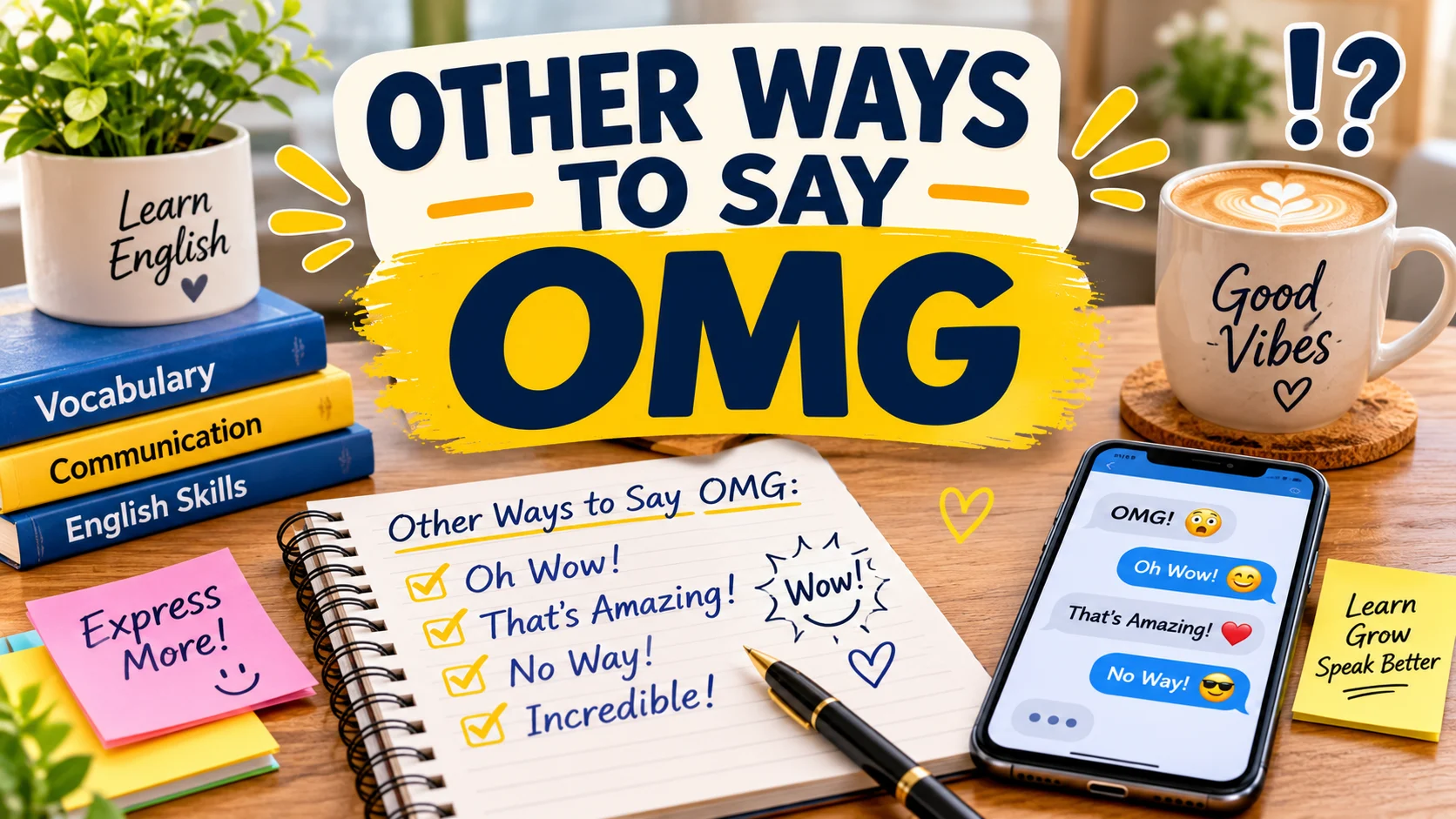
The best alternatives to OMG (Oh My God) include Oh wow, No way, That’s incredible, I can’t believe it, Goodness gracious, and That’s amazing. These expressions help you communicate surprise, excitement, admiration, or disbelief more naturally in different situations.
Top 5 alternatives: Oh wow, No way, That’s incredible, I can’t believe it, That’s amazing.
Introduction
OMG, short for “Oh My God,” is one of the most recognizable expressions in everyday English. People use it in text messages, social media comments, online conversations, and spoken communication to express surprise, excitement, shock, or disbelief. It is short, memorable, and easy to understand, which makes it especially popular in casual conversations.
However, repeating the same expression can make your communication sound predictable. Learning different alternatives to OMG helps you express emotions more accurately while adapting your language to different audiences. For example, “That’s incredible” sounds more polished, while “No way!” communicates surprise in a relaxed conversation.
Whether you are chatting with friends, reacting to exciting news, or communicating with colleagues, knowing other ways to say OMG can improve your vocabulary and help you express excitement in English. In this guide, you will discover 30 useful alternatives, their meanings, natural examples, and the situations where each expression works best.
Quick Categories: Best Alternatives to OMG
Formal alternatives to “OMG”
These expressions communicate surprise or admiration without relying on informal slang.
- That’s astonishing.
- How remarkable!
- That’s extraordinary.
- I’m genuinely surprised.
Pro Tip: Use complete expressions such as “That’s extraordinary” in formal conversations instead of internet abbreviations.
Casual alternatives
These phrases sound natural when talking with friends, relatives, and acquaintances.
- Oh wow!
- No way!
- Seriously?
- You must be kidding!
Pro Tip: Match your reaction to the situation. “No way!” works particularly well when someone shares unexpected news.
Professional alternatives
Use these expressions in workplace conversations, meetings, emails, and professional discussions.
- That’s impressive.
- That’s remarkable.
- I’m pleasantly surprised.
- That’s excellent news.
Pro Tip: Professional reaction phrases should communicate genuine interest without sounding overly emotional or exaggerated.
Informal expressions
These expressions are suitable for texting, social media, and relaxed conversations.
- What?!
- Oh my goodness!
- You’ve got to be kidding me!
- I can’t even believe it!
Pro Tip: Informal expressions in English are useful for showing personality, but avoid using them excessively in professional communication.
The best replacement for an expression is not always the most formal one. It is the one that communicates the right emotion in the right situation.
Common Mistakes When Using OMG
Although OMG is easy to understand, English learners sometimes use it in situations where another expression would sound more natural.
Here are five common mistakes to avoid.
1. Using OMG in every conversation
Repeating the same reaction makes your vocabulary sound limited.
Incorrect: OMG, that’s great! OMG, that’s wonderful!
Better: That’s wonderful! I’m genuinely happy for you.
2. Using OMG in formal business emails
OMG is generally too casual for professional correspondence.
Incorrect: OMG, thank you for the opportunity!
Better: I’m delighted to receive this opportunity.
3. Confusing surprise with admiration
Not every impressive achievement requires an expression of shock.
Incorrect: OMG, your presentation is good!
Better: Your presentation is truly impressive.
4. Using OMG when expressing sympathy
OMG may sound insensitive when someone shares unfortunate news.
Incorrect: OMG, I’m sorry about your loss.
Better: I’m deeply sorry to hear that.
5. Using exaggerated expressions in serious situations
Expressions such as “No way!” may sound inappropriate when someone discusses a serious matter.
Incorrect: No way! You lost your job?
Better: I’m sorry to hear that. That must be difficult.
What Does OMG Mean?
OMG stands for “Oh My God.” It is an informal English abbreviation used to express strong emotions, including:
- Surprise: Reacting to unexpected information.
- Excitement: Responding to something wonderful.
- Shock: Expressing disbelief about an event.
- Admiration: Showing appreciation for something impressive.
- Disappointment: Reacting to unexpected negative news.
Grammar explanation:
OMG functions as an interjection in modern English. An interjection is a word or expression that communicates a sudden emotion or reaction.
It is commonly used independently or at the beginning of a sentence.
Example: OMG! I can’t believe you won the competition.
In writing, OMG is particularly common in text messages, social media posts, and informal online conversations.
When to Use OMG
OMG is appropriate when you want to communicate an immediate emotional reaction.
Common situations include:
- Unexpected news: When someone tells you something surprising.
- Exciting announcements: When a friend shares wonderful news.
- Social media: When reacting to photographs, videos, and posts.
- Personal conversations: When discussing interesting experiences.
- Text messaging: When communicating quickly with friends.
- Entertainment: When reacting to an exciting movie or performance.
Spoken vs. Written Usage
| Communication | Recommended Usage |
|---|---|
| Spoken conversations | OMG, Oh wow, No way |
| Text messages | OMG, Seriously?, What?! |
| Social media | OMG, That’s amazing! |
| Professional emails | That’s excellent news |
| Business meetings | That’s impressive |
| Academic writing | That’s remarkable |
Formal vs. Informal Usage
OMG is primarily an informal expression. You can use it comfortably with friends and people you know well, but more polished alternatives are usually preferable when communicating professionally.
Is It Professional or Polite to Say OMG?
OMG is generally polite in friendly conversations, but it is not considered professional in most workplace situations.
The expression contains the word “God,” which some audiences may also prefer to avoid for personal or cultural reasons. Choosing a neutral alternative can make communication more inclusive.
Business-style example:
Instead of writing:
“OMG, that’s fantastic news about the project!”
Write:
“That’s excellent news about the project. Congratulations to everyone involved.”
Polite? Yes
Professional? No, in most cases
Pros and Cons of Using OMG
Pros
- Simple and natural: Easy to use in everyday conversations.
- Friendly tone: Makes casual communication feel expressive.
- Common usage: Widely recognized in digital communication.
- Easy to understand: Communicates immediate emotional reactions.
Cons
- Too informal for work: Not ideal for professional emails or reports.
- Overused: Repeating it can make conversations predictable.
- Limited emotional range: Does not always communicate the exact emotion you want.
- Not suitable for formal writing: May reduce the professionalism of academic or business content.
A strong vocabulary gives you more than different words. It gives you more control over how people understand your emotions.
Other Ways to Say OMG (With Examples)
These alternatives will help you sound more fluent, confident, and natural in different situations.
Use them according to tone, context, and audience to express excitement, admiration, or approval.
30 Best Alternatives to OMG
1. Phrase: Oh Wow!
Meaning: Expresses surprise, excitement, or admiration.
Explanation: A friendly expression used when something catches your attention.
Example Sentence: Oh wow! Your new house looks beautiful.
Best Use: Everyday conversations
Worst Use: Formal reports
Tone: Friendly, excited, natural
Context Variability:
- Casual: Oh wow! That’s amazing!
- Professional: That’s impressive work.
- Spoken: Oh wow, I wasn’t expecting that!
2. Phrase: No Way!
Meaning: Expresses disbelief or strong surprise.
Explanation: Used when something seems unexpected or difficult to believe.
Example Sentence: No way! You actually won the competition?
Best Use: Friendly reactions
Worst Use: Formal emails
Tone: Surprised, playful, informal
Context Variability:
- Casual: No way! That’s incredible!
- Professional: That’s quite unexpected.
- Spoken: No way, are you serious?
3. Phrase: That’s Incredible!
Meaning: Communicates strong admiration or excitement.
Explanation: A versatile expression for reacting positively to impressive news or achievements.
Example Sentence: That’s incredible! You completed the entire project ahead of schedule.
Best Use: Positive achievements
Worst Use: Serious complaints
Tone: Enthusiastic, appreciative, positive
Context Variability:
- Casual: That’s incredible!
- Professional: That’s an incredible achievement.
- Spoken: Wow, that’s incredible!
4. Phrase: I Can’t Believe It!
Meaning: Expresses disbelief about something unexpected.
Explanation: Suitable for both positive surprises and shocking situations.
Example Sentence: I can’t believe it! We finally got the results we wanted.
Best Use: Unexpected news
Worst Use: Routine updates
Tone: Emotional, surprised, expressive
Context Variability:
- Casual: I can’t believe it!
- Professional: I’m genuinely surprised by the result.
- Spoken: I honestly can’t believe this happened.
5. Phrase: Goodness Gracious!
Meaning: Expresses surprise, shock, or amazement.
Explanation: A traditional expression that can sound more gentle than OMG.
Example Sentence: Goodness gracious! That was an incredible performance.
Best Use: Gentle reactions
Worst Use: Technical reports
Tone: Gentle, expressive, traditional
Context Variability:
- Casual: Goodness gracious, look at that!
- Professional: That’s quite remarkable.
- Spoken: Goodness gracious! What happened?
6. Phrase: That’s Amazing!
Meaning: Shows excitement or admiration for something impressive.
Explanation: A positive expression that works in many everyday situations.
Example Sentence: That’s amazing! I’m so happy you achieved your goal.
Best Use: Celebrating achievements
Worst Use: Negative situations
Tone: Positive, warm, enthusiastic
Context Variability:
- Casual: That’s amazing!
- Professional: That’s an excellent achievement.
- Spoken: That’s absolutely amazing!
7. Phrase: Seriously?
Meaning: Asks whether something is true while expressing surprise.
Explanation: Commonly used when information seems unexpected or unbelievable.
Example Sentence: Seriously? You got the promotion already?
Best Use: Casual discussions
Worst Use: Formal presentations
Tone: Curious, surprised, informal
Context Variability:
- Casual: Seriously? That’s wonderful!
- Professional: Is that confirmed?
- Spoken: Seriously? I had no idea!
8. Phrase: That’s Unbelievable!
Meaning: Expresses strong surprise or disbelief.
Explanation: Useful when something is extremely unexpected or difficult to imagine.
Example Sentence: That’s unbelievable! I never expected us to finish first.
Best Use: Unexpected results
Worst Use: Routine conversations
Tone: Astonished, emotional, emphatic
Context Variability:
- Casual: That’s unbelievable!
- Professional: That’s an extraordinary result.
- Spoken: I find that almost unbelievable.
9. Phrase: How Wonderful!
Meaning: Expresses happiness and admiration.
Explanation: A warm expression for responding to pleasant announcements.
Example Sentence: How wonderful! Congratulations on your new job.
Best Use: Positive announcements
Worst Use: Serious emergencies
Tone: Warm, cheerful, polite
Context Variability:
- Casual: How wonderful!
- Professional: That’s wonderful news.
- Spoken: How absolutely wonderful!
10. Phrase: That’s Astonishing!
Meaning: Expresses extreme surprise or amazement.
Explanation: A polished alternative for reacting to extraordinary information.
Example Sentence: That’s astonishing! Your research uncovered something remarkable.
Best Use: Impressive discoveries
Worst Use: Ordinary updates
Tone: Formal, surprised, emphatic
Context Variability:
- Casual: That’s astonishing!
- Professional: That’s an astonishing achievement.
- Spoken: I’m genuinely astonished.
11. Phrase: You’ve Got to Be Kidding!
Meaning: Expresses disbelief about unexpected information.
Explanation: Used when something sounds so surprising that it seems impossible.
Example Sentence: You’ve got to be kidding! They canceled the entire event?
Best Use: Friendly reactions
Worst Use: Formal meetings
Tone: Playful, shocked, informal
Context Variability:
- Casual: You’ve got to be kidding!
- Professional: Is that really the case?
- Spoken: You’ve got to be kidding me!
12. Phrase: That’s Extraordinary!
Meaning: Describes something exceptionally impressive or unusual.
Explanation: A sophisticated expression that communicates admiration or surprise.
Example Sentence: That’s extraordinary! Your team accomplished so much in one month.
Best Use: Professional praise
Worst Use: Minor achievements
Tone: Sophisticated, positive, formal
Context Variability:
- Casual: That’s extraordinary!
- Professional: That’s an extraordinary accomplishment.
- Spoken: What an extraordinary result!
13. Phrase: Oh My Goodness!
Meaning: Expresses surprise, excitement, or shock.
Explanation: A gentle alternative to OMG that is suitable for many everyday conversations.
Example Sentence: Oh my goodness! Your puppy is adorable.
Best Use: Friendly conversations
Worst Use: Formal reports
Tone: Friendly, expressive, gentle
Context Variability:
- Casual: Oh my goodness!
- Professional: That’s quite surprising.
- Spoken: Oh my goodness, look at this!
14. Phrase: I’m Speechless!
Meaning: Communicates that something is so surprising that you cannot find the right words.
Explanation: Particularly useful when an event leaves a strong emotional impression.
Example Sentence: I’m speechless! I never expected such a thoughtful gift.
Best Use: Emotional moments
Worst Use: Routine discussions
Tone: Emotional, sincere, amazed
Context Variability:
- Casual: I’m literally speechless!
- Professional: I’m genuinely impressed.
- Spoken: I honestly don’t know what to say.
15. Phrase: That’s Mind-Blowing!
Meaning: Expresses amazement about something extraordinary.
Explanation: Used when information or an experience completely changes your expectations.
Example Sentence: That’s mind-blowing! I had no idea technology could do that.
Best Use: Exciting discoveries
Worst Use: Formal correspondence
Tone: Excited, informal, emphatic
Context Variability:
- Casual: That’s mind-blowing!
- Professional: That’s a remarkable development.
- Spoken: This is absolutely mind-blowing.
16. Phrase: What a Surprise!
Meaning: Expresses unexpected excitement or astonishment.
Explanation: A simple phrase for reacting to an event you did not anticipate.
Example Sentence: What a surprise! I wasn’t expecting to see you here.
Best Use: Unexpected encounters
Worst Use: Predictable events
Tone: Cheerful, surprised, friendly
Context Variability:
- Casual: What a surprise!
- Professional: That’s an unexpected development.
- Spoken: Well, what a surprise!
17. Phrase: That’s Remarkable!
Meaning: Shows admiration for something worthy of attention.
Explanation: A polished phrase for acknowledging impressive results or achievements.
Example Sentence: That’s remarkable! Your presentation explained everything so clearly.
Best Use: Workplace praise
Worst Use: Casual teasing
Tone: Professional, appreciative, polished
Context Variability:
- Casual: That’s remarkable!
- Professional: That’s a remarkable accomplishment.
- Spoken: I find that truly remarkable.
18. Phrase: Are You Serious?
Meaning: Expresses disbelief or asks for confirmation.
Explanation: Used when someone shares unexpected or surprising information.
Example Sentence: Are you serious? You met your favorite author?
Best Use: Personal conversations
Worst Use: Formal announcements
Tone: Curious, surprised, conversational
Context Variability:
- Casual: Are you serious?
- Professional: Is that information accurate?
- Spoken: Wait, are you serious?
19. Phrase: That’s Fantastic!
Meaning: Communicates excitement and approval.
Explanation: A positive alternative that works well when responding to good news.
Example Sentence: That’s fantastic! Congratulations on completing your degree.
Best Use: Celebrating success
Worst Use: Negative situations
Tone: Cheerful, positive, enthusiastic
Context Variability:
- Casual: That’s fantastic!
- Professional: That’s fantastic progress.
- Spoken: This is fantastic news!
20. Phrase: I’m Pleasantly Surprised!
Meaning: Expresses positive surprise about something unexpected.
Explanation: A professional-friendly phrase for situations that exceed your expectations.
Example Sentence: I’m pleasantly surprised by how smoothly the project went.
Best Use: Workplace discussions
Worst Use: Negative news
Tone: Polite, professional, positive
Context Variability:
- Casual: I’m pleasantly surprised!
- Professional: I’m pleasantly surprised by the outcome.
- Spoken: I have to say, I’m pleasantly surprised.
21. Phrase: What a Revelation!
Meaning: Expresses surprise about discovering something important or unexpected.
Explanation: Suitable when new information changes your understanding of a situation.
Example Sentence: What a revelation! I never knew that the company started as a small family business.
Best Use: Interesting discoveries
Worst Use: Simple compliments
Tone: Thoughtful, expressive, sophisticated
Context Variability:
- Casual: What a revelation!
- Professional: That’s an interesting discovery.
- Spoken: Well, that’s quite a revelation!
22. Phrase: I’m Amazed!
Meaning: Expresses strong admiration or surprise.
Explanation: A straightforward alternative for communicating a powerful positive reaction.
Example Sentence: I’m amazed by how much progress you’ve made.
Best Use: Personal achievements
Worst Use: Ordinary updates
Tone: Appreciative, enthusiastic, sincere
Context Variability:
- Casual: I’m amazed!
- Professional: I’m impressed by the results.
- Spoken: I’m genuinely amazed by this.
23. Phrase: That’s So Cool!
Meaning: Shows excitement or admiration about something interesting.
Explanation: A relaxed expression used when something seems enjoyable or impressive.
Example Sentence: That’s so cool! I didn’t know you could play the guitar.
Best Use: Friendly conversations
Worst Use: Formal presentations
Tone: Relaxed, cheerful, informal
Context Variability:
- Casual: That’s so cool!
- Professional: That’s an interesting innovation.
- Spoken: That’s actually really cool!
24. Phrase: Incredible!
Meaning: Expresses amazement about something impressive or unexpected.
Explanation: A short reaction that communicates strong positive feelings.
Example Sentence: Incredible! Your team completed the project in record time.
Best Use: Quick reactions
Worst Use: Serious complaints
Tone: Excited, positive, emphatic
Context Variability:
- Casual: Incredible!
- Professional: An incredible achievement.
- Spoken: Absolutely incredible!
25. Phrase: I Didn’t See That Coming!
Meaning: Expresses surprise about an unexpected event.
Explanation: A natural phrase for reacting to something you did not anticipate.
Example Sentence: I didn’t see that coming! What an unexpected ending.
Best Use: Unexpected events
Worst Use: Predictable outcomes
Tone: Conversational, surprised, natural
Context Variability:
- Casual: I didn’t see that coming!
- Professional: That was an unexpected outcome.
- Spoken: Well, I certainly didn’t see that coming!
26. Phrase: That’s Impressive!
Meaning: Shows admiration for someone’s ability, achievement, or work.
Explanation: A particularly useful alternative in professional and educational environments.
Example Sentence: That’s impressive! You managed to complete the assignment so quickly.
Best Use: Professional praise
Worst Use: Emotional emergencies
Tone: Respectful, positive, professional
Context Variability:
- Casual: That’s impressive!
- Professional: Your results are impressive.
- Spoken: I’m really impressed by that.
27. Phrase: What a Shock!
Meaning: Expresses strong surprise about unexpected information.
Explanation: Often used when something happens suddenly or produces disbelief.
Example Sentence: What a shock! Nobody expected that announcement.
Best Use: Unexpected announcements
Worst Use: Happy celebrations
Tone: Dramatic, surprised, emphatic
Context Variability:
- Casual: What a shock!
- Professional: That’s certainly unexpected.
- Spoken: What a complete shock!
28. Phrase: That’s Phenomenal!
Meaning: Expresses exceptional admiration or excitement.
Explanation: A strong positive expression for describing outstanding achievements.
Example Sentence: That’s phenomenal! Your performance was outstanding.
Best Use: Major achievements
Worst Use: Everyday updates
Tone: Enthusiastic, impressive, expressive
Context Variability:
- Casual: That’s phenomenal!
- Professional: That’s a phenomenal result.
- Spoken: Your work is absolutely phenomenal!
29. Phrase: I’m Blown Away!
Meaning: Expresses extreme admiration or amazement.
Explanation: An informal expression used when something exceeds your expectations.
Example Sentence: I’m blown away by the creativity of your design.
Best Use: Impressive experiences
Worst Use: Formal reports
Tone: Excited, informal, expressive
Context Variability:
- Casual: I’m blown away!
- Professional: I’m extremely impressed.
- Spoken: I’m completely blown away by this!
30. Phrase: That’s Excellent News!
Meaning: Communicates happiness and approval about positive information.
Explanation: A polished alternative that works particularly well in workplace communication.
Example Sentence: That’s excellent news! I’m glad the client approved the proposal.
Best Use: Business communication
Worst Use: Negative announcements
Tone: Professional, positive, courteous
Context Variability:
- Casual: That’s excellent news!
- Professional: This is excellent news for the entire team.
- Spoken: That’s really excellent news!
How to Choose the Right Alternative to OMG
Choosing an expression depends on what you want to communicate. Some phrases express excitement, while others communicate disbelief, admiration, or professional appreciation.
| Your Intention | Recommended Expression |
|---|---|
| General surprise | Oh wow! |
| Strong disbelief | No way! |
| Excitement | That’s fantastic! |
| Admiration | That’s impressive! |
| Professional praise | That’s remarkable! |
| Positive news | That’s excellent news! |
| Unexpected discovery | What a revelation! |
| Emotional reaction | I’m speechless! |
| Extreme amazement | That’s phenomenal! |
| Gentle surprise | Oh my goodness! |
Which Alternatives Work Best in Professional Communication?
For workplace communication, prioritize expressions that sound respectful and natural.
Consider these examples:
- Instead of “OMG, that’s great!” say “That’s excellent news!”
- Instead of “No way!” say “That’s quite unexpected.”
- Instead of “I’m blown away!” say “I’m genuinely impressed.”
- Instead of “That’s so cool!” say “That’s an impressive development.”
These substitutions allow you to communicate enthusiasm without losing professionalism.
Mini Quiz: Test Your Understanding
Check whether you can select the most appropriate alternative for each situation.
English Usage Challenge
0/4 answered
1. Your colleague shares excellent news about a successful project. Which response is most professional?OMG!That’s excellent news!No way!
2. Your friend tells you that they won a major competition. What sounds most natural?No way! That’s incredible!Please confirm this information.I acknowledge your statement.
3. You want to express positive surprise in a business meeting. Which phrase works best?You’ve got to be kidding!I’m pleasantly surprised.What?!
4. Someone shares a very impressive achievement. Which expression communicates admiration?That’s remarkable!Seriously?What a shock!
Check My Answers
Comparison Table: Top 10 Alternatives to OMG
Here is a quick comparison of the most useful expressions based on tone and communication context.
| Phrase | Tone | Best Use |
|---|---|---|
| Oh wow! | Friendly | Everyday conversations |
| No way! | Informal | Unexpected news |
| That’s incredible! | Enthusiastic | Impressive achievements |
| I can’t believe it! | Emotional | Strong surprise |
| Goodness gracious! | Gentle | Polite reactions |
| That’s amazing! | Positive | Exciting announcements |
| That’s astonishing! | Formal | Extraordinary events |
| I’m speechless! | Emotional | Powerful experiences |
| That’s remarkable! | Professional | Workplace praise |
| That’s excellent news! | Polished | Business communication |
Frequently Asked Questions
1. What are the best alternatives to OMG?
Some of the best alternatives are “Oh wow,” “No way,” “That’s incredible,” “I can’t believe it,” and “That’s amazing.” The right choice depends on your tone and situation.
2. What can I say instead of OMG in professional communication?
Use expressions such as “That’s impressive,” “That’s remarkable,” “I’m pleasantly surprised,” or “That’s excellent news.” They communicate enthusiasm while maintaining professionalism.
3. Is OMG considered slang?
OMG is an informal abbreviation of “Oh My God.” It is widely used in texting, social media, and everyday conversations rather than formal writing.
4. What is a polite alternative to OMG?
“Oh my goodness,” “That’s wonderful,” and “How remarkable” are useful alternatives. They communicate surprise or excitement without relying on the same informal abbreviation.
5. How can I express excitement in English without saying OMG?
You can say “That’s fantastic,” “I’m thrilled,” “That’s incredible,” “How wonderful,” or “I’m absolutely delighted.” Choose an expression that matches the intensity of your feelings.
Conclusion
Learning different ways to express surprise and excitement can make your English more natural, expressive, and versatile. Although OMG is a popular expression, alternatives such as “Oh wow,” “That’s incredible,” and “That’s remarkable” help you communicate more effectively across different situations.
Make vocabulary practice part of your daily routine. Try using one new expression in a conversation, message, or workplace discussion every day. Most importantly, pay attention to tone, audience, and context so your words always communicate the right message.
Which alternative to OMG do you use most often? Share your favorite expression and help other English learners discover new ways to communicate!