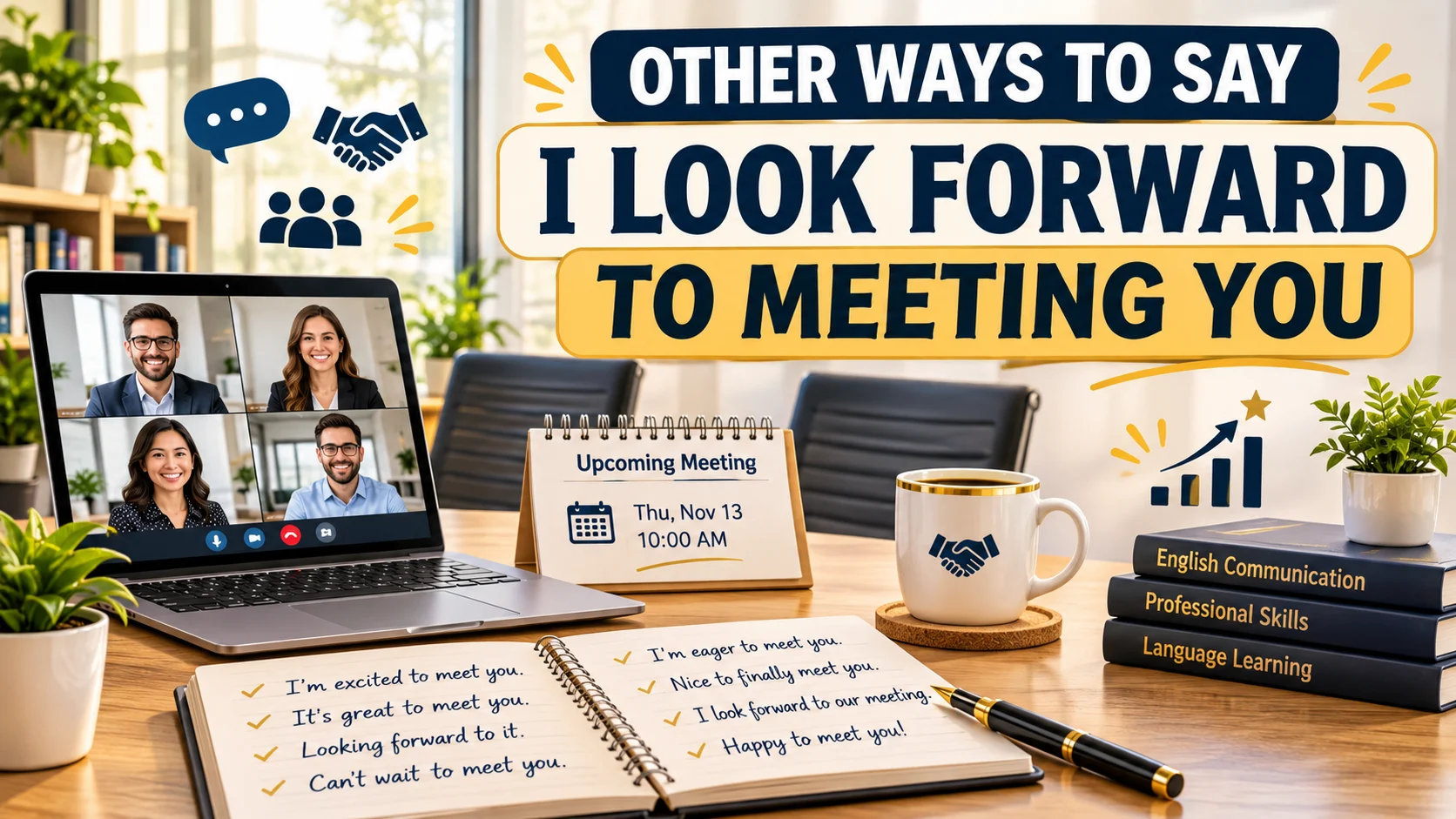
If you want to sound more natural, polite, and professional, there are several alternatives to “I look forward to meeting you.” The best choice depends on your relationship with the recipient and the situation.
Top 5 alternatives: I’m excited to meet you, I look forward to connecting with you, I’m eager to meet you, I’m pleased we’ll have the opportunity to meet, I’m looking forward to our conversation.
Introduction
The phrase “I look forward to meeting you” is a polite and positive way to express excitement about meeting someone in the future. It is commonly used in professional emails, business correspondence, interviews, networking conversations, appointments, and personal messages. It helps communicate enthusiasm while maintaining a respectful tone.
However, using the same expression in every conversation can make your English sound repetitive. Learning different alternatives to this phrase allows you to adjust your language according to the situation, relationship, and level of formality. For example, you might choose a more polished expression when contacting a potential employer or a friendly sentence when arranging to meet a new acquaintance.
Understanding other ways to say I look forward to meeting you also helps English learners express excitement in English more naturally. With the right vocabulary, you can communicate warmth, confidence, and professionalism without sounding overly formal or rehearsed.
Quick Categories: Different Ways to Express Anticipation
Here are some useful expressions organized by tone and communication style.
Formal alternatives to “I look forward to meeting you”
- I anticipate meeting you.
- I am pleased at the prospect of meeting you.
- I eagerly await our meeting.
- I welcome the opportunity to meet you.
Pro Tip: Use these expressions in formal correspondence, official invitations, and communication with senior professionals. Keep the surrounding message equally respectful.
Casual alternatives
- I’m excited to meet you.
- Can’t wait to meet you.
- It’ll be great to meet you.
- I’m looking forward to seeing you.
Pro Tip: Choose these expressions when communicating with acquaintances, friends, or colleagues you already know. They sound warmer and more conversational.
Professional alternatives
- I look forward to connecting with you.
- I look forward to our discussion.
- I’m eager to explore this opportunity together.
- I’m pleased we’ll have the chance to connect.
Pro Tip: Use these phrases in business emails, interviews, networking messages, and meeting confirmations. They communicate enthusiasm without sacrificing professionalism.
Informal expressions
- Looking forward to it!
- It’ll be lovely to meet you.
- I’m really looking forward to meeting you.
- Excited to finally meet you!
Pro Tip: Informal expressions work best when the recipient is familiar with you or the conversation already has a friendly tone.
“Professional English isn’t about using complicated words. It’s about choosing the right words for the right situation.”
Common Mistakes When Using “I Look Forward to Meeting You”
Although this expression is straightforward, English learners sometimes make grammatical and contextual mistakes when using it.
1. Using the wrong verb form
Incorrect: I look forward to meet you.
Correct: I look forward to meeting you.
Why? In this expression, “to” functions as a preposition, so it is followed by a noun or gerund (verb ending in -ing).
2. Confusing “meet” with “see”
Incorrect: I look forward to seeing you for the first time, when you have never met the person and the context requires an introduction.
Better: I look forward to meeting you.
Why? “Meet” is generally used when introducing yourself to someone for the first time. “See” is commonly used when you already know the person.
3. Making the sentence unnecessarily complicated
Incorrect: I am extremely enthusiastically anticipating the wonderful opportunity of meeting you.
Correct: I’m excited about meeting you.
Why? Simple, natural language usually communicates enthusiasm more effectively.
4. Using overly casual expressions in formal emails
Less appropriate: Can’t wait to meet you!
Better: I look forward to meeting you.
Why? Casual expressions may not match the expectations of a formal business conversation.
5. Forgetting the context and recipient
Less appropriate: I’m thrilled to finally meet you!
This might sound excessive in a routine professional appointment.
Better: I look forward to our meeting.
Why? Match the emotional intensity of your message to the relationship and occasion.
What Does “I Look Forward to Meeting You” Mean?
“I look forward to meeting you” means that you feel positive, interested, or excited about meeting someone in the future.
It communicates anticipation and creates a friendly impression before the actual meeting takes place.
Grammar explanation:
The expression follows this grammatical structure:
- I: Subject pronoun.
- Look forward to: A phrasal expression meaning to anticipate something positively.
- Meeting: Gerund functioning as the object of the preposition “to.”
- You: Object pronoun.
Remember that “to” is a preposition in this expression, not the infinitive marker.
Example: I look forward to meeting you at the conference next week.
When to Use “I Look Forward to Meeting You”
This expression is useful in different professional, academic, and personal situations.
Common contexts include:
- Job interviews: When confirming an upcoming interview with a recruiter or hiring manager.
- Business meetings: When arranging a discussion with a potential client or business partner.
- Networking events: When responding to someone you plan to meet professionally.
- First introductions: When communicating with someone you have recently connected with.
- Academic settings: When contacting a professor, lecturer, or academic advisor.
- Professional appointments: When confirming a scheduled consultation.
- Social gatherings: When responding to an invitation to meet someone new.
Spoken vs. Written Usage
Written English:
The phrase is particularly common in emails, formal invitations, professional messages, and meeting confirmations.
Example: Thank you for arranging the interview. I look forward to meeting you next Tuesday.
Spoken English:
In everyday conversations, shorter and more relaxed alternatives often sound more natural.
Example: I’m excited to meet you tomorrow!
Formal vs. Informal Usage
| Situation | Recommended Expression |
|---|---|
| Formal email | I look forward to meeting you. |
| Job interview | I look forward to speaking with you. |
| Business networking | I look forward to connecting with you. |
| Friendly introduction | I’m excited to meet you. |
| Casual conversation | Can’t wait to meet you! |
“The best expression is not always the most formal one. Natural communication comes from matching your words to your audience.”
Is It Professional or Polite to Say “I Look Forward to Meeting You”?
Yes. “I look forward to meeting you” is both polite and professional. It is a widely accepted expression in business communication because it conveys enthusiasm without becoming overly familiar.
It works particularly well when writing to recruiters, clients, managers, colleagues, interviewers, and new professional contacts.
However, it can sometimes sound repetitive if you use it in every email. Choosing an appropriate alternative can make your writing more varied and engaging.
Politeness? Yes.
Professional? Yes.
Business-style example:
Thank you for confirming the appointment. I appreciate the opportunity to discuss the project with you and look forward to meeting you on Thursday.
Pros and Cons of Using “I Look Forward to Meeting You”
Like other common English expressions, this phrase has advantages and limitations.
Pros
- Simple and natural: It communicates positive anticipation without requiring complicated vocabulary.
- Friendly tone: It creates a welcoming impression before a meeting.
- Common usage: Most English speakers understand its meaning immediately.
- Easy to understand: It is suitable for intermediate and advanced English learners.
Cons
- Can feel repetitive: Using it in every professional email may make your writing less varied.
- Limited emotional range: It does not always communicate strong excitement or personal enthusiasm.
- May sound formal: It can feel slightly distant in relaxed conversations with friends.
- Not ideal for every context: Some situations require more specific expressions, such as looking forward to a discussion rather than a physical meeting.
30 Other Ways to Say “I Look Forward to Meeting You” (With Examples)
The following alternatives will help you sound more fluent, confident, and natural in different situations.
Use them according to tone, context, and audience to express excitement, admiration, or approval where appropriate.
1. I’m Excited to Meet You
Meaning: You feel enthusiastic about meeting someone.
Explanation: This is a friendly and natural way to communicate genuine excitement.
Example Sentence: I’m excited to meet you at the networking event next Friday.
Best Use: Friendly introductions
Worst Use: Highly formal letters
Tone: Warm, enthusiastic, friendly
Context Variability:
- Casual: I’m excited to meet you tomorrow!
- Professional: I’m excited to meet you and discuss the opportunity.
- Spoken: I’m really excited to finally meet you.
2. I Look Forward to Connecting With You
Meaning: You anticipate establishing communication or building a relationship with someone.
Explanation: This expression is especially useful for networking and professional introductions.
Example Sentence: Thank you for reaching out. I look forward to connecting with you next week.
Best Use: Business networking
Worst Use: Intimate conversations
Tone: Professional, polite, welcoming
Context Variability:
- Casual: Looking forward to connecting!
- Professional: I look forward to connecting with you regarding the project.
- Spoken: It’ll be great to connect with you.
3. I’m Eager to Meet You
Meaning: You are enthusiastic and interested in meeting someone.
Explanation: This phrase communicates a stronger sense of anticipation than a neutral meeting confirmation.
Example Sentence: I’m eager to meet you and learn more about your experience.
Best Use: Professional introductions
Worst Use: Routine messages
Tone: Enthusiastic, respectful, confident
Context Variability:
- Casual: I’m eager to meet you!
- Professional: I’m eager to meet you and discuss our potential collaboration.
- Spoken: I’m really eager to meet you.
4. I’m Pleased We’ll Have the Opportunity to Meet
Meaning: You feel happy that an opportunity to meet has been arranged.
Explanation: This polished expression is suitable for formal and professional correspondence.
Example Sentence: I’m pleased we’ll have the opportunity to meet during the upcoming conference.
Best Use: Formal correspondence
Worst Use: Casual texting
Tone: Formal, courteous, refined
Context Variability:
- Casual: It’ll be nice to meet you.
- Professional: I’m pleased we’ll have the opportunity to meet and discuss the proposal.
- Spoken: I’m pleased we’ll finally get to meet.
5. I’m Looking Forward to Our Conversation
Meaning: You anticipate having a discussion with someone.
Explanation: This is an excellent alternative when the main purpose of the meeting is exchanging ideas or information.
Example Sentence: Thank you for scheduling the call. I’m looking forward to our conversation on Monday.
Best Use: Scheduled discussions
Worst Use: Social introductions
Tone: Professional, positive, courteous
Context Variability:
- Casual: Looking forward to our chat!
- Professional: I’m looking forward to our conversation about the new strategy.
- Spoken: I’m looking forward to talking with you.
6. It Will Be a Pleasure to Meet You
Meaning: You believe meeting someone will be an enjoyable experience.
Explanation: This courteous expression communicates respect and positive expectations.
Example Sentence: It will be a pleasure to meet you and discuss your organization’s goals.
Best Use: Formal introductions
Worst Use: Casual texting
Tone: Respectful, elegant, polite
Context Variability:
- Casual: It’ll be lovely to meet you.
- Professional: It will be a pleasure to meet you in person.
- Spoken: It’ll be a real pleasure to meet you.
7. I Can’t Wait to Meet You
Meaning: You are very excited about meeting someone.
Explanation: This expression conveys strong enthusiasm and is more conversational than the original phrase.
Example Sentence: I’ve heard so much about your work, and I can’t wait to meet you.
Best Use: Friendly conversations
Worst Use: Formal business letters
Tone: Excited, enthusiastic, informal
Context Variability:
- Casual: I can’t wait to meet you!
- Professional: I’m looking forward to meeting you and discussing your ideas.
- Spoken: I really can’t wait to meet you.
8. I’m Thrilled About Meeting You
Meaning: You feel extremely happy and enthusiastic about an upcoming meeting.
Explanation: Use this expression when you want to communicate a particularly high level of excitement.
Example Sentence: I’m thrilled about meeting you and exploring our shared interests.
Best Use: Special introductions
Worst Use: Routine appointments
Tone: Excited, expressive, positive
Context Variability:
- Casual: I’m thrilled we’re finally meeting!
- Professional: I’m thrilled about the opportunity to meet and collaborate.
- Spoken: I’m genuinely thrilled to meet you.
9. I Anticipate Meeting You
Meaning: You expect and look forward to meeting someone.
Explanation: This is a more formal alternative, although it can sound slightly stiff in everyday English.
Example Sentence: I anticipate meeting you at the annual business conference.
Best Use: Formal writing
Worst Use: Friendly texting
Tone: Formal, reserved, courteous
Context Variability:
- Casual: Looking forward to meeting you.
- Professional: I anticipate meeting you during the scheduled consultation.
- Spoken: I expect we’ll have a chance to meet soon.
10. Looking Forward to Seeing You
Meaning: You are happy about an upcoming opportunity to see someone.
Explanation: This expression is particularly natural when you already know the person.
Example Sentence: Looking forward to seeing you at the company gathering.
Best Use: Familiar contacts
Worst Use: First introductions
Tone: Friendly, relaxed, positive
Context Variability:
- Casual: Looking forward to seeing you!
- Professional: I look forward to seeing you at the event.
- Spoken: It’ll be great to see you again.
11. I’m Glad We’ll Get to Meet
Meaning: You feel happy that you and another person will have a chance to meet.
Explanation: This expression sounds natural and approachable in everyday conversations.
Example Sentence: I’m glad we’ll get to meet and talk about the project in person.
Best Use: Friendly meetings
Worst Use: Formal applications
Tone: Warm, natural, conversational
Context Variability:
- Casual: I’m glad we’ll finally meet!
- Professional: I’m glad we’ll get to meet and review the proposal.
- Spoken: I’m really glad we get to meet.
12. I’m Looking Forward to Meeting You in Person
Meaning: You are excited about meeting someone face-to-face.
Explanation: This phrase is particularly useful when you have previously communicated online, by phone, or through email.
Example Sentence: We’ve exchanged several emails, and I’m looking forward to meeting you in person.
Best Use: First face-to-face meetings
Worst Use: Routine phone calls
Tone: Professional, friendly, enthusiastic
Context Variability:
- Casual: Can’t wait to meet you in person!
- Professional: I look forward to meeting you in person next week.
- Spoken: It’ll be nice to finally meet face-to-face.
13. I Welcome the Opportunity to Meet You
Meaning: You are happy to accept an opportunity to meet someone.
Explanation: This expression emphasizes openness and appreciation rather than strong excitement.
Example Sentence: I welcome the opportunity to meet you and discuss the proposed partnership.
Best Use: Business correspondence
Worst Use: Casual invitations
Tone: Formal, respectful, professional
Context Variability:
- Casual: I’d love to meet you.
- Professional: I welcome the opportunity to meet and discuss potential cooperation.
- Spoken: I’d be happy to meet with you.
14. I’m Excited About Our Upcoming Meeting
Meaning: You feel enthusiastic about a meeting that has already been arranged.
Explanation: This alternative focuses on the scheduled meeting rather than the act of meeting someone for the first time.
Example Sentence: I’m excited about our upcoming meeting and the ideas we’ll be discussing.
Best Use: Meeting confirmations
Worst Use: Unscheduled introductions
Tone: Positive, confident, professional
Context Variability:
- Casual: Really excited about our meeting!
- Professional: I’m excited about our upcoming meeting next Wednesday.
- Spoken: I’m looking forward to our meeting.
15. It Will Be Wonderful to Meet You
Meaning: You expect that meeting someone will be a pleasant experience.
Explanation: This warm expression is appropriate for friendly introductions and positive professional relationships.
Example Sentence: It will be wonderful to meet you and hear more about your journey.
Best Use: Warm introductions
Worst Use: Strictly formal notices
Tone: Warm, cheerful, welcoming
Context Variability:
- Casual: It’ll be wonderful to meet you!
- Professional: It will be wonderful to meet you at the upcoming event.
- Spoken: It’ll be so nice to meet you.
16. I Look Forward to Our Meeting
Meaning: You anticipate an upcoming scheduled meeting.
Explanation: This concise alternative is ideal for professional emails and meeting confirmations.
Example Sentence: Thank you for confirming the appointment. I look forward to our meeting on Friday.
Best Use: Business emails
Worst Use: Unplanned introductions
Tone: Professional, neutral, courteous
Context Variability:
- Casual: Looking forward to our meeting!
- Professional: I look forward to our scheduled meeting.
- Spoken: I’m looking forward to getting together.
17. I’m Looking Forward to Getting to Know You
Meaning: You are interested in learning more about someone personally or professionally.
Explanation: This phrase communicates interest in developing a relationship beyond a single meeting.
Example Sentence: I’m looking forward to getting to know you and learning about your career journey.
Best Use: Relationship building
Worst Use: Brief appointments
Tone: Friendly, interested, welcoming
Context Variability:
- Casual: Looking forward to getting to know you!
- Professional: I’m looking forward to getting to know you and understanding your professional goals.
- Spoken: It’ll be nice getting to know you.
18. I’m Delighted We’ll Be Meeting Soon
Meaning: You feel very pleased about an upcoming meeting.
Explanation: This is a polished expression that communicates enthusiasm while maintaining a professional tone.
Example Sentence: I’m delighted we’ll be meeting soon to discuss the next stage of the project.
Best Use: Formal emails
Worst Use: Casual texting
Tone: Courteous, polished, enthusiastic
Context Variability:
- Casual: So glad we’re meeting soon!
- Professional: I’m delighted we’ll be meeting soon to explore the proposal.
- Spoken: I’m delighted we’ll finally get to meet.
19. I Look Forward to Speaking With You
Meaning: You anticipate having a conversation with someone.
Explanation: This phrase is especially useful when the upcoming interaction will take place over the phone or through a video call.
Example Sentence: Thank you for arranging the interview. I look forward to speaking with you on Tuesday.
Best Use: Phone interviews
Worst Use: Physical introductions
Tone: Professional, polite, respectful
Context Variability:
- Casual: Looking forward to chatting!
- Professional: I look forward to speaking with you about the position.
- Spoken: It’ll be great to talk with you.
20. I’m Excited About the Chance to Meet You
Meaning: You feel enthusiastic about having an opportunity to meet someone.
Explanation: This expression highlights the value you place on the upcoming introduction.
Example Sentence: I’m excited about the chance to meet you and exchange ideas.
Best Use: Networking opportunities
Worst Use: Routine confirmations
Tone: Positive, enthusiastic, approachable
Context Variability:
- Casual: I’m excited we get to meet!
- Professional: I’m excited about the chance to meet and discuss potential opportunities.
- Spoken: I’m really happy we have a chance to meet.
21. I Await the Opportunity to Meet You
Meaning: You are waiting for an opportunity to meet someone.
Explanation: This formal expression can communicate anticipation, although it may sound less conversational than other alternatives.
Example Sentence: I await the opportunity to meet you and discuss the proposed arrangements.
Best Use: Formal correspondence
Worst Use: Friendly messages
Tone: Formal, reserved, respectful
Context Variability:
- Casual: Hope we get to meet soon!
- Professional: I await the opportunity to meet you.
- Spoken: I hope we have a chance to meet soon.
22. It’ll Be Great to Finally Meet You
Meaning: You are enthusiastic about meeting someone after communicating for some time.
Explanation: This expression is especially suitable when you have previously interacted online or through other communication channels.
Example Sentence: We’ve been working together remotely, so it’ll be great to finally meet you.
Best Use: Remote colleagues
Worst Use: Formal applications
Tone: Friendly, enthusiastic, natural
Context Variability:
- Casual: It’ll be great to finally meet!
- Professional: It’ll be great to finally meet you in person.
- Spoken: It’s going to be great to meet you.
23. I’m Looking Forward to Our Introduction
Meaning: You anticipate being introduced to someone.
Explanation: This phrase works well when a mutual contact has arranged an introduction.
Example Sentence: Thank you for arranging the introduction. I’m looking forward to our meeting.
Best Use: Professional introductions
Worst Use: Existing friendships
Tone: Polite, professional, courteous
Context Variability:
- Casual: Looking forward to being introduced!
- Professional: I’m looking forward to our introduction and potential discussion.
- Spoken: I’m glad we’ll have a chance to meet.
24. I’m Happy We’ll Have Time to Meet
Meaning: You appreciate having an opportunity to meet someone.
Explanation: This natural expression communicates warmth and gratitude without sounding overly formal.
Example Sentence: I’m happy we’ll have time to meet during your visit to our office.
Best Use: Personal arrangements
Worst Use: Formal applications
Tone: Friendly, appreciative, positive
Context Variability:
- Casual: I’m happy we can meet!
- Professional: I’m happy we’ll have time to meet and review the details.
- Spoken: I’m glad we could arrange a time to meet.
25. I’m Looking Forward to Collaborating With You
Meaning: You anticipate working together with someone.
Explanation: This is an excellent professional alternative when the meeting involves a shared project or business opportunity.
Example Sentence: Thank you for considering our proposal. I’m looking forward to collaborating with you.
Best Use: Project partnerships
Worst Use: Social meetings
Tone: Professional, cooperative, optimistic
Context Variability:
- Casual: Excited to work together!
- Professional: I’m looking forward to collaborating with you on this initiative.
- Spoken: I’m excited about working together.
26. It Will Be Nice to Put a Face to the Name
Meaning: You are looking forward to meeting someone you have heard about or communicated with but have not met personally.
Explanation: This conversational expression is commonly used when meeting someone for the first time after online or indirect communication.
Example Sentence: We’ve exchanged several messages, so it’ll be nice to put a face to the name.
Best Use: First introductions
Worst Use: Formal letters
Tone: Friendly, conversational, relaxed
Context Variability:
- Casual: It’ll be nice to put a face to the name!
- Professional: It’ll be nice to finally put a face to the name at the conference.
- Spoken: It’s nice to finally meet you in person.
27. I’m Looking Forward to Sharing Ideas With You
Meaning: You anticipate exchanging thoughts and perspectives with someone.
Explanation: This phrase is particularly useful when an upcoming meeting involves brainstorming or professional discussions.
Example Sentence: I’m looking forward to sharing ideas with you during our strategy session.
Best Use: Creative discussions
Worst Use: Social introductions
Tone: Collaborative, positive, professional
Context Variability:
- Casual: Excited to exchange ideas!
- Professional: I’m looking forward to sharing ideas and exploring solutions.
- Spoken: It’ll be great to exchange thoughts.
28. I’m Glad We Have the Chance to Meet
Meaning: You appreciate the opportunity to meet someone.
Explanation: This expression sounds natural and respectful in both professional and personal settings.
Example Sentence: I’m glad we have the chance to meet and discuss your expectations.
Best Use: Scheduled introductions
Worst Use: Highly formal letters
Tone: Appreciative, friendly, respectful
Context Variability:
- Casual: Glad we get to meet!
- Professional: I’m glad we have the chance to meet and discuss the project.
- Spoken: I’m happy we could make this meeting happen.
29. I’m Looking Forward to What We’ll Accomplish Together
Meaning: You feel positive about the results you may achieve by working with someone.
Explanation: This expression shifts attention from the meeting itself to future teamwork and shared achievements.
Example Sentence: I’m looking forward to what we’ll accomplish together as we move ahead with this project.
Best Use: Team partnerships
Worst Use: First casual meetings
Tone: Optimistic, collaborative, confident
Context Variability:
- Casual: Excited to see what we can do together!
- Professional: I’m looking forward to what we’ll accomplish together.
- Spoken: I’m excited about what we can achieve as a team.
30. I’m Looking Forward to a Productive Discussion
Meaning: You anticipate a useful and constructive conversation.
Explanation: This professional expression is appropriate when the purpose of meeting is to discuss ideas, solve problems, or make decisions.
Example Sentence: I’m looking forward to a productive discussion about the upcoming business strategy.
Best Use: Business meetings
Worst Use: Social gatherings
Tone: Professional, constructive, focused
Context Variability:
- Casual: Looking forward to a good discussion!
- Professional: I’m looking forward to a productive discussion about the proposed changes.
- Spoken: I’m excited to hear your thoughts and discuss the next steps.
Important Highlights: Choosing the Right Expression
Here are a few quick reminders to help you select the most appropriate expression.
- For job interviews: Choose “I look forward to speaking with you” or “I look forward to meeting you.”
- For business networking: Use “I look forward to connecting with you.”
- For friendly introductions: Choose “I’m excited to meet you.”
- For formal correspondence: Use “It will be a pleasure to meet you.”
- For collaborative projects: Choose “I’m looking forward to collaborating with you.”
“A small change in wording can make a big difference in how your message sounds.”
Mini Quiz: Test Your English Knowledge
Check your understanding of these expressions by answering the following questions.
1. Which expression is most suitable for a formal business email confirming an interview?
A. Can’t wait to meet you!
B. I look forward to meeting you.
C. See you around!
D. Let’s hang out soon!
Correct Answer: B. I look forward to meeting you.
Explanation: It is polite, professional, and appropriate for formal correspondence.
2. Which expression is best when meeting someone for the first time after communicating online?
A. I’m looking forward to meeting you in person.
B. I’m looking forward to seeing you again.
C. I’ll catch you later.
D. See you soon, buddy!
Correct Answer: A. I’m looking forward to meeting you in person.
Explanation: It clearly communicates anticipation about a face-to-face introduction.
3. Choose the grammatically correct sentence.
A. I look forward to meet you.
B. I look forward meeting you.
C. I look forward to meeting you.
D. I looking forward to meeting you.
Correct Answer: C. I look forward to meeting you.
Explanation: The preposition “to” is followed by the gerund “meeting.”
4. Which expression is most appropriate for a friendly, casual introduction?
A. I await the opportunity to meet you.
B. I’m excited to meet you!
C. I anticipate our introduction.
D. I welcome the opportunity to meet you.
Correct Answer: B. I’m excited to meet you!
Explanation: It sounds natural, warm, and enthusiastic in everyday conversations.
Comparison Table: Top 10 Alternatives
The following table compares ten useful alternatives according to their tone and most suitable context.
| Phrase | Tone | Best Use |
|---|---|---|
| I’m excited to meet you. | Friendly | First introductions |
| I look forward to connecting with you. | Professional | Networking |
| I’m eager to meet you. | Enthusiastic | Professional introductions |
| It will be a pleasure to meet you. | Formal | Business correspondence |
| I’m looking forward to our conversation. | Professional | Scheduled discussions |
| I can’t wait to meet you. | Informal | Friendly messages |
| I look forward to our meeting. | Neutral | Meeting confirmations |
| I’m delighted we’ll be meeting soon. | Courteous | Formal emails |
| I’m looking forward to collaborating with you. | Professional | Business partnerships |
| It’ll be great to finally meet you. | Casual | Remote introductions |
FAQs
1. What is another professional way to say I look forward to meeting you?
“I look forward to connecting with you” and “I look forward to our discussion” are excellent professional alternatives. Both sound polished and appropriate in business emails.
2. How do you say I look forward to meeting you in a formal email?
You can write, “I would welcome the opportunity to meet with you” or “It will be a pleasure to meet you.” Both expressions communicate courtesy and professionalism.
3. Is it correct to say looking forward to meeting you?
Yes. “Looking forward to meeting you” is grammatically correct in conversational English. It is a shortened version of “I am looking forward to meeting you.”
4. Can I say I’m excited to meet you in a professional email?
Yes. It is appropriate when you want to communicate genuine enthusiasm. However, “I look forward to meeting you” may be a better choice for particularly formal situations.
5. What is the difference between looking forward to meeting you and looking forward to seeing you?
“Meeting you” generally refers to an introduction or meeting someone for the first time, while “seeing you” commonly refers to meeting someone you already know. Context can affect both expressions.
Conclusion
Learning different ways to say I look forward to meeting you can make your English more natural, flexible, and effective. Whether you are writing a professional email, confirming a job interview, arranging a business meeting, or communicating with a new acquaintance, choosing the right expression helps you create a positive impression.
Start practicing these 30 alternatives in your everyday conversations and written communication. Pay attention to your audience, the purpose of the interaction, and the level of formality required. With regular practice and greater tone awareness, you can express excitement confidently while making your English sound polished and authentic.