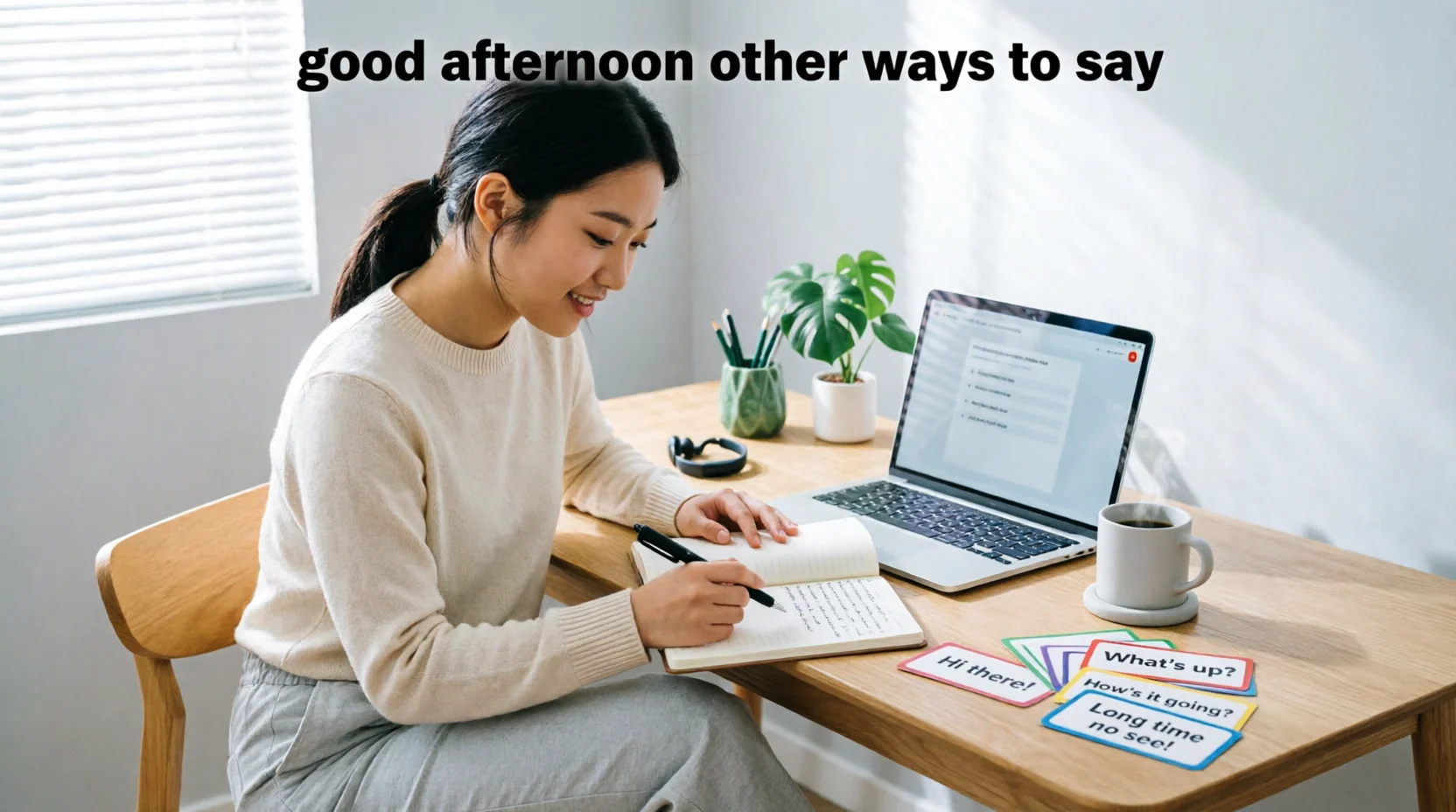
If you want natural alternatives to good afternoon other ways to say, you can choose a phrase based on your relationship, setting, and level of formality. The most useful options include Good afternoon, everyone, Hello, everyone, Hope you’re having a good afternoon, Afternoon, and Wishing you a pleasant afternoon.
The phrase good afternoon other ways to say refers to different expressions you can use instead of the standard afternoon greeting. “Good afternoon” is commonly used from around midday until the early evening and works well in conversations, meetings, emails, classrooms, and customer interactions.
Learning alternatives to good afternoon other ways to say can help English learners communicate with greater flexibility. Instead of repeating the same greeting, you can choose an expression that matches your audience, relationship, and situation. A formal greeting may be appropriate in a business email, while a warmer expression can work better with colleagues or friends. Understanding different greetings also helps learners sound more natural and confident. These expressions are not only useful for daily communication but can also help you express excitement in English, welcome people professionally, and create a positive first impression.
“The best greeting is not always the most formal one. It is the one that fits the situation.”
Formal Alternatives to “Good Afternoon Other Ways to Say”
Formal situations require respectful and polished language. These expressions work well with clients, senior professionals, official visitors, and formal written communication.
- Good afternoon, everyone
- Wishing you a pleasant afternoon
- I hope you’re having a pleasant afternoon
- I hope this afternoon finds you well
Pro Tip
Use a complete greeting when speaking to a group or addressing someone in a formal setting. A warm but respectful expression creates a professional first impression.
Casual Alternatives
Casual conversations allow shorter and more relaxed greetings. These are useful with friends, classmates, familiar colleagues, and people you interact with regularly.
- Hello, everyone
- Hi, everyone
- Afternoon
- Hope you’re having a good afternoon
Pro Tip
With friends or familiar colleagues, you do not always need a traditional greeting. A short “Afternoon!” can sound natural when the context is already clear.
Professional Alternatives
Professional communication benefits from greetings that are friendly without sounding overly casual.
- Good afternoon, team
- Good afternoon, everyone
- I hope you’re doing well this afternoon
- I hope your afternoon is going well
Pro Tip
For emails and meetings, combine your greeting with the purpose of your message. This keeps your communication efficient and professional.
Informal Expressions
Informal expressions are suitable when you already know the people you are addressing and the situation does not require formal language.
- Hi there
- Hello there
- Hey, everyone
- Afternoon, everyone
Pro Tip
Avoid very informal expressions when speaking to clients, senior managers, interviewers, or unfamiliar people.
“Tone matters as much as vocabulary when you want your English to sound natural.”
Common Mistakes
1. Using “Good afternoon” at the wrong time
Some learners use it late at night.
Example: “Good afternoon” at 10:30 p.m.
Use Good evening when the time and context indicate evening.
2. Making the greeting unnecessarily complicated
A simple greeting can become awkward when too many words are added.
Example: “I would like to formally wish you a very wonderful afternoon.”
A natural alternative is: “I hope you’re having a pleasant afternoon.”
3. Using casual greetings in formal situations
Example: “Hey, boss!” during a formal client meeting.
Use “Good afternoon” or “Good afternoon, Mr. Ahmed” instead.
4. Forgetting the audience
A greeting to one person is different from a greeting to a group.
Example: “Good afternoon, everyone” is appropriate when addressing several people.
5. Repeating the same greeting in every situation
Using only one expression can make your communication sound repetitive.
Example: Using “Good afternoon” in every email, meeting, and casual conversation.
Learning alternatives gives you more flexibility.
What Does “Good Afternoon Other Ways to Say” Mean?
The phrase good afternoon other ways to say describes alternative expressions that communicate the same basic afternoon greeting.
“Good afternoon” is a conventional greeting. Good functions as an adjective describing the afternoon, while afternoon identifies the part of the day.
Example: “Good afternoon, how can I help you?”
The exact wording can change depending on whether you are speaking formally, casually, professionally, or informally.
When to Use “Good Afternoon Other Ways to Say”
You can use these expressions in several common situations:
- Greeting coworkers at the beginning of an afternoon meeting
- Starting a professional email
- Welcoming customers or visitors
- Addressing students in a classroom
- Greeting friends during the afternoon
- Opening a presentation
- Starting a phone or video call
- Responding politely to someone in the afternoon
Spoken vs. Written
Spoken: “Good afternoon, everyone. Let’s get started.”
Written: “Good afternoon, Ms. Khan. I am writing to follow up on our meeting.”
Formal vs. Informal
Formal: “I hope you’re having a pleasant afternoon.”
Informal: “Hi there!”
Choosing between these options depends on your audience and relationship.
Is It Professional or Polite to Say “Good Afternoon Other Ways to Say”?
The standard greeting “Good afternoon” is generally polite and can be professional. However, the phrase good afternoon other ways to say itself is not something you would normally say as a greeting. It is a search-style phrase describing alternative expressions.
Polite? ✔️ Yes
Professional? ✔️ Yes, when used as the actual greeting
Business example:
“Good afternoon, Mr. Ali. Thank you for taking the time to meet with us.”
Pros and Cons of Using “Good Afternoon”
Pros
- Simple and natural
- Friendly tone
- Common usage
- Easy to understand
Cons
- Can feel repetitive
- May sound too formal with close friends
- Has limited emotional range
- Not always ideal for every informal situation
“Professional English is not about using difficult words. It is about choosing appropriate words.”
Other Ways to Say “Good Afternoon Other Ways to Say” With Examples
These alternatives will help you sound more fluent, confident, and natural in different situations.
Use them according to tone, context, and audience to express warmth, enthusiasm, respect, or approval.
1. Phrase: Good afternoon, everyone
Meaning: A polite greeting for a group during the afternoon.
Explanation: This is especially useful when opening meetings, classes, presentations, or events.
Example Sentence: “Good afternoon, everyone. Thank you for joining today’s meeting.”
Best Use: Group meetings
Worst Use: Close friends
Tone: Polite, professional, welcoming
Context Variability: casual / professional / spoken examples
2. Phrase: Hello, everyone
Meaning: A friendly greeting addressed to a group.
Explanation: It is less time-specific than “good afternoon” and works in many situations.
Example Sentence: “Hello, everyone. Let’s begin today’s discussion.”
Best Use: Group settings
Worst Use: Formal letters
Tone: Friendly, neutral, clear
Context Variability: casual / professional / spoken examples
3. Phrase: Hi, everyone
Meaning: A friendly greeting for multiple people.
Explanation: It is more relaxed than “good afternoon” and works well with familiar groups.
Example Sentence: “Hi, everyone. How is your afternoon going?”
Best Use: Familiar groups
Worst Use: Formal ceremonies
Tone: Casual, friendly, relaxed
Context Variability: casual / professional / spoken examples
4. Phrase: Wishing you a pleasant afternoon
Meaning: A polite wish for someone to have a pleasant afternoon.
Explanation: It sounds warm and polished, particularly in written communication.
Example Sentence: “Thank you for your message. Wishing you a pleasant afternoon.”
Best Use: Professional emails
Worst Use: Casual chats
Tone: Formal, warm, courteous
Context Variability: casual / professional / written examples
5. Phrase: I hope you’re having a pleasant afternoon
Meaning: A polite way to greet someone while expressing goodwill.
Explanation: This creates a warmer opening than a simple greeting.
Example Sentence: “I hope you’re having a pleasant afternoon. I wanted to discuss the project timeline.”
Best Use: Business emails
Worst Use: Quick greetings
Tone: Polite, warm, professional
Context Variability: casual / professional / written examples
6. Phrase: I hope your afternoon is going well
Meaning: A friendly way to ask indirectly about someone’s afternoon.
Explanation: It combines a greeting with a positive expression.
Example Sentence: “I hope your afternoon is going well. Do you have a moment to talk?”
Best Use: Work communication
Worst Use: Formal announcements
Tone: Warm, professional, considerate
Context Variability: casual / professional / spoken examples
7. Phrase: I hope you’re doing well this afternoon
Meaning: A polite greeting that expresses concern for someone’s well-being.
Explanation: It works particularly well in professional conversations.
Example Sentence: “I hope you’re doing well this afternoon. I am following up on your request.”
Best Use: Professional messages
Worst Use: Very casual chats
Tone: Professional, courteous, warm
Context Variability: casual / professional / written examples
8. Phrase: Good afternoon, team
Meaning: An afternoon greeting specifically directed at a team.
Explanation: It is useful when starting workplace communication.
Example Sentence: “Good afternoon, team. Here are today’s project updates.”
Best Use: Team communication
Worst Use: Personal chats
Tone: Professional, direct, positive
Context Variability: casual / professional / spoken examples
9. Phrase: Afternoon
Meaning: A shortened version of “Good afternoon.”
Explanation: This informal greeting is common among people who already know each other.
Example Sentence: “Afternoon! How’s everything going?”
Best Use: Casual conversations
Worst Use: Client meetings
Tone: Informal, relaxed, friendly
Context Variability: casual / professional / spoken examples
10. Phrase: Hope you’re having a good afternoon
Meaning: A friendly wish for someone to enjoy their afternoon.
Explanation: It sounds conversational while remaining polite.
Example Sentence: “Hope you’re having a good afternoon. I wanted to check on the report.”
Best Use: Friendly messages
Worst Use: Formal notices
Tone: Friendly, warm, natural
Context Variability: casual / professional / written examples
11. Phrase: Hi there
Meaning: A friendly greeting for one person.
Explanation: It is useful when you want a relaxed and welcoming opening.
Example Sentence: “Hi there! How can I help you today?”
Best Use: Friendly interactions
Worst Use: Formal letters
Tone: Casual, warm, approachable
Context Variability: casual / professional / spoken examples
12. Phrase: Hello there
Meaning: A friendly and slightly expressive greeting.
Explanation: It can make an interaction feel more welcoming.
Example Sentence: “Hello there. Thanks for stopping by.”
Best Use: Friendly encounters
Worst Use: Formal reports
Tone: Friendly, warm, conversational
Context Variability: casual / professional / spoken examples
13. Phrase: Hey, everyone
Meaning: A relaxed greeting for a group.
Explanation: It works well with friends, classmates, or familiar coworkers.
Example Sentence: “Hey, everyone! Are we ready to start?”
Best Use: Familiar groups
Worst Use: Formal meetings
Tone: Informal, energetic, friendly
Context Variability: casual / professional / spoken examples
14. Phrase: Afternoon, everyone
Meaning: A shortened group greeting used during the afternoon.
Explanation: It sounds relaxed while still clearly addressing the group.
Example Sentence: “Afternoon, everyone. Let’s review the schedule.”
Best Use: Familiar teams
Worst Use: Formal events
Tone: Casual, relaxed, friendly
Context Variability: casual / professional / spoken examples
15. Phrase: Good afternoon, everyone. How are you?
Meaning: A greeting followed by a polite question about people’s well-being.
Explanation: This makes the opening more conversational.
Example Sentence: “Good afternoon, everyone. How are you? Shall we begin?”
Best Use: Meetings
Worst Use: Formal letters
Tone: Polite, friendly, engaging
Context Variability: casual / professional / spoken examples
16. Phrase: Good afternoon. It’s nice to see you.
Meaning: A polite afternoon greeting expressing pleasure at seeing someone.
Explanation: It works well when meeting someone in person.
Example Sentence: “Good afternoon. It’s nice to see you again.”
Best Use: Professional meetings
Worst Use: Email openings
Tone: Warm, polite, professional
Context Variability: casual / professional / spoken examples
17. Phrase: Good afternoon. How can I help?
Meaning: A greeting followed by an offer of assistance.
Explanation: It is particularly useful in customer service and professional interactions.
Example Sentence: “Good afternoon. How can I help you today?”
Best Use: Customer service
Worst Use: Casual friends
Tone: Professional, helpful, courteous
Context Variability: casual / professional / spoken examples
18. Phrase: Good afternoon. Thank you for joining us.
Meaning: A formal greeting combined with appreciation.
Explanation: It is ideal for presentations, webinars, and meetings.
Example Sentence: “Good afternoon. Thank you for joining us today.”
Best Use: Presentations
Worst Use: Casual chats
Tone: Formal, appreciative, professional
Context Variability: casual / professional / spoken examples
19. Phrase: Good afternoon. Welcome.
Meaning: A greeting that also welcomes someone.
Explanation: It is concise and useful for events and professional settings.
Example Sentence: “Good afternoon. Welcome to our annual conference.”
Best Use: Formal events
Worst Use: Personal messages
Tone: Formal, welcoming, respectful
Context Variability: casual / professional / spoken examples
20. Phrase: Good afternoon. Thank you for coming.
Meaning: A polite greeting that acknowledges someone’s presence.
Explanation: It is useful when receiving guests or participants.
Example Sentence: “Good afternoon. Thank you for coming to today’s session.”
Best Use: Events
Worst Use: Casual texts
Tone: Polite, formal, appreciative
Context Variability: casual / professional / spoken examples
21. Phrase: I hope you’re enjoying your afternoon
Meaning: A warm wish that someone is enjoying their afternoon.
Explanation: It adds friendliness to an ordinary greeting.
Example Sentence: “I hope you’re enjoying your afternoon. I wanted to share an update.”
Best Use: Friendly emails
Worst Use: Urgent notices
Tone: Warm, friendly, considerate
Context Variability: casual / professional / written examples
22. Phrase: I hope you’re having a wonderful afternoon
Meaning: A warm wish for someone to have an enjoyable afternoon.
Explanation: It is more expressive than a standard greeting.
Example Sentence: “I hope you’re having a wonderful afternoon. Thank you for your continued support.”
Best Use: Warm messages
Worst Use: Formal notices
Tone: Warm, positive, expressive
Context Variability: casual / professional / written examples
23. Phrase: Have a pleasant afternoon
Meaning: A polite wish for the rest of someone’s afternoon.
Explanation: It is often used when ending an interaction rather than starting one.
Example Sentence: “Thank you for your time. Have a pleasant afternoon.”
Best Use: Professional closings
Worst Use: Opening emails
Tone: Polite, formal, courteous
Context Variability: casual / professional / spoken examples
24. Phrase: Enjoy your afternoon
Meaning: A friendly wish for someone to enjoy the rest of their day.
Explanation: It usually works as a closing expression.
Example Sentence: “Thanks for your help. Enjoy your afternoon!”
Best Use: Friendly closings
Worst Use: Formal announcements
Tone: Friendly, positive, warm
Context Variability: casual / professional / spoken examples
25. Phrase: Hope you’re doing well
Meaning: A general greeting expressing goodwill.
Explanation: It is not limited to the afternoon and works well in professional communication.
Example Sentence: “Hope you’re doing well. I wanted to follow up on our previous conversation.”
Best Use: Professional emails
Worst Use: Formal speeches
Tone: Neutral, polite, professional
Context Variability: casual / professional / written examples
26. Phrase: Hello
Meaning: A universal greeting that can replace a time-specific greeting.
Explanation: It is simple, flexible, and suitable for many situations.
Example Sentence: “Hello, Sarah. I wanted to ask you about the project.”
Best Use: General greetings
Worst Use: Very formal ceremonies
Tone: Neutral, polite, flexible
Context Variability: casual / professional / spoken examples
27. Phrase: Welcome, everyone
Meaning: A greeting that welcomes a group.
Explanation: It works particularly well when opening an event, class, or presentation.
Example Sentence: “Welcome, everyone. We are pleased to have you here.”
Best Use: Group events
Worst Use: Private chats
Tone: Warm, formal, welcoming
Context Variability: casual / professional / spoken examples
28. Phrase: It’s great to see you this afternoon
Meaning: A warm greeting expressing happiness about seeing someone.
Explanation: It is useful for meetings and personal interactions.
Example Sentence: “It’s great to see you this afternoon. How have things been?”
Best Use: Meetings
Worst Use: Formal letters
Tone: Warm, positive, friendly
Context Variability: casual / professional / spoken examples
29. Phrase: A pleasant afternoon to you
Meaning: A courteous wish for someone to have a pleasant afternoon.
Explanation: It is more formal and less common in everyday conversation.
Example Sentence: “Thank you for your assistance. A pleasant afternoon to you.”
Best Use: Formal interactions
Worst Use: Casual chats
Tone: Formal, courteous, traditional
Context Variability: casual / professional / spoken examples
30. Phrase: I trust you’re having a pleasant afternoon
Meaning: A formal way to express goodwill toward someone.
Explanation: This phrase is most appropriate in polished professional or business writing.
Example Sentence: “I trust you’re having a pleasant afternoon. I am writing regarding our upcoming meeting.”
Best Use: Business correspondence
Worst Use: Casual conversations
Tone: Formal, polished, professional
Context Variability: casual / professional / written examples
“Fluent English means knowing not only what to say, but when to say it.”
Professional English Tip
When choosing professional reaction phrases, focus on clarity rather than complexity. “Good afternoon, everyone” is often more effective than an unusually elaborate greeting.
Mini Quiz: Test Yourself
1. Which greeting is most suitable for starting a formal business meeting?
A. Hey, everyone!
B. Afternoon!
C. Good afternoon, everyone.
D. What’s up?
Answer: C
2. Which phrase is more appropriate for a close friend?
A. I trust you’re having a pleasant afternoon.
B. Hey, everyone!
C. A pleasant afternoon to you.
D. I hope this afternoon finds you well.
Answer: B
3. Which expression works well as a professional email opening?
A. Yo!
B. Afternoon!
C. I hope you’re doing well this afternoon.
D. Hey there, buddy!
Answer: C
4. Which phrase is mainly useful as a closing?
A. Have a pleasant afternoon.
B. Good afternoon, team.
C. Hello, everyone.
D. Welcome, everyone.
Answer: A
Comparison Table: Top Alternatives
| Phrase | Tone | Best Use |
|---|---|---|
| Good afternoon, everyone | Professional | Meetings |
| Hello, everyone | Neutral | Groups |
| Hi, everyone | Friendly | Familiar groups |
| Wishing you a pleasant afternoon | Formal | Emails |
| I hope you’re having a pleasant afternoon | Professional | Business messages |
| Good afternoon, team | Professional | Workplace |
| Afternoon | Casual | Friends |
| Hope you’re having a good afternoon | Friendly | Messages |
| Have a pleasant afternoon | Polite | Closings |
| I hope you’re doing well this afternoon | Professional | Emails |
FAQs
What are some good alternatives to “good afternoon”?
Popular alternatives include “Hello, everyone,” “Hi, everyone,” “Afternoon,” “Wishing you a pleasant afternoon,” and “I hope you’re having a pleasant afternoon.”
What is a professional way to say “good afternoon”?
For professional communication, you can say “Good afternoon, everyone,” “Good afternoon, team,” or “I hope you’re doing well this afternoon.”
What is a casual way to say “good afternoon”?
“Afternoon,” “Hi there,” “Hello there,” and “Hey, everyone” can work in casual situations when the relationship allows informal language.
Can I use “good afternoon” in a business email?
Yes. “Good afternoon” is polite and professional for business emails, especially when followed by the recipient’s name or a clear message purpose.
Why should I learn other ways to say “good afternoon”?
Learning alternatives helps you avoid repetition and choose greetings that match different audiences, relationships, and levels of formality.
Conclusion
Learning good afternoon other ways to say expressions gives English learners more flexibility in everyday and professional communication. Instead of relying on one greeting, you can select an expression that matches your audience, purpose, and tone.
Practice two or three alternatives each day and use them in real conversations, emails, and meetings. With regular practice, you will become more comfortable using formal, professional, casual, and informal expressions in English.
Which of these alternatives do you use most often? Share your favorite phrase and practice it in a sentence.