“Yeah” is a casual way to say “yes,” show agreement, confirm information, or respond positively. The best alternative depends on whether you are speaking casually, professionally, formally, or enthusiastically.
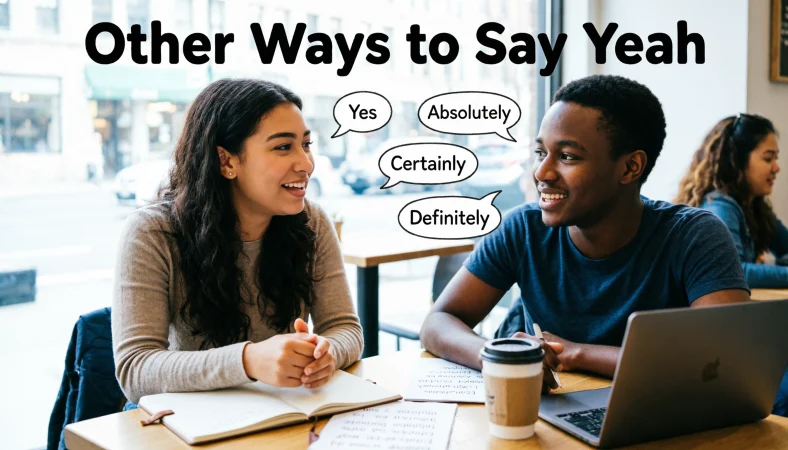
Top alternatives: Yes, Absolutely, Certainly, Definitely, Of course
Learning other ways to say “yeah” can make your English sound more natural, precise, and appropriate in different situations. “Yeah” is extremely common in spoken English, especially when talking with friends, family members, and familiar colleagues. However, using it repeatedly can make your communication sound limited or overly casual. Choosing alternatives such as “yes,” “certainly,” or “definitely” allows you to adjust your tone depending on the situation.
The best alternative to “yeah” depends on what you want to express. You may be confirming information, agreeing with an opinion, accepting an invitation, showing enthusiasm, or responding politely to a request. For example, “yes” is neutral and versatile, while “absolutely” and “definitely” show stronger agreement. For English learners and professionals, understanding these differences can improve conversational fluency and help you choose expressions that fit your meaning, audience, and level of formality.
“Fluent English means knowing not only what to say, but how strongly and appropriately to say it.”
Formal Alternatives to “Yeah”
Yes
The standard neutral response to indicate agreement or confirmation.
Certainly
A polite and confident way to agree or confirm something.
Indeed
A formal expression used to confirm or emphasize a statement.
Affirmative
A highly formal term meaning yes or confirmed.
Pro Tip: Use “yes,” “certainly,” or “indeed” in formal writing and professional situations instead of casual “yeah.”
Casual Alternatives
Yep
A relaxed way to say yes.
Sure
A friendly response showing agreement or willingness.
Definitely
A natural way to express strong agreement.
Of Course
A friendly response showing clear agreement or willingness.
Pro Tip: Casual alternatives work well with friends and familiar colleagues, but choose neutral language when the relationship or situation is formal.
Professional Alternatives
Absolutely
A confident way to express strong agreement.
Certainly
A polished way to confirm or accept something.
I Agree
A direct way to express agreement with an opinion or statement.
That Is Correct
A precise response used to confirm information.
Pro Tip: In professional communication, choose alternatives that clearly communicate whether you are agreeing, confirming, or accepting a request.
Informal Expressions
Yep
A short and relaxed response.
Uh Huh
A conversational way to show agreement or that you are listening.
Sure
A casual way to accept or agree.
You Bet
An enthusiastic informal way to say yes.
Pro Tip: Informal expressions in English are best reserved for relaxed conversations and should generally be avoided in formal documents.
“A simple yes can sound neutral, enthusiastic, formal, or casual depending on the words surrounding it.”
Common Mistakes
1. Using “yeah” in formal writing
“Yeah” is generally too conversational for formal reports, academic essays, and official correspondence.
Example: Formal: “Yes, the figures have been verified.”
2. Assuming every alternative means exactly the same thing
“Certainly,” “absolutely,” and “definitely” can communicate different levels or types of agreement.
Example: “Absolutely” often sounds stronger than a simple “yes.”
3. Using “yep” with senior professionals
“Yep” may sound overly casual in formal workplace communication.
Example: Use “Certainly” when responding to a formal request.
4. Confusing agreement with confirmation
Sometimes you are confirming a fact rather than agreeing with an opinion.
Example: “That is correct” is better for confirming information.
5. Overusing enthusiastic alternatives
Words such as “absolutely” and “definitely” can sound unnatural if used for every response.
Example: Use “yes” for a simple confirmation rather than “absolutely” every time.
“The strongest alternative is not always the best alternative. Match your response to the situation.”
What Does “Yeah” Mean?
“Yeah” is an informal form of yes. It can express agreement, confirmation, acceptance, acknowledgment, or a positive response.
It is primarily used in spoken English and informal written communication such as text messages and casual online conversations.
Example:
“Are you coming to the meeting?”
“Yeah, I’ll be there.”
Grammatically, “yeah” functions as an interjection or response word rather than a conventional verb or adjective.
When to Use “Yeah”
You can use “yeah” when:
- Talking with friends or family
- Responding casually to a question
- Agreeing with someone’s opinion
- Confirming information
- Accepting a casual invitation
- Acknowledging something during a conversation
Spoken vs Written
Spoken: “Yeah” is extremely common in everyday conversation.
Written: It can appear naturally in texts, chats, informal messages, and dialogue.
Formal vs Informal
Informal: Yeah, yep, uh huh, you bet
Neutral: Yes, sure, of course
Formal or professional: Certainly, indeed, that is correct
Is “Yeah” Professional or Polite?
“Yeah” is not rude, but it is distinctly informal. It can be acceptable with close colleagues or in relaxed workplace conversations, but it is usually not the best choice for formal emails, presentations, interviews, or official communication.
Polite? ✔ Yes
Professional? ❌ No, in most formal cases
Business example:
Instead of writing, “Yeah, I can send the report today,” write, “Yes, I can send the report today.”
The second version sounds clearer and more professional.
Pros and Cons of Using “Yeah”
Pros
- Simple and natural: It is one of the most common responses in spoken English.
- Friendly tone: It can make conversations feel relaxed.
- Common usage: Native speakers use it frequently.
- Easy to understand: Its basic meaning is immediately clear.
Cons
- Too informal for work: It may sound inappropriate in formal communication.
- Overused: Repeating “yeah” can make speech sound limited.
- Limited emotional range: It does not always show how strongly you agree.
- Not suitable for formal writing: More precise alternatives are usually better.
“Use ‘yeah’ when you want casual warmth; use ‘yes’ when you need clarity and professionalism.”
Other Ways to Say “Yeah” With Examples
These alternatives will help you sound more fluent, confident, and natural in different situations.
Use them according to tone, context, and audience to express agreement, confirmation, acceptance, enthusiasm, admiration, or approval.
1. Phrase: Yes
Meaning: A standard word used to express agreement or confirmation.
Explanation: “Yes” is the most versatile alternative and works in both formal and informal situations.
Example Sentence: Yes, I can attend the meeting tomorrow.
Best Use: General communication
Worst Use: Strong enthusiasm
Tone: Neutral, clear, polite
Context Variability: casual / professional / spoken examples
2. Phrase: Absolutely
Meaning: A strong way to express complete agreement.
Explanation: It communicates more enthusiasm and certainty than a simple “yes.”
Example Sentence: Absolutely, I agree with your recommendation.
Best Use: Strong agreement
Worst Use: Weak confirmation
Tone: Enthusiastic, confident, positive
Context Variability: casual / professional / spoken examples
3. Phrase: Certainly
Meaning: A polite and confident way to say yes.
Explanation: It is particularly appropriate in professional and formal communication.
Example Sentence: Certainly, I will send you the updated document.
Best Use: Professional requests
Worst Use: Casual banter
Tone: Polished, courteous, professional
Context Variability: casual / professional / spoken examples
4. Phrase: Definitely
Meaning: An emphatic way to confirm agreement or certainty.
Explanation: It indicates that you strongly agree or intend to do something.
Example Sentence: Definitely, we should discuss this opportunity further.
Best Use: Strong confirmation
Worst Use: Formal documents
Tone: Confident, enthusiastic, natural
Context Variability: casual / professional / spoken examples
5. Phrase: Of Course
Meaning: A confident way to express agreement or willingness.
Explanation: It can suggest that the answer is obvious or that you are happy to help.
Example Sentence: Of course, I’d be happy to help with the presentation.
Best Use: Friendly agreement
Worst Use: Sensitive disagreement
Tone: Warm, helpful, confident
Context Variability: casual / professional / spoken examples
6. Phrase: Sure
Meaning: A casual way to agree, accept, or indicate willingness.
Explanation: It is common in everyday conversations and relaxed workplace settings.
Example Sentence: Sure, I can review the document this afternoon.
Best Use: Casual requests
Worst Use: Formal correspondence
Tone: Casual, friendly, cooperative
Context Variability: casual / professional / spoken examples
7. Phrase: I Agree
Meaning: A direct statement showing agreement with an opinion or idea.
Explanation: It clearly identifies agreement rather than simple acknowledgment.
Example Sentence: I agree that we should prioritize customer satisfaction.
Best Use: Discussions
Worst Use: Simple questions
Tone: Direct, professional, clear
Context Variability: casual / professional / spoken examples
8. Phrase: That’s Right
Meaning: A way to confirm that something is correct.
Explanation: It is useful when responding to a statement rather than accepting a request.
Example Sentence: That’s right, the meeting starts at nine.
Best Use: Fact confirmation
Worst Use: Formal reports
Tone: Natural, confident, conversational
Context Variability: casual / professional / spoken examples
9. Phrase: That Is Correct
Meaning: A formal confirmation that information is accurate.
Explanation: It is more precise and professional than “yeah” or “that’s right.”
Example Sentence: That is correct; the payment was processed yesterday.
Best Use: Professional confirmation
Worst Use: Casual conversation
Tone: Formal, precise, professional
Context Variability: casual / professional / spoken examples
10. Phrase: Indeed
Meaning: A formal word used to confirm or emphasize something.
Explanation: It can express agreement but is less common in casual conversation.
Example Sentence: Indeed, this approach could improve overall efficiency.
Best Use: Formal discussion
Worst Use: Casual texting
Tone: Formal, thoughtful, emphatic
Context Variability: casual / professional / spoken examples
11. Phrase: Affirmative
Meaning: A formal way to say yes or confirm something.
Explanation: It is common in highly structured, technical, or official communication.
Example Sentence: Affirmative, the system is ready for testing.
Best Use: Official confirmation
Worst Use: Friendly conversation
Tone: Formal, technical, authoritative
Context Variability: casual / professional / spoken examples
12. Phrase: Yep
Meaning: A casual form of yes.
Explanation: It is common in relaxed speech and informal messages.
Example Sentence: Yep, I’ll meet you outside the office.
Best Use: Casual conversation
Worst Use: Formal meetings
Tone: Informal, relaxed, friendly
Context Variability: casual / professional / spoken examples
13. Phrase: Uh Huh
Meaning: A conversational response showing agreement or acknowledgment.
Explanation: It can also show that you are listening without necessarily expressing strong agreement.
Example Sentence: Uh huh, I understand what you mean.
Best Use: Casual conversation
Worst Use: Formal communication
Tone: Informal, conversational, relaxed
Context Variability: casual / professional / spoken examples
14. Phrase: You Bet
Meaning: An enthusiastic informal way to say yes.
Explanation: It strongly communicates willingness or agreement.
Example Sentence: Can you help me with this? You bet!
Best Use: Friendly exchanges
Worst Use: Formal requests
Tone: Enthusiastic, informal, friendly
Context Variability: casual / professional / spoken examples
15. Phrase: For Sure
Meaning: Definitely or certainly.
Explanation: It is a common conversational expression of strong agreement.
Example Sentence: For sure, I’ll join you for the discussion.
Best Use: Casual agreement
Worst Use: Formal writing
Tone: Casual, confident, friendly
Context Variability: casual / professional / spoken examples
16. Phrase: Without a Doubt
Meaning: Certainly or with complete confidence.
Explanation: It expresses very strong certainty or agreement.
Example Sentence: Without a doubt, this is the best solution available.
Best Use: Strong certainty
Worst Use: Simple confirmations
Tone: Confident, emphatic, formal
Context Variability: casual / professional / spoken examples
17. Phrase: I Certainly Do
Meaning: A formal or emphatic confirmation.
Explanation: It can emphasize agreement with a question or statement.
Example Sentence: Do you support the proposal? I certainly do.
Best Use: Strong agreement
Worst Use: Casual texting
Tone: Formal, emphatic, confident
Context Variability: casual / professional / spoken examples
18. Phrase: I Would
Meaning: A concise response agreeing with a hypothetical or suggested action.
Explanation: Its meaning depends heavily on the preceding question.
Example Sentence: Would you recommend this course? I would.
Best Use: Direct responses
Worst Use: Contextless statements
Tone: Neutral, confident, concise
Context Variability: casual / professional / spoken examples
19. Phrase: Agreed
Meaning: I accept or share the same opinion.
Explanation: It is concise and especially useful in discussions and professional communication.
Example Sentence: Agreed. Let’s proceed with the proposed timeline.
Best Use: Business discussions
Worst Use: Friendly greetings
Tone: Direct, professional, decisive
Context Variability: casual / professional / spoken examples
20. Phrase: Precisely
Meaning: Exactly or completely correct.
Explanation: It strongly confirms that another person’s statement is accurate.
Example Sentence: Precisely. That is the main issue we need to address.
Best Use: Formal agreement
Worst Use: Simple requests
Tone: Precise, confident, formal
Context Variability: casual / professional / spoken examples
21. Phrase: Exactly
Meaning: Completely correct or in agreement.
Explanation: It is common when confirming another person’s point.
Example Sentence: Exactly. That’s what I was trying to explain.
Best Use: Conversational agreement
Worst Use: Formal correspondence
Tone: Natural, emphatic, conversational
Context Variability: casual / professional / spoken examples
22. Phrase: Certainly So
Meaning: A formal way to strongly affirm something.
Explanation: It is less common in everyday speech but can appear in polished communication.
Example Sentence: Certainly so; the evidence supports the conclusion.
Best Use: Formal discussion
Worst Use: Casual conversation
Tone: Formal, emphatic, polished
Context Variability: casual / professional / spoken examples
23. Phrase: I Think So
Meaning: A cautious way to express agreement or belief.
Explanation: Unlike “yeah,” it can communicate some uncertainty.
Example Sentence: I think so, although I’d like to verify the figures first.
Best Use: Cautious responses
Worst Use: Certain confirmations
Tone: Cautious, neutral, thoughtful
Context Variability: casual / professional / spoken examples
24. Phrase: Most Certainly
Meaning: An emphatic way to express definite agreement or willingness.
Explanation: It sounds more formal and deliberate than “definitely.”
Example Sentence: Most certainly, we can arrange another meeting.
Best Use: Formal requests
Worst Use: Casual texting
Tone: Formal, confident, courteous
Context Variability: casual / professional / spoken examples
25. Phrase: Absolutely Right
Meaning: Completely correct.
Explanation: It strongly confirms another person’s statement or opinion.
Example Sentence: You’re absolutely right about the importance of preparation.
Best Use: Strong agreement
Worst Use: Neutral confirmation
Tone: Enthusiastic, supportive, confident
Context Variability: casual / professional / spoken examples
26. Phrase: That’s True
Meaning: Acknowledgment that a statement is correct.
Explanation: It is useful when agreeing with a particular point.
Example Sentence: That’s true; we should consider the long term costs.
Best Use: Thoughtful discussion
Worst Use: Direct requests
Tone: Neutral, reflective, conversational
Context Variability: casual / professional / spoken examples
27. Phrase: I Couldn’t Agree More
Meaning: I completely agree.
Explanation: This idiomatic expression communicates very strong agreement.
Example Sentence: I couldn’t agree more; customer service should remain our priority.
Best Use: Strong agreement
Worst Use: Simple confirmations
Tone: Strong, positive, professional
Context Variability: casual / professional / spoken examples
28. Phrase: Absolutely Yes
Meaning: A very enthusiastic way to say yes.
Explanation: It emphasizes strong positive agreement.
Example Sentence: Would you like to participate? Absolutely yes!
Best Use: Enthusiastic responses
Worst Use: Formal reports
Tone: Enthusiastic, emphatic, positive
Context Variability: casual / professional / spoken examples
29. Phrase: Certainly, I Can
Meaning: A polite confirmation that you are willing and able to do something.
Explanation: This is particularly useful when responding to professional requests.
Example Sentence: Certainly, I can provide the revised document by Friday.
Best Use: Professional requests
Worst Use: Casual banter
Tone: Polite, confident, professional
Context Variability: casual / professional / spoken examples
30. Phrase: I Agree Completely
Meaning: I fully share the same opinion.
Explanation: It communicates stronger agreement than a simple “yes.”
Example Sentence: I agree completely with your assessment of the project.
Best Use: Professional discussions
Worst Use: Simple questions
Tone: Formal, confident, emphatic
Context Variability: casual / professional / spoken examples
“When you know several ways to say yes, you gain much more control over confidence, enthusiasm, and professionalism.”
Mini Quiz and Self Check
1. Which response is most appropriate for a formal business email?
A. Yep
B. Uh huh
C. Certainly
D. You bet
Answer: C
2. Someone asks, “Do you strongly support this proposal?” Which response shows strong agreement?
A. I think so
B. Absolutely
C. Uh huh
D. Maybe
Answer: B
3. Which phrase is best for confirming factual information?
A. That is correct
B. You bet
C. Yep
D. For sure
Answer: A
4. Which expression is most informal?
A. Indeed
B. Certainly
C. Affirmative
D. Yep
Answer: D
Comparison Table: Top Alternatives
| Phrase | Tone | Best Use |
| Yes | Neutral | General communication |
| Absolutely | Enthusiastic | Strong agreement |
| Certainly | Professional | Formal requests |
| Definitely | Confident | Strong confirmation |
| Of course | Friendly | Agreement and willingness |
| I Agree | Professional | Discussions |
| That Is Correct | Formal | Fact confirmation |
| Indeed | Formal | Formal discussions |
| Yep | Informal | Casual conversation |
| Agreed | Professional | Business discussions |
Frequently Asked Questions
What are the best alternatives to “yeah”?
The best alternatives include yes, absolutely, certainly, definitely, of course, and I agree. Your choice depends on context and tone.
What is a formal alternative to “yeah”?
Certainly, indeed, affirmative, and that is correct are more formal alternatives. “Yes” is the safest neutral choice.
Is “yeah” professional English?
“Yeah” is understandable and not rude, but it is informal. In formal emails, interviews, and official communication, “yes,” “certainly,” or another precise alternative is usually better.
What is the difference between “yeah” and “absolutely”?
“Yeah” usually communicates simple agreement, while “absolutely” expresses stronger and more enthusiastic agreement.
What are some informal expressions in English for “yeah”?
Common informal expressions include yep, uh huh, sure, for sure, and you bet. These are best suited to relaxed conversations.
Conclusion
Learning other ways to say yeah helps you communicate agreement with greater precision and confidence. While “yeah” is perfectly natural in casual speech, alternatives such as “yes,” “certainly,” “absolutely,” “definitely,” and “I agree” allow you to adjust your tone for different audiences and situations.
Practice using a few alternatives every day instead of trying to memorize all 30 immediately. Pay attention to whether you are confirming information, agreeing with an opinion, accepting a request, or showing enthusiasm. Choosing the right expression will make your spoken and written English more natural and professional.
CTA: Which alternative to “yeah” do you use most often? Choose one phrase from this list and create your own sentence with it.