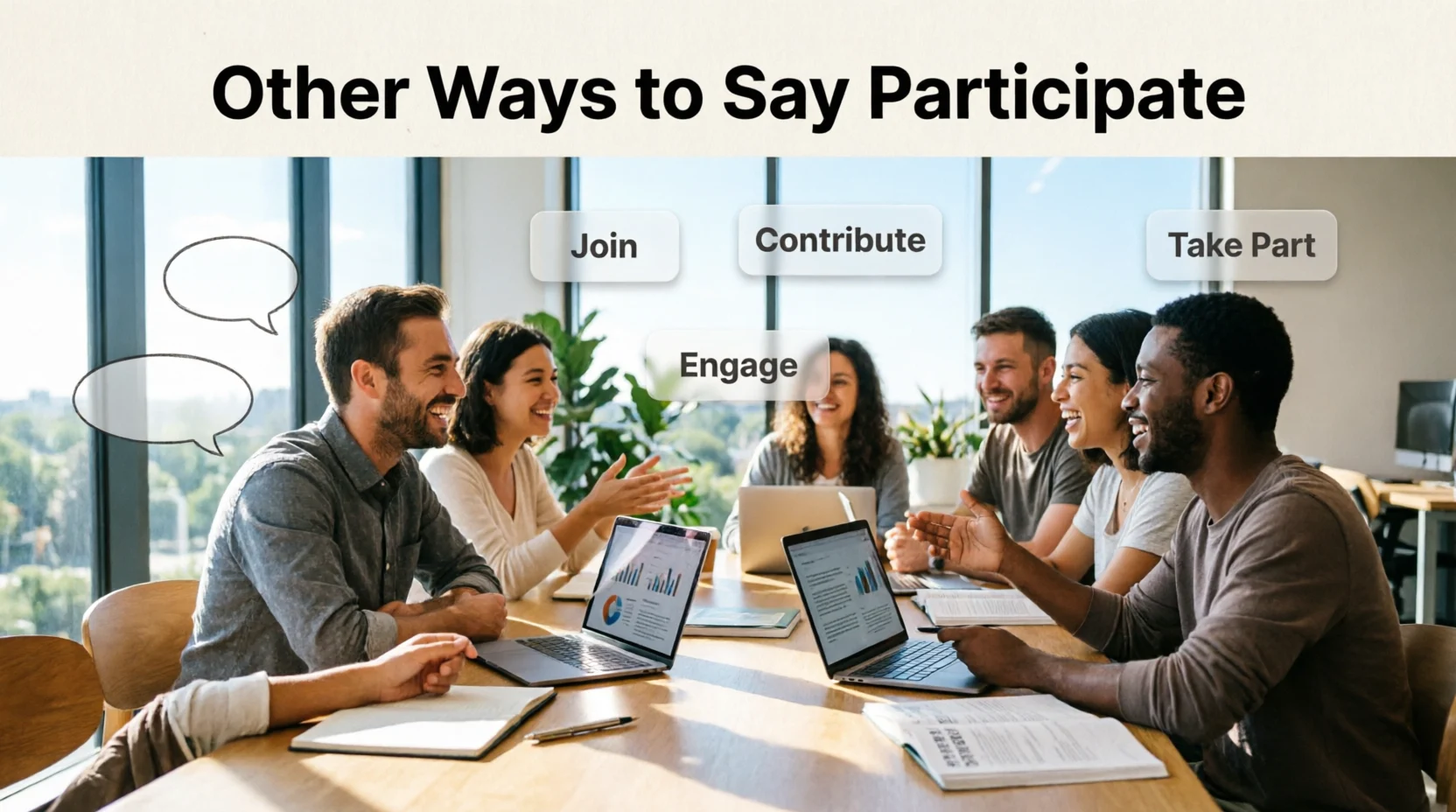
There are many natural alternatives to participate, depending on the situation and level of formality. The best options include take part, get involved, join in, contribute, engage, attend, and be involved.
Top Alternative: Take part is a natural, simple, and widely used alternative.
The word participate means to take part in an activity, event, discussion, project, or shared experience. It is commonly used in classrooms, workplaces, meetings, competitions, community events, and everyday conversations. Choosing the right expression can make your English sound more natural and precise. Learning alternatives to participate also helps you communicate according to your audience. Some expressions sound formal and professional, while others work better in casual conversations.
Understanding these differences can improve your fluency and help you express excitement in English without repeating the same word. For English learners and professionals, building a wider vocabulary makes communication more flexible. Whether you are writing an email, answering a question in class, or joining a team project, these alternatives can help you choose language that fits the situation.
Formal Alternatives to “Participate”
- Take part
- Contribute
- Engage
- Be involved
Pro Tip: Use these expressions when writing formal emails, academic assignments, reports, or professional messages.
Casual Alternatives
- Join in
- Get involved
- Come along
- Join the activity
Pro Tip: Choose shorter expressions such as “join in” when speaking with friends or classmates.
Professional Alternatives
- Contribute to
- Engage in
- Collaborate
- Be actively involved
Pro Tip: In professional communication, choose an expression that clearly describes how someone will contribute.
Informal Expressions
- Join us
- Get in on it
- Jump in
- Take part
Pro Tip: Informal expressions work best in conversations, team chats, and friendly invitations.
“Good vocabulary is not about using difficult words. It is about choosing the right words.”
Common Mistakes When Using “Participate”
1. Using “participate” with the wrong preposition
Incorrect: I participated on the meeting.
Correct: I participated in the meeting.
2. Using “participate” when “attend” is more accurate
Incorrect: I participated in the conference but did not speak or contribute.
Better: I attended the conference but did not participate in the discussions.
3. Using it when you mean “contribute”
Incorrect: She participated several useful ideas.
Correct: She contributed several useful ideas.
4. Making the sentence unnecessarily formal
Awkward in casual conversation: Would you like to participate in our movie night?
More natural: Would you like to join us for movie night?
5. Confusing participation with leadership
Incorrect: He participated the project.
Correct: He participated in the project.
If he led the project, say: He led the project.
What Does “Participate” Mean?
Participate means to take part in an activity, event, discussion, or situation.
It is normally followed by in when describing the activity:
participate in + activity/event
Example: Students participated in the class discussion.
The word is neutral and works in both spoken and written English, although some alternatives may sound more natural in specific situations.
When to Use “Participate”
You can use participate when talking about:
- Class discussions
- Meetings
- Competitions
- Group projects
- Workshops
- Community activities
- Research studies
- Conferences
- Workplace activities
- Online discussions
Spoken vs. Written
Spoken: “Would you like to join in?”
Written: “We encourage employees to participate in the training session.”
Formal vs. Informal
Formal: “Employees are encouraged to participate in the program.”
Informal: “Do you want to join us?”
“Context determines whether a synonym sounds natural, formal, friendly, or professional.”
Is It Professional or Polite to Say “Participate”?
Polite? ✔️ Yes
Professional? ❌ No (in most cases)
“Participate” is polite and grammatically correct, but it can sound somewhat formal. In business communication, words such as contribute, engage, collaborate, or be involved may communicate the intended action more specifically.
Business example:
“We encourage all team members to participate in the upcoming workshop.”
Pros and Cons of Using “Participate”
Pros
- Simple and natural
- Friendly tone
- Common usage
- Easy to understand
Cons
- Too informal for some work contexts
- Can become repetitive
- Limited emotional range
- Not always suitable for highly formal writing
Other Ways to Say “Participate” With Examples
These alternatives will help you sound more fluent, confident, and natural in different situations.
Use them according to tone, context, and audience to express excitement, admiration, or approval.
1. Phrase: Take Part
- Meaning: To participate in an activity or event.
- Explanation: This is one of the most natural alternatives to “participate.”
- Example Sentence: Everyone is welcome to take part in the discussion.
- Best Use: General situations
- Worst Use: Highly technical writing
- Tone: Natural, neutral, friendly
- Context Variability: Casual: High | Professional: High | Spoken: High
2. Phrase: Join In
- Meaning: To become involved in an activity.
- Explanation: “Join in” sounds friendly and conversational.
- Example Sentence: Come and join in the celebration.
- Best Use: Casual conversations
- Worst Use: Formal reports
- Tone: Casual, friendly, inviting
- Context Variability: Casual: High | Professional: Low | Spoken: High
3. Phrase: Get Involved
- Meaning: To become actively connected with an activity.
- Explanation: It often suggests active participation rather than simply being present.
- Example Sentence: We encourage students to get involved in campus activities.
- Best Use: Activities, groups
- Worst Use: Formal invitations
- Tone: Friendly, active, encouraging
- Context Variability: Casual: High | Professional: High | Spoken: High
4. Phrase: Contribute
- Meaning: To provide ideas, effort, information, or resources.
- Explanation: Use this when participation involves adding something valuable.
- Example Sentence: Everyone contributed useful ideas during the meeting.
- Best Use: Team discussions
- Worst Use: Passive attendance
- Tone: Professional, positive, purposeful
- Context Variability: Casual: Medium | Professional: High | Spoken: High
5. Phrase: Engage
- Meaning: To become actively involved in something.
- Explanation: “Engage” is common in professional, academic, and educational contexts.
- Example Sentence: Students should engage in meaningful classroom discussions.
- Best Use: Academic settings
- Worst Use: Very casual chats
- Tone: Formal, professional, active
- Context Variability: Casual: Medium | Professional: High | Spoken: Medium
6. Phrase: Be Involved
- Meaning: To take an active or connected role.
- Explanation: This phrase works well when describing ongoing participation.
- Example Sentence: She is actively involved in several community projects.
- Best Use: Ongoing activities
- Worst Use: Quick invitations
- Tone: Neutral, professional, positive
- Context Variability: Casual: High | Professional: High | Spoken: High
7. Phrase: Attend
- Meaning: To be present at an event or activity.
- Explanation: Use “attend” when the main idea is being present rather than actively contributing.
- Example Sentence: More than 100 employees attended the seminar.
- Best Use: Events, meetings
- Worst Use: Active contribution
- Tone: Neutral, formal, clear
- Context Variability: Casual: Medium | Professional: High | Spoken: High
8. Phrase: Collaborate
- Meaning: To work together with others.
- Explanation: This is more specific than “participate” because it emphasizes teamwork.
- Example Sentence: The designers collaborated on the new campaign.
- Best Use: Team projects
- Worst Use: Simple attendance
- Tone: Professional, cooperative, formal
- Context Variability: Casual: Medium | Professional: High | Spoken: High
9. Phrase: Take an Active Role
- Meaning: To participate actively.
- Explanation: It emphasizes meaningful involvement rather than passive presence.
- Example Sentence: She took an active role in organizing the event.
- Best Use: Leadership contexts
- Worst Use: Casual invitations
- Tone: Professional, confident, purposeful
- Context Variability: Casual: Medium | Professional: High | Spoken: Medium
10. Phrase: Contribute to
- Meaning: To add effort, ideas, or resources to something.
- Explanation: This phrase is useful when participation produces a specific contribution.
- Example Sentence: Each employee contributed to the project’s success.
- Best Use: Workplace settings
- Worst Use: Simple attendance
- Tone: Professional, positive, formal
- Context Variability: Casual: Medium | Professional: High | Spoken: High
11. Phrase: Engage in
- Meaning: To become actively involved in an activity.
- Explanation: This formal phrase is common in academic and professional writing.
- Example Sentence: Participants engaged in a detailed discussion.
- Best Use: Formal writing
- Worst Use: Casual invitations
- Tone: Formal, academic, professional
- Context Variability: Casual: Low | Professional: High | Spoken: Medium
12. Phrase: Join
- Meaning: To become part of an activity or group.
- Explanation: “Join” is short, flexible, and extremely common.
- Example Sentence: Would you like to join our study group?
- Best Use: Everyday communication
- Worst Use: Technical reports
- Tone: Friendly, natural, simple
- Context Variability: Casual: High | Professional: High | Spoken: High
13. Phrase: Take an Active Part
- Meaning: To participate actively.
- Explanation: This phrase emphasizes effort and involvement.
- Example Sentence: Employees are encouraged to take an active part in training.
- Best Use: Workplace communication
- Worst Use: Casual chats
- Tone: Professional, active, encouraging
- Context Variability: Casual: Medium | Professional: High | Spoken: Medium
14. Phrase: Become Involved
- Meaning: To start participating in something.
- Explanation: It is useful when describing the beginning of involvement.
- Example Sentence: She became involved in several volunteer programs.
- Best Use: Community activities
- Worst Use: Immediate actions
- Tone: Neutral, formal, positive
- Context Variability: Casual: High | Professional: High | Spoken: High
15. Phrase: Lend a Hand
- Meaning: To help with an activity or task.
- Explanation: This phrase focuses more on helping than general participation.
- Example Sentence: Can you lend a hand with the event preparations?
- Best Use: Helping situations
- Worst Use: Formal reports
- Tone: Casual, friendly, helpful
- Context Variability: Casual: High | Professional: Low | Spoken: High
“Use ‘contribute’ when participation means adding ideas, effort, or value.”
16. Phrase: Get Engaged
- Meaning: To become actively involved.
- Explanation: It is common when encouraging people to participate more actively.
- Example Sentence: The teacher encouraged students to get engaged in the lesson.
- Best Use: Education, teams
- Worst Use: Formal contracts
- Tone: Encouraging, active, professional
- Context Variability: Casual: High | Professional: High | Spoken: High
17. Phrase: Be a Part Of
- Meaning: To belong to or participate in something.
- Explanation: This phrase emphasizes being included in an activity or group.
- Example Sentence: I am proud to be a part of this project.
- Best Use: Groups, projects
- Worst Use: Technical instructions
- Tone: Friendly, positive, natural
- Context Variability: Casual: High | Professional: High | Spoken: High
18. Phrase: Play a Role
- Meaning: To have a particular part or function in something.
- Explanation: It focuses on someone’s contribution rather than simple attendance.
- Example Sentence: Every team member played a role in the project’s success.
- Best Use: Team achievements
- Worst Use: Simple events
- Tone: Professional, neutral, purposeful
- Context Variability: Casual: High | Professional: High | Spoken: High
19. Phrase: Get On Board
- Meaning: To become involved or supportive of an activity or idea.
- Explanation: It is commonly used in workplace and informal communication.
- Example Sentence: We need everyone to get on board with the new plan.
- Best Use: Team communication
- Worst Use: Academic essays
- Tone: Informal, encouraging, collaborative
- Context Variability: Casual: High | Professional: Medium | Spoken: High
20. Phrase: Step In
- Meaning: To become involved and help with a situation.
- Explanation: “Step in” often suggests responding to a need or problem.
- Example Sentence: Several volunteers stepped in to help organize the event.
- Best Use: Helpful actions
- Worst Use: Passive events
- Tone: Informal, active, helpful
- Context Variability: Casual: High | Professional: High | Spoken: High
21. Phrase: Join the Discussion
- Meaning: To become part of a conversation or debate.
- Explanation: This is especially useful in meetings, classrooms, and online discussions.
- Example Sentence: Please feel free to join the discussion.
- Best Use: Discussions, meetings
- Worst Use: Physical activities
- Tone: Polite, professional, inviting
- Context Variability: Casual: High | Professional: High | Spoken: High
22. Phrase: Share Your Ideas
- Meaning: To contribute thoughts or opinions.
- Explanation: This phrase makes the expected form of participation clear.
- Example Sentence: We encourage everyone to share their ideas.
- Best Use: Brainstorming sessions
- Worst Use: Competitive events
- Tone: Friendly, encouraging, professional
- Context Variability: Casual: High | Professional: High | Spoken: High
23. Phrase: Take Part In
- Meaning: To participate in something.
- Explanation: It is a direct and natural synonym for “participate in.”
- Example Sentence: Many employees took part in the training program.
- Best Use: General communication
- Worst Use: None specific
- Tone: Neutral, natural, clear
- Context Variability: Casual: High | Professional: High | Spoken: High
24. Phrase: Be an Active Member
- Meaning: To participate regularly and meaningfully.
- Explanation: This phrase works well for teams, clubs, and organizations.
- Example Sentence: She is an active member of the marketing team.
- Best Use: Teams, organizations
- Worst Use: One-time events
- Tone: Professional, positive, committed
- Context Variability: Casual: Medium | Professional: High | Spoken: High
25. Phrase: Volunteer
- Meaning: To offer your time or effort willingly.
- Explanation: Use this when participation is voluntary and involves helping.
- Example Sentence: Many students volunteered to help at the event.
- Best Use: Community activities
- Worst Use: Required meetings
- Tone: Positive, helpful, active
- Context Variability: Casual: High | Professional: High | Spoken: High
26. Phrase: Interact
- Meaning: To communicate or work with other people.
- Explanation: This is useful when participation involves communication with others.
- Example Sentence: Participants interacted with experts during the workshop.
- Best Use: Workshops, events
- Worst Use: Silent activities
- Tone: Neutral, professional, academic
- Context Variability: Casual: Medium | Professional: High | Spoken: High
27. Phrase: Contribute Ideas
- Meaning: To provide thoughts or suggestions.
- Explanation: This phrase clearly describes intellectual participation.
- Example Sentence: Team members were invited to contribute ideas for the campaign.
- Best Use: Brainstorming
- Worst Use: Social gatherings
- Tone: Professional, constructive, collaborative
- Context Variability: Casual: Medium | Professional: High | Spoken: High
28. Phrase: Take Part Actively
- Meaning: To participate with meaningful effort.
- Explanation: It emphasizes active involvement rather than passive presence.
- Example Sentence: Students are expected to take part actively in classroom activities.
- Best Use: Education settings
- Worst Use: Casual invitations
- Tone: Formal, academic, encouraging
- Context Variability: Casual: Low | Professional: High | Spoken: Medium
29. Phrase: Become a Participant
- Meaning: To officially start participating.
- Explanation: This phrase is useful when someone formally enters an activity or program.
- Example Sentence: You can become a participant by registering online.
- Best Use: Programs, studies
- Worst Use: Casual events
- Tone: Formal, neutral, structured
- Context Variability: Casual: Low | Professional: High | Spoken: Medium
30. Phrase: Be Actively Engaged
- Meaning: To participate with attention and effort.
- Explanation: This professional expression highlights meaningful involvement.
- Example Sentence: Employees should be actively engaged during the training session.
- Best Use: Professional settings
- Worst Use: Casual conversations
- Tone: Professional, formal, confident
- Context Variability: Casual: Medium | Professional: High | Spoken: Medium
Mini Quiz: Test Your Usage
1. Which phrase is most suitable for a formal academic sentence?
A. Get in on it
B. Join in
C. Engage in
D. Jump in
Answer: C. Engage in
2. Which sentence is correct?
A. I participated on the meeting.
B. I participated in the meeting.
C. I participated at the meeting.
D. I participated to the meeting.
Answer: B. I participated in the meeting.
3. You want colleagues to provide ideas during a meeting. Which phrase fits best?
A. Attend
B. Contribute ideas
C. Come along
D. Step in
Answer: B. Contribute ideas
4. Which phrase is most casual?
A. Engage in
B. Contribute to
C. Join in
D. Be actively engaged
Answer: C. Join in
“Fluent English means knowing not only what a phrase means, but when to use it.”
Comparison Table: Top Alternatives
| Phrase | Tone | Best Use |
|---|---|---|
| Take part | Neutral | General situations |
| Join in | Casual | Friendly conversations |
| Get involved | Friendly | Activities and groups |
| Contribute | Professional | Meetings and projects |
| Engage | Formal | Academic settings |
| Be involved | Neutral | Ongoing activities |
| Attend | Formal | Events and meetings |
| Collaborate | Professional | Team projects |
| Join | Natural | Everyday communication |
| Play a role | Professional | Team contributions |
FAQs
What are the best alternatives to “participate”?
Common alternatives include take part, join in, get involved, contribute, engage, collaborate, and be involved.
What is a professional way to say “participate”?
Contribute, engage in, collaborate, and be actively involved are useful professional alternatives.
Is “take part” the same as “participate”?
Yes. “Take part” has almost the same meaning and often sounds more natural in everyday English.
What is an informal way to say “participate”?
You can say join in, join us, get involved, or jump in, depending on the situation.
Should I use “attend” instead of “participate”?
Only when you mean being present. “Participate” suggests taking part actively, while “attend” mainly means being present.
Conclusion
Learning different ways to say participate gives you more control over your English. Expressions such as take part, join in, contribute, engage, and collaborate can communicate slightly different meanings while making your speech and writing more natural.
Practice these phrases in real conversations, emails, meetings, and academic situations. Pay attention to tone and context so you can choose the expression that sounds appropriate for your audience.
Which alternative do you use most often? Share your favorite phrase and example sentence.